

Why Japan Banned A Popular Sushi Fish
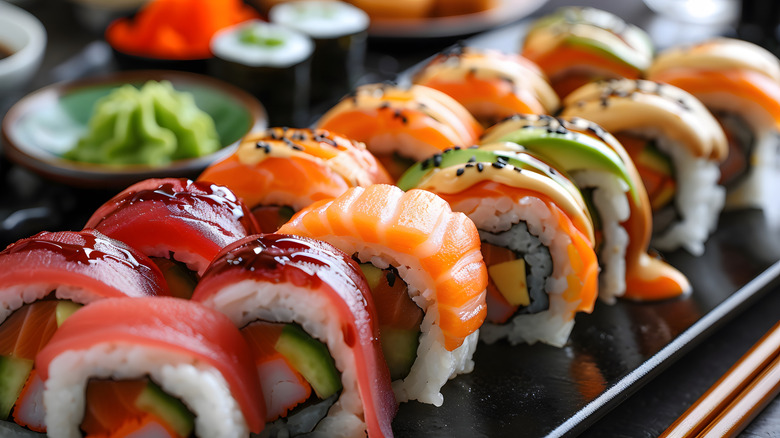
Buttery, rich, clean, smooth, decadent, melt-in-your-mouth. The language used to describe this fish makes it abundantly clear that it belongs at the culinary high table. Unfortunately, consuming it can often trigger side effects that, to put it mildly, belong in the toilet. We're talking about escolar, a fleshy white fish with incredible mouthfeel that can still be found in sushi restaurants in America (you might know it as white tuna sushi). This is despite the fact that it was banned in Japan in the late 1970s because it contains an indigestible oil that acts as a laxative for a lot of people. It remains banned there today.
Escolar is abundant in the Gulf of Mexico and the South Pacific, as well as other tropical waters. It is a common bycatch of swordfish and tuna fishing. Boasting a high fat content, its richness is balanced out by a subtle sweetness, and the texture is comparable to silky tuna. All of this is thanks to the presence of an oily substance called gempylotoxin, which is made up of a high percentage of wax esters that humans can't digest. This triggers keriorrhea — oily, orange, explosive bouts of diarrhoea.
Consuming escolar can trigger these reactions in a significant percentage of the population, which is the reason the Japanese government banned the fish back in 1977. In fact, even the U.S. Food and Drug Administration issued a notice in the early 1990s advising against the sale of the fish, but this was revoked before the end of the decade.
Is it safe to eat escolar?
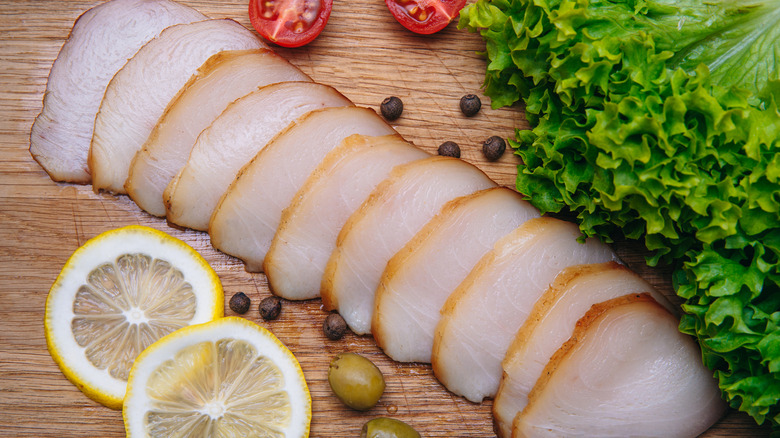
The short answer is yes, it is safe to eat escolar, but with some caveats attached. Describing gempylotoxins in a guidance document published in 2019, the FDA lists out the many potential side effects of consuming the fish, but adds that these are only triggered when "consumed in sufficient quantities or consumed in lower quantities by sensitive individuals." Also, while the FDA says that eating escolar can cause diarrhea, abdominal cramps, nausea, headache, and vomiting, it does add that the "exact quantity required to cause these purgative effects is not known." Another reason for not banning the fish is that while these reactions can be extremely uncomfortable, they are not life-threatening. Keriorrhea doesn't result in a loss of fluids, and bouts are relatively short-lived, with affected people bouncing back in 24 to 48 hours.
Despite this, sushi restaurants that serve escolar call it by several different names. If you spot something called white fish, white tuna, or king tuna on the menu, consider it a major red flag. If you really want to know what all the flavor and taste fuss is about, the general consensus online seems to be that eating six ounces or less of escolar should be safe.
We know what you're thinking: If it is indeed safe to consume in small quantities, why is it still banned in Japan? It's a question that's really hard to answer, given that puffer fish, or fugu, have been considered a delicacy in Japan for centuries, but at the same, you'll have a hard time finding fugu in the U.S. This is because it contains TTX, a toxin that's more potent than arsenic and can kill humans, rather than just send them running to the toilet.