

This Type Of Fish At A Sushi Restaurant Signals A Bright Red Flag
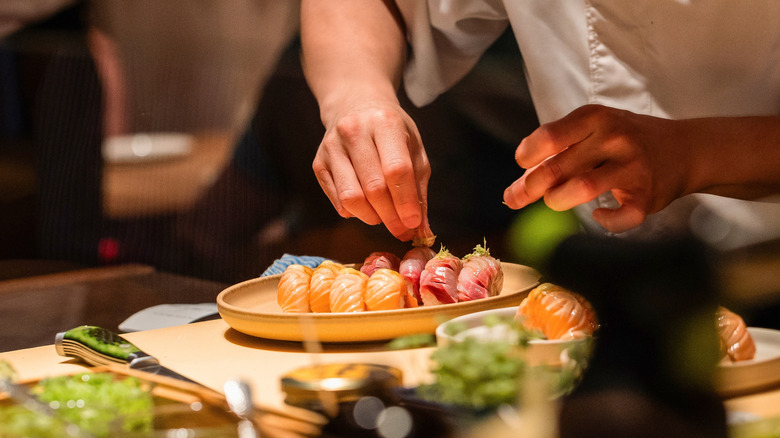
If you wanted to order a pound of wings but the menu simply listed "bird wings" with no further detail, you might become suspicious. This same principle should apply to fish, yet a major red flag you might very well encounter in a sushi restaurant is menus effectively doing the same thing. If you visit a sushi spot and the menu simply lists "white fish," "white tuna," or "seasonal white fish," that might be your cue to head back out the door.
This sushi restaurant red flag comes to us from head sushi chef Akar Win at Uchi, an award-winning family of sushi restaurants. According to Win, these fish listed on a sushi menu could mean what you get served is actually escolar, sometimes considered fake tuna. In fact escolar may also parade under names like "super white tuna" or "king tuna" but is in fact in the family of snake mackerel, not tuna at all. What really makes these flags bright red is that yet another name for this breed is "Ex-Lax fish," due to its ability to motivate lavatorial activity when consumed raw.
Let's be clear — it's not a red flag if restaurants serve types of white fish such as grouper and snapper, which are delicious and safe for fresh sushi. The red flag is when the menu simply lists "white fish" without naming which white fish species they're slicing up. More often than not, as Win has warned, that means it's escolar on your plate.
White fish is a red flag
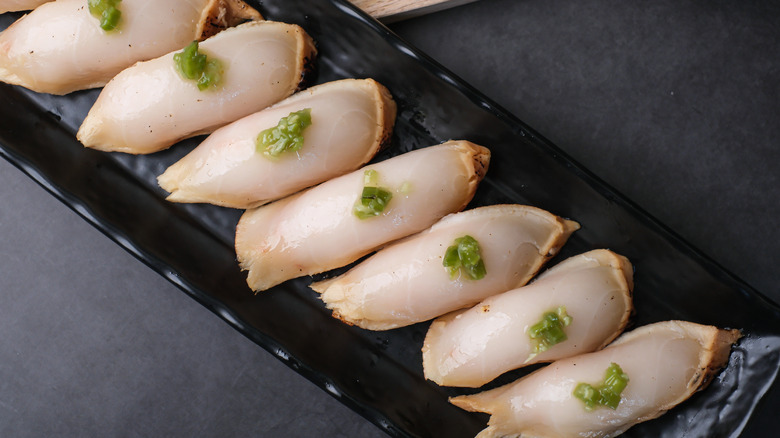
Escolar is a bycatch of tuna and swordfish fishing, but the flesh of the fish is extremely oily, with a high concentration of indigestible waxy esters called gempylotoxins that create gastric havoc. To boot, the fish can also be over 20% fat, which also contributes to its digestive disturbance. Sadly, this doesn't stop some sushi restaurants from serving it in lieu of actual tuna or a preferable white fish species. The fish is so undesirable that it was banned in Japan in 1977.
So how do you avoid this red flag? Look for green flags. The key green flag to look for is that all fish species, especially white fish, are named on the menu — and none of those names are any of escolar's pseudonyms. If you see tuna named as yellowfin, albacore, or bluefin, that's a big ol' bingo. If restaurants aren't serving some of the less desirable fish species, they should be able to tell you exactly what you're getting. As Win explains, this can also apply to generic descriptions of sushi rolls that don't have to display the fish front-and-centre, as with sashimi or nigiri. He warns, "Be very wary if there is a sushi roll with assorted fishes without the names of each type."