

The 3 Types Of Cookware Andrew Zimmern Suggests To Keep Chemicals Out Of Your Food
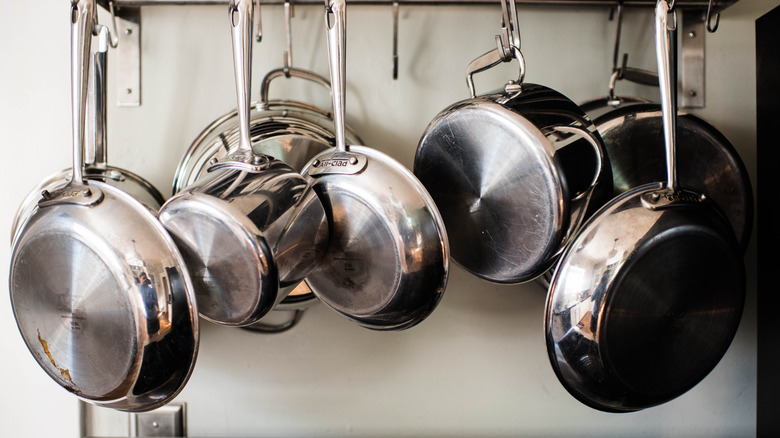
Great pots and pans are a required staple in any home kitchen, but with so many cookware options on the market, it's hard to know where to start. That's why it's a good idea to consult a pro; chef Andrew Zimmern recently shared what he looks for when stocking his kitchen's cookware supply — and most notably, what he avoids.
Zimmern notes that it's not just the performance of your cookware you need to consider. It's also worth noting what chemicals are used in the manufacturing process and avoiding any that use PFAS — also called "forever chemicals." In fact, these chemicals are exactly why Zimmern is throwing his weight behind cookware made from stainless steel, cast iron, and ceramic coatings.
Unfortunately, PFAS can be found in everyday items found in most homes. They're in everything from cleaning products to upholstered furniture to dental floss — as well as Teflon-coated, non-stick cookware. But with a few changes, you can remove PFAS from your home, and you should start by replacing your potentially unsafe pots and pans with chemical-free alternatives.
Why it's important to avoid forever chemicals
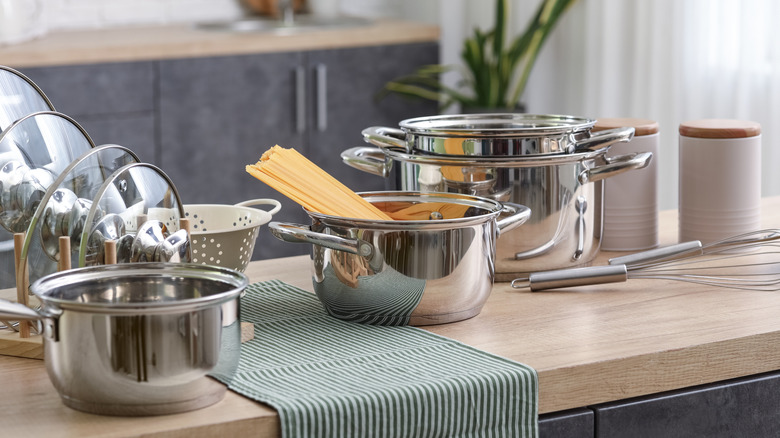
Although Teflon is now considered safe to use at temperatures under 500 degrees Fahrenheit, previous versions of the nonstick material included PFAS, and these forever chemicals have been linked to a whole host of health problems, including cancer, high cholesterol, and hormonal changes. What's more, the long-term effects of the chemicals used to replace PFAS remain unknown, and — as Zimmern points out — there are plenty of non-Teflon alternatives available. With these options on hand, it's easy to avoid the risk.
Of course, switching to certain types of cookware can take some getting used to, especially after years of using nonstick pans. Mistakes with stainless steel are common, and you might need to get used to cooking at different temperatures and seasoning your pan properly. Famously, there's a learning curve with cast iron, too — especially when it comes to seasoning and maintaining your pans. But once you've made the effort to adjust and understand how to use these Zimmern-approved alternatives, you won't look back at your old, nonstick varieties.