

Why You Should Weigh Walmart's Meat On The Produce Scales (And What To Do If The Price Doesn't Add Up)
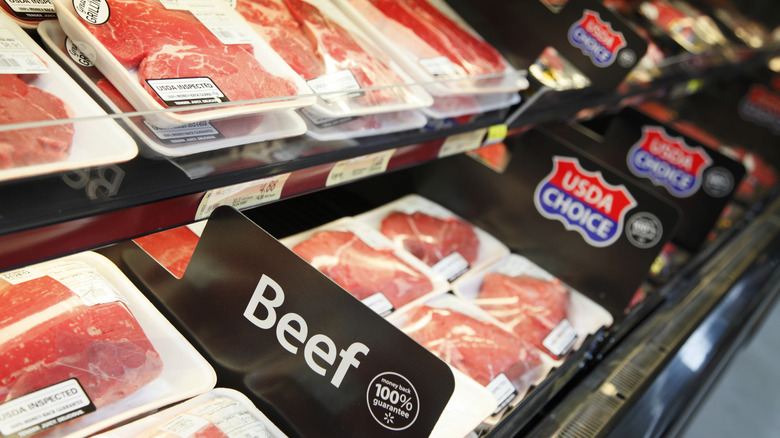
If you're dining out at a nice restaurant and you notice a discrepancy with the bill, you'd probably speak up and ask for an adjustment, right? You wouldn't willingly overpay for something — but if you're overpaying unknowingly, the deceit can feel all the worse. In the last few months, Walmart customers have begun to notice a discrepancy between the labeled weight of the meat department's products and their actual weight. The weight difference translates into a major price difference, which is why many now recommend weighing Walmart's meat on produce scales.
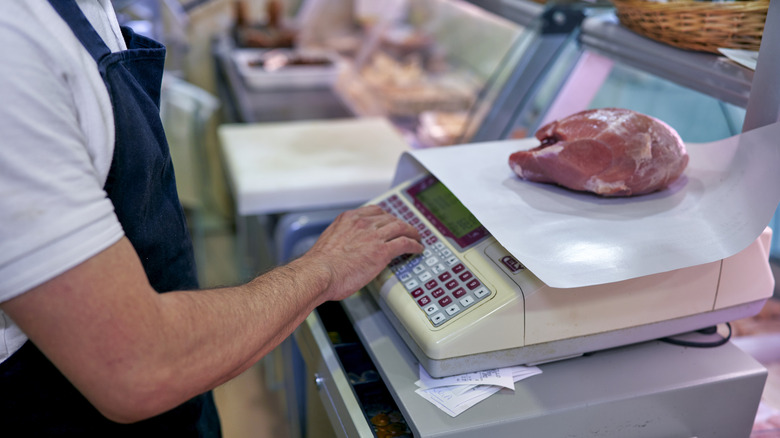
TikToker @james_wrigg has served as a boots-on-the-ground investigator at several Walmart meat departments and discovered that customers are often overpaying. In one of his viral videos, Wrigg gathered a handful of Kentucky Legend hams sold at Walmart and noted that one of the hams was labeled as 5.62 pounds, but after testing on the produce scale, he found that it actually weighed 2.53 pounds. In another video, Wrigg takes a Walmart-branded package of chicken breast tenderloins that supposedly weighed 4.66 pounds, only to uncover that the produce scale says it weighed 2.37 pounds. Walmart faced a similar lawsuit in 2024, where misweighed fruits led to a class-action lawsuit with a $45 million settlement – as if the huge PepsiCo and Federal Trade Commission lawsuit in 2025 wasn't bad enough.
What to do if the price doesn't add up
If you test your Walmart-sold meat on the produce scale only to discover a discrepancy in the weight (and therefore the price), the first thing you should do is put that package down (since Walmart's meat is ranked as one of the worst, anyway). It's worth bringing up the issue with Walmart's customer service, but there may not be anything they can do for you in the store, since the individual Walmart isn't responsible for weighing and/or determining the price of its pre-packaged meat. That responsibility falls on the manufacturer, which is why it might be best to reach out to your state's Office of Weights and Measurements (OWM) instead. The OWM is responsible for ensuring consistency with weights and measurements to protect the customer. Once contacted, the OWM can send undercover representatives to conduct an investigation.
While Walmart has yet to issue an official statement, Kentucky Legends in particular did follow up on the miscalculation claims. The company blamed the issue on an error with one specific packaging date on its Brown Sugar Quarter Hams and said that it would remove the affected products from Walmart's shelves, which Walmart also confirmed. Although, as of a video Wrigg posted on May 8, he was still finding mislabeled Kentucky Legend products at Walmart. Despite issues in the past, it seems that the heat for Walmart's overpriced meat products might mean it could face another lawsuit, though only time will tell.