

Everyone Had This In Their Kitchen 90 Years Ago — Now It Would Be Strange To See One
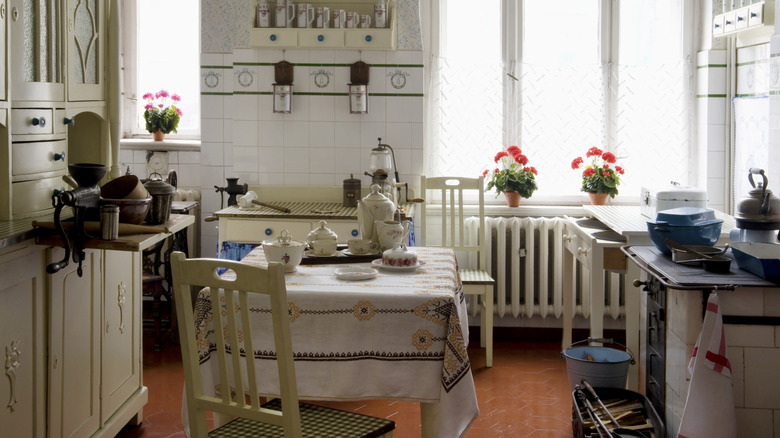
If you've ever lived in, been to, or passed by a historic home dating anytime from the 1880s to the 1920s, you may have seen a curious square-shaped cast iron door in the outer wall leading into the kitchen or pantry. What is it for? Yet another vintage kitchen feature nobody remembers anymore, the milk door was a way to keep delivered dairy products cold until they could be collected inside during the era before refrigeration was common.
Long before the milk door, refrigeration, and even pasteurization, households would have had their own cows. When keeping livestock became impractical or impossible, fresh milk used to be delivered to your door daily in large metal containers, then kept cool in cellars or iceboxes. The first glass milk bottle, the Lester milk jar, was patented in 1878, followed by the first milk bottle with a cap in 1884, designed by Harvey D. Thatcher and patented in 1900.
After the advent of the capped milk bottle, delivery became much more convenient. The heyday of the milkman had arrived. Milk would be delivered daily, empty bottles collected, payment made, and orders for the next day taken. Milk was delivered between 4 a.m. and 7 a.m. so that families could have milk for breakfast, but that also meant that if no one was up early to bring it inside, it would sit outside, risking spoilage.
The milk door was like a mini fridge
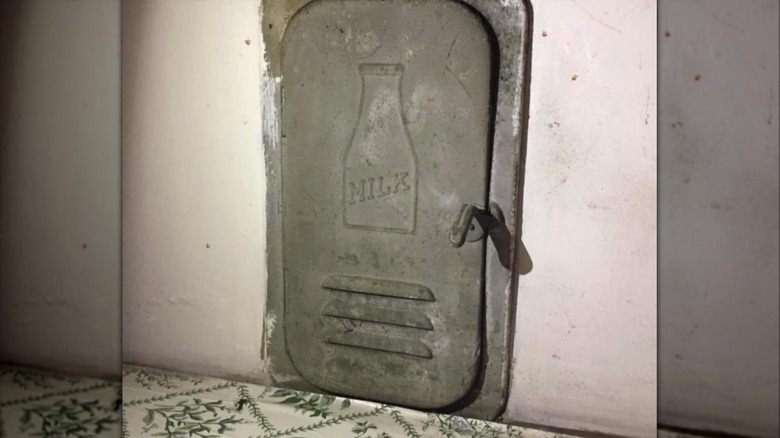
The milk door was the perfect solution. A milk door is a small, insulated cupboard between inside and outside with a latched door on both sides. Putting milk inside the compartment would keep it cool until it could be brought in the house or prevent it from freezing in winter. A 1918 article from "The House Beautiful" magazine touts the merits of the milk door, saying it keeps milk "safe from inquisitive cats and dogs as well as relatively safe from the milk thief."
According to the article, milk doors were typically about 5 inches deep, 18 inches high, and 12 inches wide, offering a convenient place for milk and items like eggs, butter, and even the morning paper to be delivered. Some milk doors even included dials on the inside so that customers could indicate which items needed to be restocked, such as milk, butter, or cream.
By the time most households had refrigerators, the milk door had become obsolete. Milkmen were no longer patrolling streets in the pre-dawn hours, either, although having milk delivered from a local dairy has made a slight, if novel, resurgence. While the milk door might be a vintage kitchen gadget that no one remembers, it deserves a revival. With so many items being delivered to our doorsteps these days, from groceries to Prime Day buys, we need a secure place to stash stuff away from porch pirates — bring back the milk door!