

The Flavorful Companion Plant Your Potatoes Will Thrive Next To
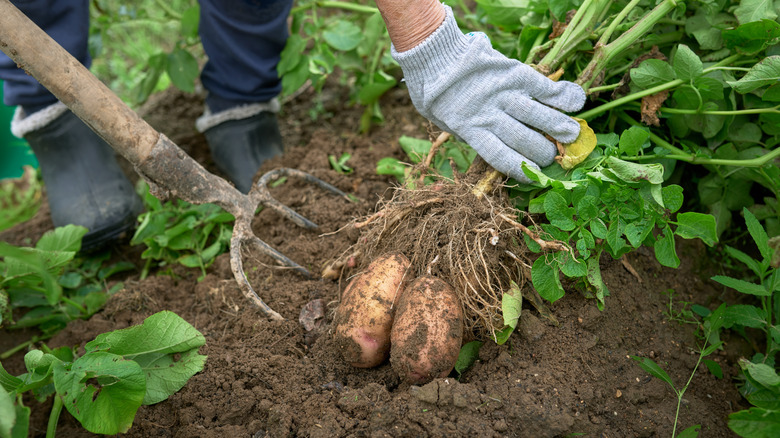
A companion plant is one that, when planted next to or near another plant, can help it grow healthier and stronger. It may attract beneficial pollinators, deter predators, increase nutrients in the soil, provide shade or shelter, or release chemicals or scents that repel insects that could damage the plants. If you're considering growing potatoes in your backyard garden, one flavorful companion plant that can help them thrive is chives.
Chives are a cool-season herb and one of the most effective companion plants for potato crops. They emit a strong smell that can repel pests like snails, slugs, Japanese beetles, and aphids. They bloom with bright purple flowers that attract pollinators and other helpful insects. They also last for the entire growing cycle of your potato crop, offering these benefits from seedling to harvest. Because garlic, onions, leeks, and scallions are in the allium family along with chives, they also make excellent companion plants for potatoes. Garlic can reduce the risk of potato blight and may increase yield, while onions can offer protection from aphids.
Another great reason to add chives to your potato bed is the added benefits you'll enjoy after harvesting both crops. Chives are one of the best toppings for baked potatoes, offering a flavorful, grassy, garlicky crunch that pairs perfectly with butter, sour cream, and seasonings. Just chop up some fresh chives and sprinkle them on top of baked, roasted, or old-fashioned scalloped potatoes, or even use them to make an herby compound butter.
Tips for growing chives with potatoes

For the best chance of success with growing potatoes in a backyard garden, plant them two to four weeks before the last frost date in your region. Choose a spot that gets at least six hours of direct sunlight each day, and amend the soil so that it reaches a pH of 5.8 to 6.5, or slightly acidic. Your potatoes will need consistent moisture, or about an inch or two of water each week.
Like potatoes, chives should be planted in early spring and will thrive in direct sun. The ideal soil type is well-draining with a pH between 6.0 and 7.0, amended with organic compost. If you want to plant chive seedlings at the same time as your potatoes, start them indoors about six to eight weeks before the last frost. Once the seedlings have achieved healthy growth and the last frost has passed, transplant them in the garden bed or container when you plant your potatoes, placing them at least 4 to 6 inches apart. Chives are drought-tolerant, but should be watered consistently to increase yield.
In addition to being the perfect topping for baked potatoes, chives have a lot of other uses in the kitchen. Fresh chives can be sprinkled over almost anything when you want to impart a zesty, herbaceous flavor. Use them as a topping for a French omelet or to garnish spring or summer soups, add them to a green salad or dressing, or blend them to make a sauce for sandwiches, pizza, or fish. However, keep in mind that you should avoid cooking chives as heat can dull their flavor; always use these herbs fresh.