

The Old-School Grocery Chain That Took Over The Midwest In The '60s

We may receive a commission on purchases made from links.
These days, if you ask any American where they shop for groceries, they'll likely name grocery giants like Walmart, Costco, and Kroger. Ask the same question back in the 20th century, though, and shoppers would more likely name smaller, regional grocery chains that have sadly fizzled out over the decades. One much-missed Midwest grocer is Red Owl, which flew high throughout the 1960s before crashing in the '80s.
Countless Midwesterners fondly remember Red Owl for its big-eyed bird mascot and the ubiquity of its stores — every small town in the Midwest seemed to have one. This is evidenced by the scores of people who recall a family member working at Red Owl or who worked there themselves. General Mills founded the Hopkins, Minnesota-based store and began selling coal, groceries, and dry goods in 1922. Making it one of the oldest grocery stores in the U.S. Just three years later, in 1925, Red Owl had expanded to 53 stores across Iowa, Wisconsin, and the Dakotas, in addition to its native Minnesota.
The chain peaked in the early '60s, when it operated 172 locations in 10 states and sold Red Owl brand products to over 450 other independent grocery stores across the nation. At that time, Red Owl commanded 55% of Minnesota's grocery market. While it seemed like Red Owl would keep flapping towards success, as with many defunct grocery stores, changing industry trends drastically turned the tide.
Red Owl's fall in the 1980s and last remaining location
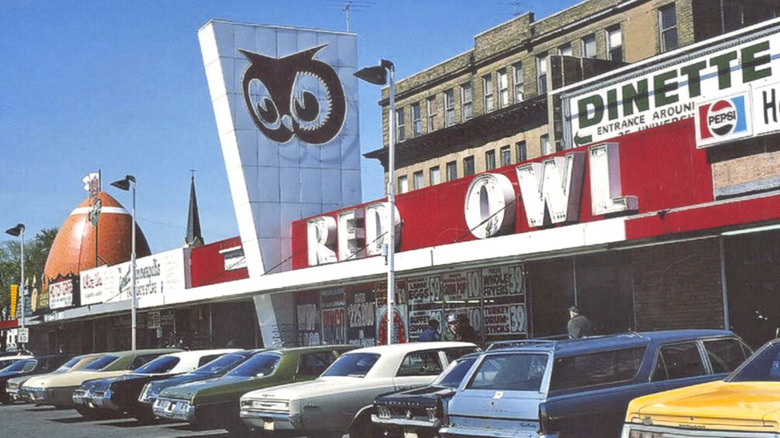
Red Owl soared throughout the '60s, but at the end of the decade, the chain was purchased by Gamble-Skogmo. The parent company was apparently interested in moving Red Owl away from groceries and towards non-food items, which some say was the beginning of the end for the store. Red Owl was also paying its unionized employees much higher than newer competing grocers, further shrinking the chain's profit margins.
In the '80s, the company Vickes bought Gamble-Skogmo (and therefore Red Owl), but couldn't save the resource-starved store. "The deprivation of capital in the late 1970s and early 1980s gave Red Owl a 'second class' image with consumers that resulted in declining market share," said a Minnesota Star Tribune article from 1986. The chain was ultimately purchased by SuperValu Inc. in 1988 and only carried the Red Owl name for a short time afterward.
In 1990, just seven stores remained in Red Owl's native Minnesota. Eventually, SuperValu phased out the brand altogether — save for one. A single surviving store in Green Bay, Wisconsin, known as Mason Bros. Red Owl, is still in operation as of this writing. Its storefront bears the classic bird logo, and it offers a butcher counter and bakery in addition to standard groceries. Former customers and employees have also kept Red Owl's spirit alive.
Red Owl aficionados trade merch, host meetups, and even opened a mini museum
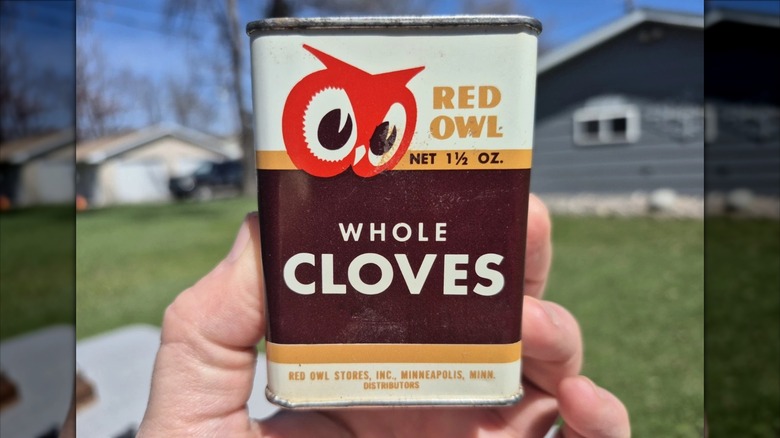
Many boomers who remember grocery shopping in the '60s have a soft spot for their go-to stores, but Red Owl has a full-blown fanbase. Every year, former employees host a reunion meetup in Golden Valley, Minnesota. Nostalgic customers also fervently collect, buy, and sell Red Owl merchandise. The chain put out a tremendous array of branded items during its time, including dishware, apparel such as T-shirts and neckties, iconic metal spice tins, and soda cans with the famed owl logo.
The most intriguing Red Owl passion project is a prospective museum, which was first proposed in 2018 by Red Owl memorabilia collector Jim Pessek. The fan bought a former Red Owl store in Stewart, Minnesota, for $1,000 in 2013, with plans to renovate it into a museum and community center. Pessek later partnered with the Stewart Area Historical Society to raise funds for the project, and over the years, locals have donated Red Owl merchandise and money to the cause.
However, as of 2026, Pessek's plans have not come to fruition. His project exists as a mini-museum inside the Art Heads Emporium in Rochester, Minnesota. It is unclear if the Stewart store renovation and full-size museum are still in the cards, but in the meantime, visitors to the Emporium can browse through a charming corner of Red Owl merchandise. It may not be a grocery leader anymore, but for Midwesterners, Red Owl can't be called a forgotten grocery store by any stretch of the imagination.