

Empress 1908 Original Gin: The Ultimate Bottle Guide
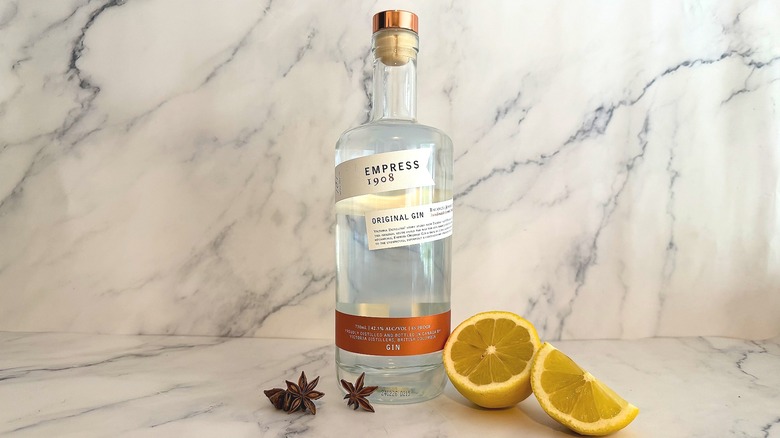
You can hardly call yourself a gin fanatic if you aren't at least somewhat familiar with Empress 1908. The Canadian distillery is perhaps most famous for its color-changing Indigo Gin, an unabashedly gorgeous spirit that provides fun sipping and barside entertainment all in one go. One of the company's other expressions seems to go relatively unnoticed since its flashier counterpart came onto the scene, but its U.S. release may signal new vitality for the bottle.
May 12, 2026 marked the debut of Empress 1908's Original Gin to store shelves across the U.S., a win for both the distillery and gin lovers alike. Moreover, this gin doesn't deserve to take the backseat to its indigo sibling; it should get just as much fanfare, if not more. As a masterful blend of botanicals featuring juniper, citrus, and spice notes, and with a 42.5% ABV (or 85 proof), it has an alcohol content well in line with most gins on the market. Let's dive into the story behind one of the region's first craft gins to find out what makes it so special.
Some recommendations are based on firsthand impressions of promotional materials and products provided by the manufacturer.
History of Empress 1908 Original Gin
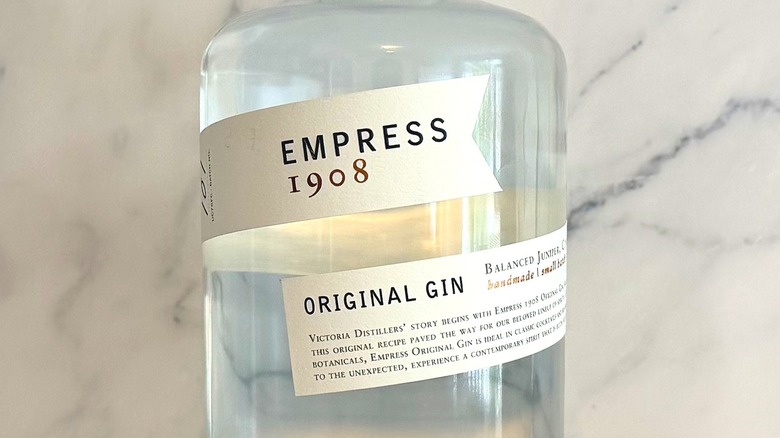
Empress 1908 Original Gin is, as its name would suggest, the distillery's flagship gin. Victoria Distillers was founded in 2008, which actually marks a pretty long lifespan as far as regional distilleries go. The distillery faced a host of obstacles as it came onto the scene in British Columbia, and that just makes its Original Gin an even more impressive feat, in my opinion.
Prior to 2013, there were very few distillers to speak of in British Columbia. Distilling was incredibly expensive until the region passed laws giving tax breaks to distilleries that adhered to certain standards, like using produce grown in the Canadian province. That opened the door for droves of new distilleries to come onto the scene. But at the time that Empress 1908's Original Gin was released, it was a pretty unique product of the region, and restrictions on distilling even reached down into the states (which I'll talk a little more about later).
What does Empress 1908 Original Gin taste like?
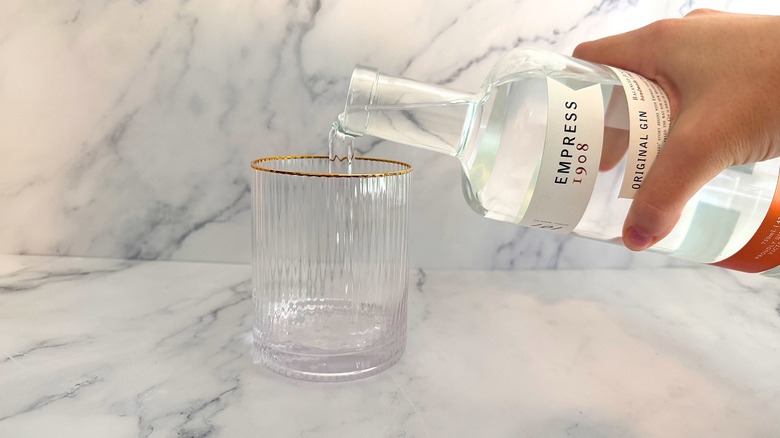
Empress 1908 is sharp on the nose, and in this way, it contrasts with Bombay Sapphire, another popular gin that I recently reviewed. There's a certain astringency to it that's at once inviting and a bit daunting for the gin newbie. Obviously, juniper is apparent, and there's a deep herbaceous quality to its aroma, as well. Citrus notes come through softly to lift the spirit's overall impression out of heavy territory.
I was surprised to find that it was actually quite floral on the palate, especially at the beginning of the sip. Spice comes through after a second or two, bringing a certain heat to the gin that's a bit mouth-tingling. Herbal notes underline the whole sip, and overall, the gin is a smoother sip than one would guess just by smelling it. It's also slightly viscous, with a full body that makes it perfectly suitable as a solo sipper.
How is Empress 1908 Original Gin made?
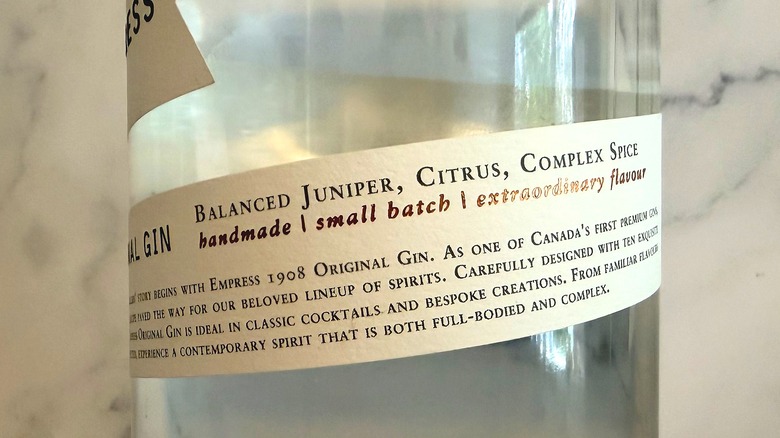
Like the distillery's other spirits, Empress 1908 Original Gin is handmade in small batches in the distillery's copper pot stills. Only the purest Canadian water available is used in the bottle's production, and it's distilled with a blend of 10 botanicals that work together to give the spirit its remarkable aromas and flavor profile.
You'll find some of the expected botanicals in the gin — juniper is a must-have, and citrus (like lemon peel and orange peel) also play a key role in shaping the spirit. However, Victoria Distillers also included some surprising additions to the blend; namely, star anise and sarsaparilla. These add a unique punch, body, and depth to the gin, and they help it really distinguish itself from others in its class. Sure, the bottle didn't have much competition at its founding, but now that Canadian gin brands are competing for shelf space, it was certainly the right move.
How to drink Empress 1908 Original Gin
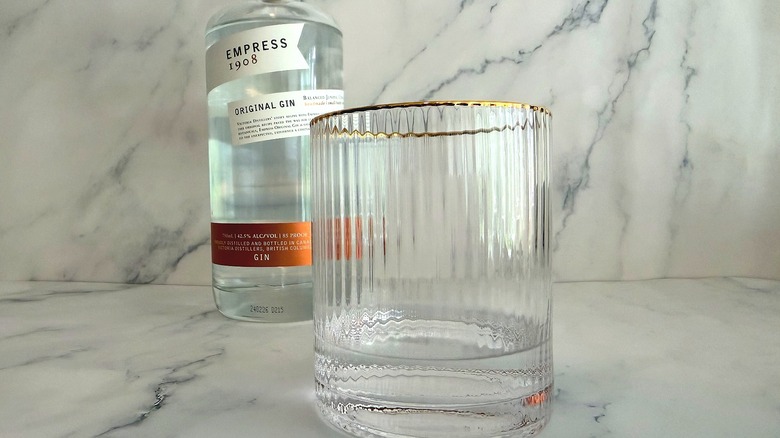
Would it be wild of me to recommend you start by drinking Empress 1908 Original Gin neat? I don't think so — its complexity deserves to be noticed, and if you're going to pair it well, you should know what it tastes like straight. I'm a whiskey lover, and the depth of this gin really endeared me to this bottle in the same way that an Irish whiskey does.
If you, too, are a fan of whiskey, you may like drinking this neat as much as I did. Or, if you try it neat, and that's just not your vibe, no worries — the company has some recommended cocktails on its website, including a dirty martini, an elevated gin and tonic, or a simple spritzer. Personally, I'd be tempted to bring out the floral notes with something lavender-flavored, topping the drink off with some tonic water for a simple, elegant drink.
Empress 1908 Original Gin is still produced by a member of the founding team
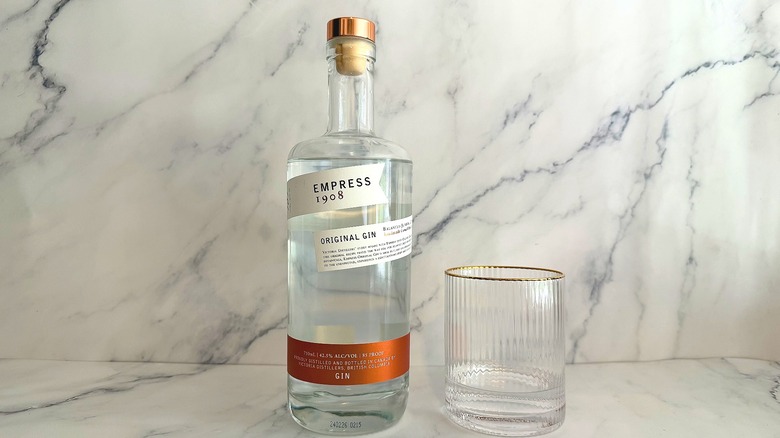
Turnover can be high in the food and beverage world, and all too often, production changes hands faster than companies would prefer. That doesn't seem to be the case at Victoria Distillers, though — its Empress 1908 Original Gin was formulated by its founding team, at least one of whom still calls the distillery home.
Master distiller Phil Lecours has been part of the team at Victoria Distillers since its founding and was on the original team that crafted the bottle. Today, he oversees production of the gin and was understandably very excited about the bottle's stateside debut. In a recent press release about the launch, Lecours said, "As our first, original spirit, it set the stage for everything we've built since. Crafted with care and the finest ingredients, it's a true reflection of our approach to distilling."
The distillery uses a geothermal loop to reduce its carbon footprint
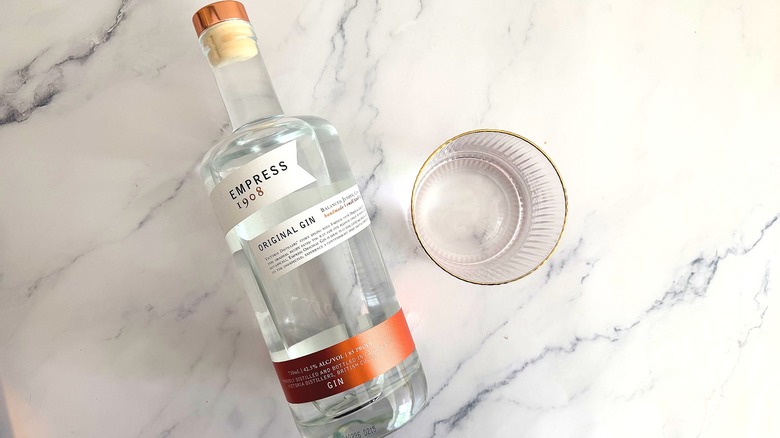
Wondering about sustainability at the distillery? You're right to — distilling is no joke, and its massive use of water and energy practically requires producers to be forward thinkers as far as sustainable efforts go. Fortunately, Victoria Distillers can claim the honor of producing pretty darn sustainable spirits, thanks to its closed-loop geothermal system. Phil Lecours told us that this closed-loop system was "designed to reduce our carbon footprint," adding that "this helps reduce our reliance on municipal water — a project we are very passionate about." This is just one benefit of the energy-saving production process.
Even more impressive is where the energy produced by the distilling process goes. Sidney Pier Hotel, which sits near Victoria Distillery, uses the heat from the distillery's water as an energy source. The hotel receives about 850,000 BTUs of energy from each distillation. The distillery also recycles its water; as water vapor left over from the distilling process is cooled back to its liquid state, it's captured by the distillery to be used again, saving about 7,000 liters of water per distillation.
Empress 1908 Original Gin is one of the Pacific Northwest's first craft gins
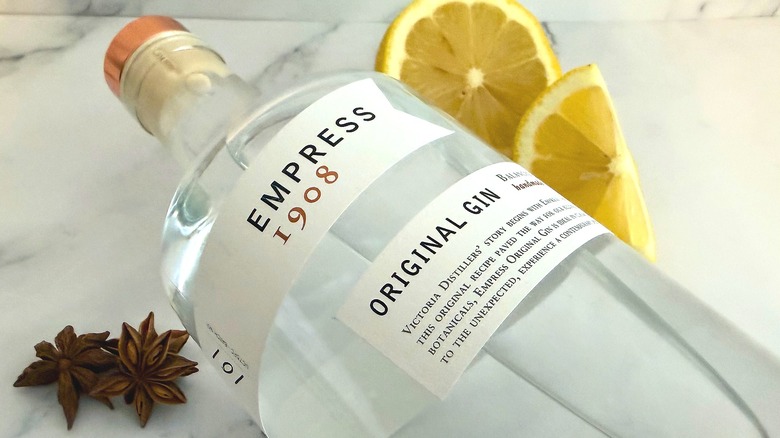
Nowadays, buying gin produced in the Pacific Northwest is just a matter of walking into any liquor store, where you'll find an abundance of options to choose from. That wasn't always the case, though. Oregon has become a huge hub for the spirit since the passing of a 2008 law that alleviated previous constraints on the craft distilling industry; since then, gins made in the region have become hard to avoid.
This, coupled with the long-lasting restrictive distilling laws in British Columbia that we discussed earlier, primed Victoria Distillers' flagship release to be one of the first of its kind in the region. Though the distillery no longer has craft status in British Columbia due to its massive output, the impact of its Empress 1908 Original Gin bottle as one of the first to come on the scene will be a long-enduring legacy for the brand.