

This Time-Consuming Rib Technique Is Worth It For The Sauce Alone
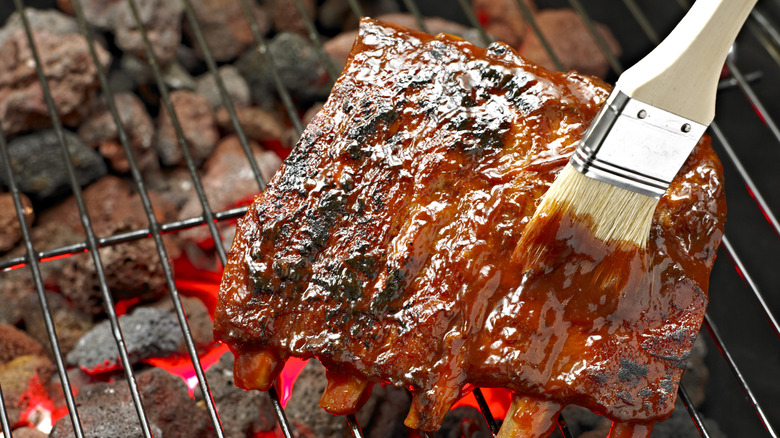
The smell of barbecue ribs in the oven is one of cooking's more convincing illusions — for a few minutes, brown sugar caramelizing and spices blooming can make any kitchen feel like a proper cookout. Whether you're using an oven or an air fryer, that aroma alone feels like half the reward. Most people ride it straight to the finish line: pull the ribs, slice them up, and call it a night. There's nothing wrong with that, well, besides the fact that you're leaving a lot of flavor in the pot.
While your ribs are cooking, the meat releases juices, which mingle with the barbecue sauce, and then thin out into a watery pool of diluted flavor at the bottom of the pot. If you've been tossing that away, consider taking some time to do this instead: pour it off into a saucepan and cook it down over medium heat until it tightens into a glossy, concentrated glaze. What comes out will be well worth the effort — the gelatin released from the bones adds body, the fat carries flavor, and the whole thing develops a superb depth of flavor that makes bottled barbecue sauce taste like bland, boring tap water in comparison.
Either spoon or brush that over your ribs during the last 10 or 15 minutes, and aside from a wallop of smoky-savoriness, you also get a rich, luxurious glaze lacquered to every inch of meat and bone. That's what "finger-lickin' good" looks like, in barbecuing language.
Tips to take your glaze even further
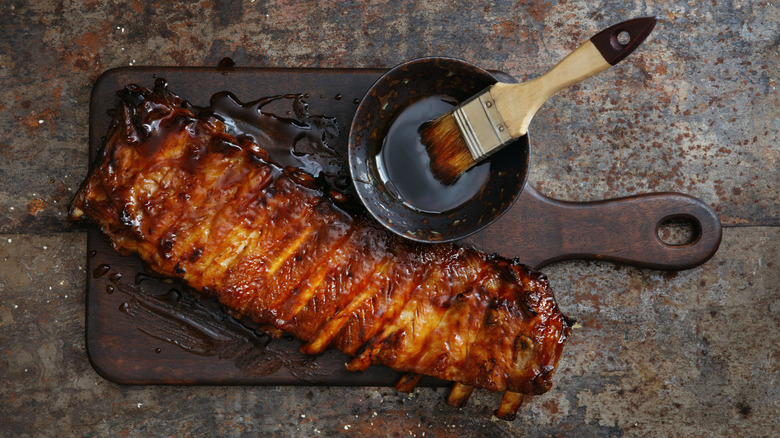
Got the basic reduction down? Then it's a good thing there are a few other things you can do to push the results even further. In your next batch, before reducing the leftover liquid, take a spoon and skim the fat floating at the top first. It'll keep the glaze from becoming too greasy and let the actual sauce flavors land more cleanly. You'll also want to use a wide, shallow pan instead of a typical saucepan — the larger surface area will speed up evaporation. Don't let the heat get away from you here. A low, steady simmer is the move: crank it up to a boil, and those natural sugars will go from caramelized to scorched in the time it takes to answer a text.
Pull the glaze off the heat and work in a small pat of cold butter — the flavor is more or less the same, but the texture becomes noticeably smoother and picks up a beautiful glossiness that looks far more polished than it has any right to. From there, a short splash of apple cider vinegar or a pinch of smoked paprika is all it takes to round out a glaze that's falling a little flat. That's all there is to getting ribs so good that you can tell folks that it's a secret family rib recipe, and they'd believe it.