

Were Old-School Ovens Actually More Reliable?
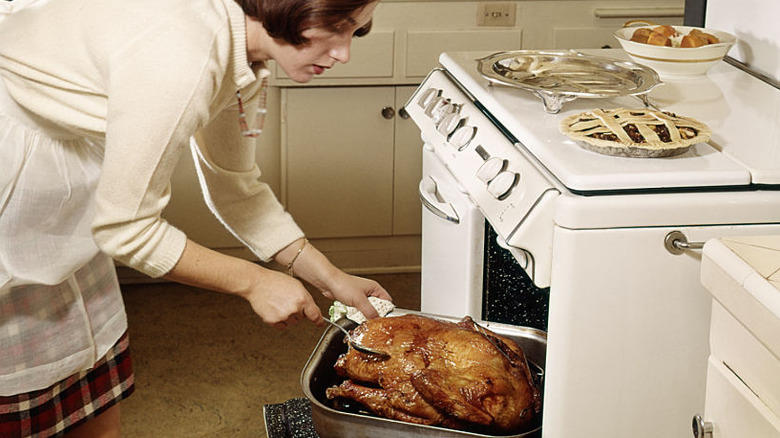
As Depression-era meals see a resurgence with budget-conscious cooks, it lends even more credence to the phrase, "everything old is new again." Some bargain shoppers have sought out products that fall under the "buy it for life" category, many of which are thrifted vintage kitchen tools. Between cast-iron pans, high-quality stand mixers, and more, it's worth wondering whether or not old-school ovens are actually a better option. While it's certainly a matter of personal preference and needs, most shoppers across the internet indicate that, yes, old-school ovens are more reliable.
A Redditor who specializes in refurbishing old-school stoves shares, "Chambers and OKMs from the 50s are the best stoves ever made. Nothing now compares to them in terms of efficiency, heat retention or performance, let alone longevity, " continuing, "I won't touch anything made after 1959 because the quality of the parts is much lower and the design is often not as well thought out...When a Chambers from the 20s through the 50s rolls out of my shop, it will last another hundred years."
The biggest drawback to sourcing an old-school oven, however, is cost. Given that these reliable kitchen tools are so sought-after, they can fetch a hefty price. With that said, many home cooks consider it a valuable investment. In the same Reddit thread, another user advises, "Look up replacement parts for your model, and ask yourself if you're willing to pay for the most expensive one."
Tips for sourcing an old-school oven
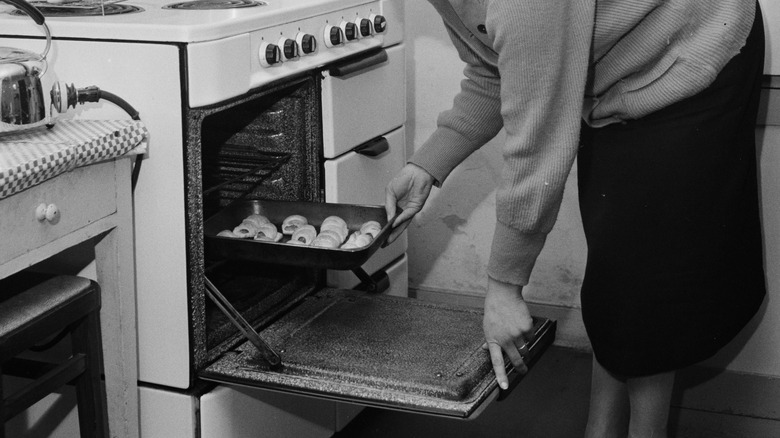
When searching for a reliable old-school oven, the most important thing to look for is quality and functionality. Additionally, vintage ovens and stovetops have many unique features you won't find anywhere today, so if there's something you've really got your heart set on, proper research is key.
The same Redditor who refurbishes old-school ovens mentions a few red flags to keep an eye out for, sharing, "If it's been outside, walk away. If it's been in a garage, look carefully for mouse droppings and clean the oven completely before turning it on (heating up mouse droppings is a terrible idea). If there are major parts missing, you may want to walk away, unless it's a Chambers or a Magic Chef, where the parts are readily available," going on to say, "Get a manual for your stove even if you're not handy. If you can't find a manual — that could be a flag that you'll have a tough time doing simple things like calibrating the oven. Check for rust — surface rust is no problem. Flakey rust is a major problem that you don't want to get into. Cracked or missing cast iron legs are a difficult issue to overcome."
There will also be a learning curve when using a major appliance that doesn't come with modern conveniences. It's definitely a good idea to learn about oven temperature terms from vintage recipes to help get the hang of using your new-to-you old-school oven.