

The Old-School Canned Sandwich Spread You Probably Forgot About
We may receive a commission on purchases made from links.
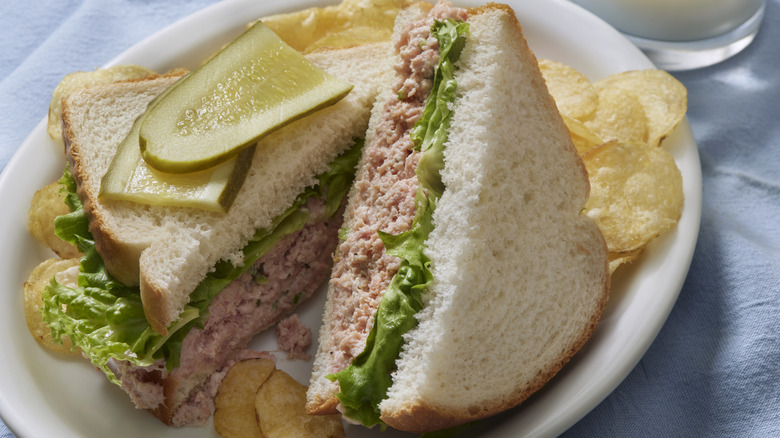
Whether because of changes in cost, availability, or the fickle taste of the general public, many sandwich fillings have fallen in and out of style over the decades, from the notoriously pungent Limburger cheese to the liverwurst which arrived in the U.S. with German Jewish immigrants at the turn of the 20th century. Unless your memory stretches back to the culinary trends of the 1950s and beyond, one canned sandwich filling you may have forgotten is deviled ham, an old-school spread thoroughly deserving of a comeback.
First things first — why might a food be called deviled? The term does not denote any particular combination of ingredients, but instead infers that any dish bearing this appellation will be distinctly spicy in some way. Modern Americans will probably be most familiar with deviled eggs, while in Victorian England, a popular breakfast was deviled kidneys, which featured lamb kidneys fried along with such potent flavor-boosters as mustard, cayenne pepper, and Worcestershire sauce. Similarly, deviled ham typically consists of finely ground ham combined with seasonings like mustard, cayenne, and paprika, with some homemade recipes also including mayonnaise and hot sauce.
During the 19th century, the new process of canning meat products dramatically extended their shelf life, which may partially account for deviled ham's popularity from the 19th through to the mid-20th century. Taste was another factor — while canned ham in general would acquire a reputation for blandness, this was not an accusation levelled at the highly seasoned deviled variety. Finally, there was its sheer versatility — the spreadable nature of deviled ham rendered it an obvious sandwich filling, but also made it perfect as a dip, or as a topping for crackers for a quick and easy hors d'oeuvre.
Deviled ham is a part of American history
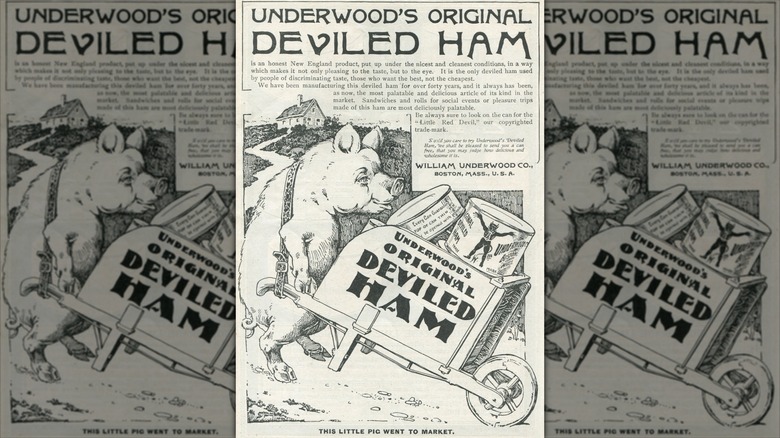
This spicy ham isn't just a quaint culinary artefact, but a part of America's history — in fact, deviled ham is the oldest trademarked food in the United States. Despite deviled ham's enduring popularity in the American South, it was New England that made the canned version such a phenomenon. In 1822, the William Underwood Company was founded in Boston, Massachusetts, and would become one of the first canning companies in America to find success, but originally focused on other products with a long shelf-life like condiments and pickled vegetables.
In 1868, however, Underwood would build upon his experience supplying canned meat to Union soldiers during the American Civil War and unveil deviled ham as a canned meat spread, which by 1870 would be identifiable by the devil logo on the label, a version of which still adorns it today. That same year, the company would register a trademark at the U.S. Patent Office for "Deviled Entremets", which were "Intended for Sandwiches, Luncheons, and Traveler's Repasts" (per the Smithsonian magazine).
Despite its retro status, you can still buy this original deviled ham today, and it remains inexpensive — a 4.25 ounce can of Underwood Premium Quality Deviled Ham Spread will cost you only $2.34 at Walmart. You may prefer to make your own, however, incorporating other ingredients that best suit your personal taste, such as garlic, scallions, lemon zest, or dill, and blending them with some ham. Whichever you choose, it's entirely possible your first deviled ham sandwich will come with the revelation of why this spread enjoys such a nostalgic appeal.