

This Is Why Your Pizza Stone Cracked Last Season — And Here's How To Prevent It This Year

Whether you're digging a frozen pie out of the freezer or you've spent two days working your sourdough pizza bases, there's no greater buzzkill than when your pizza stone cracks, breaking your heart along with it. Pizza stones are typically made of clay, ceramic, or more durable materials like cordierite, leading us to wonder why they cracked in the first place. The three most common causes of pizza stone destruction are thermal shock, trapped moisture or oil, and general rough handling, which, for a fragile slap of ceramic, may not even be that rough.
Thermal shock is an easy mistake to make. This happens when you warm up your oven, but forget to put the stone in. When you do, you quickly discover that your stone has sub-divided. Thermal shock happens when the stone heats or cools too rapidly, particularly when this transition happens unevenly. On a microscopic level, thermal shock is when part of a material expands or contracts with heat (or when losing it) faster than other parts, causing them to fracture.
Of course, this can happen by putting a cold stone into a hot oven or even laying a hot stone on a cool surface or in cold water. It can even happen mid-bake if the pizza on the stone is too cold itself. Getting water or oil trapped is also a sleeper threat to pizza stones, as moisture can get stuck in porous nooks and expand with heat. With nowhere to go but out, that means the stone has to move out of the way.
How to keep your pizza stone intact
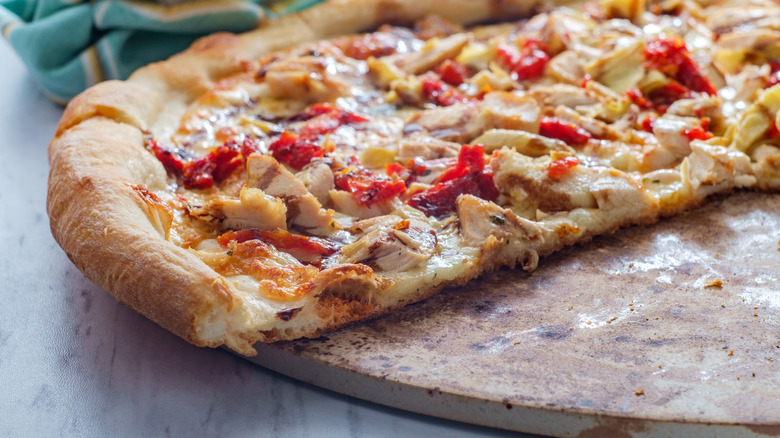
Knowing the pitfalls that can crack your pizza stone helps us to better prevent them. Of course, avoiding thermal shock can be time consuming and require a little extra preparation, but your unbroken pizza stone will thank you. Make sure you put the stone into the oven before pre-heating so that the stone and the oven heat up slowly together.
Making pizzas at home often means pushing your humble home oven to its limits. After all, traditional woodfire pizza ovens can get as hot as 800 degrees Fahrenheit. However, you can prepare your stone in 100-to-200-degree increments, giving the stone time to get heat up comfortably before increasing it to your desired temperature. For homemade pizza, that's often around 450 degrees or more.
Additionally, make sure that the pizza you put on your hot stone isn't too cold. Your favorite frozen pizzas should get at least up to room temp before going anywhere near your stone. Likewise, if you must pull a hot stone from the oven, do not cool it down in cold water. It's best to lay it on a folded towel that will have an insulating effect and allow it to cool slowly outside the oven. The safest tactic is to let the stone cool down slowly in the oven once it's off.
Take care of the stone and it will take care of you
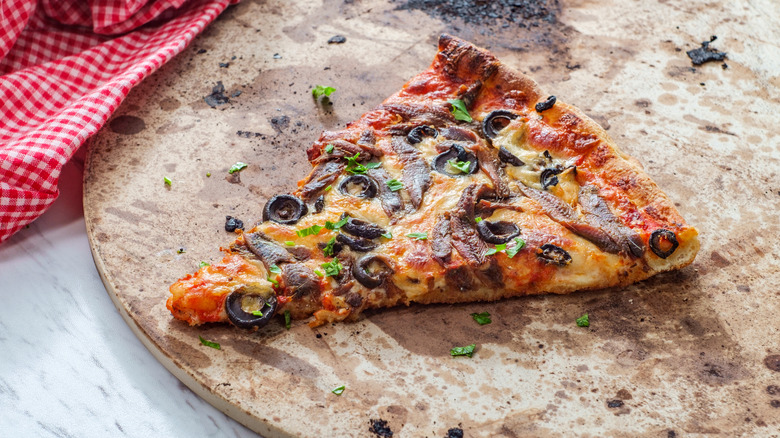
General rough handling will also shorten a pizza stone's lifespan, and even a small bump with a pizza peel can crack it. This is harder than it sounds when you're trying to work between hot oven walls or tossing a pizza onto the stone without flinging toppings to the back of your oven. To avoid damaging the stone, the best thing to do is to just leave it in there. This will actually help stabilize your oven's temperature when using it for non-pizza-making ventures.
Avoiding water and moisture is also quite simple. Just don't wash it by submersion. It's normal for pizza stones to pick up some staining, scorches, and other marks from the food you put on it. In fact, some consider that "seasoning." Any excess material that burns onto the surface can be dry scraped off once the stone is fully cooled down.
If you're worried you've got too much grease on your stone, you can use hot water to dab it clean with a damp cloth. If you absolutely must soak it to get the grease off, ensure you dry it as thoroughly as possible and avoid using soap or vinegar — or risk ruining the taste of future pizzas. Of course, another solution is just to upgrade to a more resilient "pizza steel," which replaces stone with metal.