

The Trick To Making Pizza Dough That Gives You Sourdough Flavor Without The Wait
We may receive a commission on purchases made from links.
Sourdough's tangy taste makes us want to turn the bread into everything possible — croutons, chips, pizza crust, you name it. For the latter ingredient, you'll need a starter to make the dough, but if you don't have one already, getting your hands on sourdough pizza crust could take upwards of a week. Thankfully, brewing yeast can give you the unique flavors you're after without the lengthy wait.
Baker's yeast is for baked goods and brewing yeast is for beer, but the two don't always have to stay in their respective lanes. Brewing yeast, which helps beers ferment and lends them a distinct flavor, is often used in bread baking and can effectively give your pizza crust a more complex taste. It's important you use active brewing yeast rather than inactive brewer's yeast, which is sold as a dietary supplement and won't help the crust to rise. Brewing yeast tends to be harvested from the beer-making process, so it's infused with all the notes and aromas from its respective beverage, which is then transferred to your pizza crust.
There are hundreds of strains of brewing yeast to pick from, with plenty of punchy examples to mimic the sourdough taste. You can purchase strains from a number of brewing companies online (or try these Craft A Brew sachets from Amazon), or stop by your local brewery to see if they have any yeasts available.
It takes time for beer yeast crust to rise
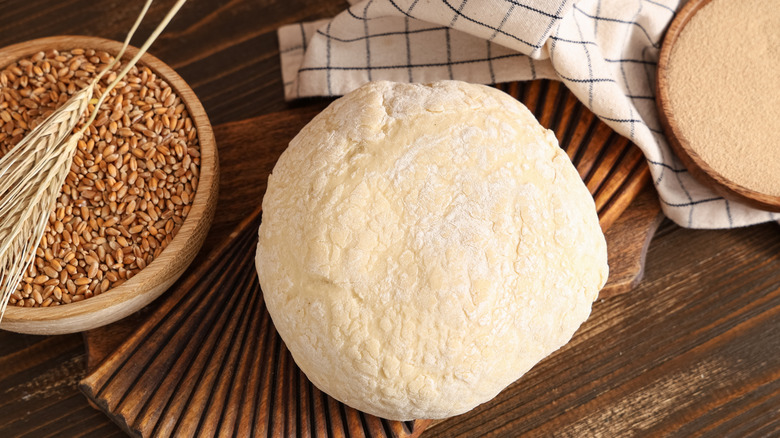
While the process won't be as lengthy as waiting on a sourdough starter, unless you're aiming for a thin crust, baking the pizza dough won't happen right away. Brewing yeast doesn't necessarily have the same level of cellular activity as the baker's one does, so it'll need time to develop. Mix the brewing yeast with some water, then slowly pour in flour and mix. Once they're well-combined, you'll need to autolyse the dough – which basically means a rest near the start of the process before adding any other ingredients.
After 30 minutes' resting, add salt to the dough and slowly mix it again. The next step is where further patience comes in. Rather than having it rest for two hours like this beer-based pizza dough, the crust will need to sit for a day. As the dough undergoes bulk fermentation, its flavors develop, ensuring that the yeast's nuances are present in the final product. After the 24 hours are up, divide the dough into four balls and place them on a nonstick pan and keep them in the fridge for a few more hours before baking.
Keeping the toppings simple allows you to really taste the yeast's role in the dough, but the sourdough-alike crust complements an array of pizza recipes. You could take the flavor in a sweeter direction to balance any acidity with our sweet and savory Italian salad pizza featuring proscuitto and peach or lean into the tanginess with a topping of barbecue chicken and red onions.