

Amish Meadow Tea: The Refreshing Way To Use Up Your Mint This Summer

Few garden herbs grow as vociferously and enthusiastically as mint in the summer. If you're lucky enough to have some growing nearby, don't be surprised to see it sprawling over beds, containers, and even sidewalks. That delightful abundance is exactly why Amish meadow tea is a beloved seasonal tradition in many Amish and rural Midwestern communities. The common herb has so many uses, but we think drinking it iced is one of the most delicious.
Despite its name, meadow tea isn't "tea" in the traditional sense because it usually doesn't contain any tea leaves. It'd be more accurate to call it a "tisane," which is an herbal infusion made of one or many plants. Regardless, it's a simple homemade drink made by steeping large amounts of fresh mint in hot water, and then adding sugar. It can be any kind of mint, from mojito mint to spearmint to wintergreen. Wild mint is native to most states in the U.S., so it's easy enough to forage if you're up for the hunt.
The drink has especially strong roots in Pennsylvania Dutch traditions across states like Pennsylvania (natch), Ohio, and Indiana. In these rural households, meadow tea was a practical way to use up the explosion of mint during the growing season. Mint is famously invasive and easy to cultivate, so it was traditionally served at church gatherings, summer suppers, and harvest meals. What makes the drink "Amish-style," besides its history, is the amount of sugar added, as these communities have quite the sweet tooth.
How to make meadow tea at home
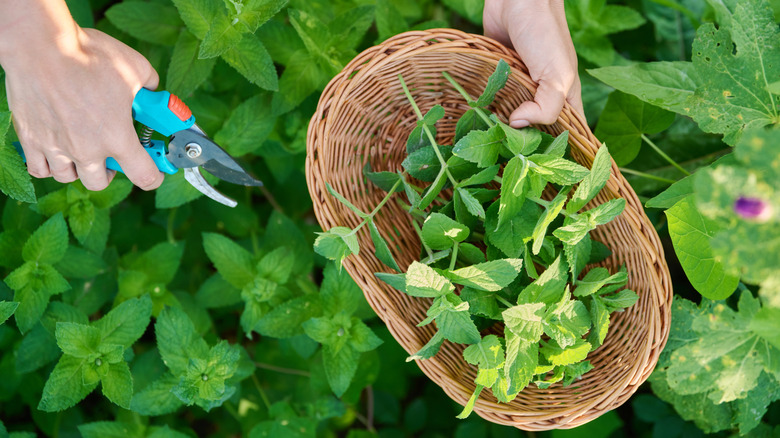
To make meadow tea, gather roughly 2½ cups of fresh mint and rinse well to ensure no bugs are hitching a ride. Add the mint to a pot of just-boiled water, cover, and let steep for three hours. Use a strainer to pour the minty mixture into a gallon-sized container if you don't want bits of leaves floating around. While still warm, add enough sugar to sweeten to your liking. Recipes call for ¾ of a cup, or double that if you want to make it taste more "local." Just like when you're making Southern sweet tea, adding sugar while the tea is still warm is key to giving it a silky-smooth mouthfeel.
The mint flavor should be quite strong, so don't be afraid to go hog wild on the herb. Keep in mind that mint can become bitter if boiled for too long, so focus on steeping rather than cooking. It's the same reasoning behind why you shouldn't aggressively muddle mint for a mojito. Chilling the mixture thoroughly before serving can also smooth out flavors. Lemon is sometimes added for brightness, though purists often prefer the mint flavor uninterrupted.
Meadow tea's continued popularity is a reflection of the traditional, seasonal-driven cooking that's back in style. Before modern grocery stores made everything available 24/7, rural cooks depended on whatever grew nearby. Of course, there's lots of other ways to use up leftover mint, but we think this tisane is especially refreshing on a hot summer day.