

The Retro Chocolate Drink Pepsi Made To Compete With Yoo-Hoo
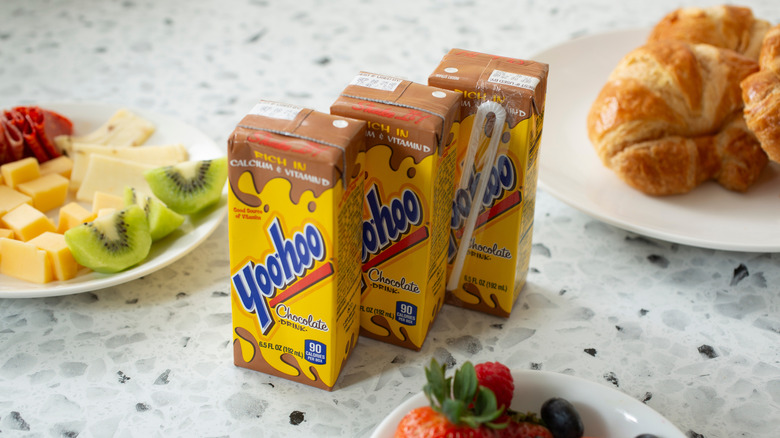
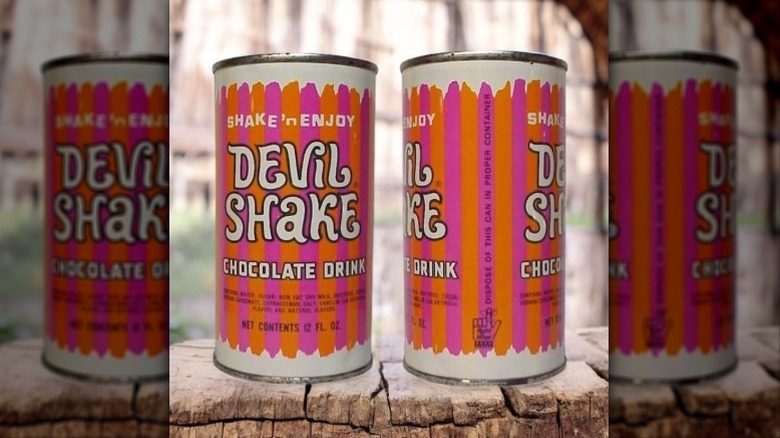
The world of soft drinks is rife with competition. Coke and Pepsi have long battled it out in the Cola Wars, but other soda categories have their own rivalries, too. Sprite and 7Up are the major competing lemon lime soda brands. Mug Root Beer competes with A&W. Fanta and Orange Crush go head-to-head in the orange soda race. By the 1960s, Yoo-Hoo, a chocolate and whey drink, had become popular enough that Pepsi tried to compete with its own chocolate drink called Devil Shake.
Yoo-Hoo dates back to 1928, and by 1960, it was so popular that the company even had Yogi Berra doing ads. Pepsi, in an effort to capture some of the market, introduced Devil Shake in 1966. The drink was made with sugar, chocolate powder, and non-fat milk powder. Ads described it as richer, tastier, and even nutritious. Pepsi was convinced that its recipe was superior and that Devil Shake would outsell Yoo-Hoo by a five-to-three margin, according to the New York Times. But the company made one critical planning error.
Yoo-Hoo is a shelf-stable chocolate beverage that requires some high-tech pasteurization techniques. At the time, Yoo-Hoo held exclusive rights to the sterilization machines that allowed it to remain shelf-stable for so long. Pepsi only discovered this later on, so it was forced to enter into a deal with its own competitor to bottle the drink. The company ended up paying Yoo-Hoo $1 million to bottle Devil Shake on its behalf. That would be over $10 million today, adjusted for inflation.
Devil Shake ends in a shambles
It's not hard to see why Pepsi wanted to get into the chocolate drink market. Yoo-Hoo had very little serious competition and was doing good business. Sales increased by 40% after Yogi Berra became the spokesperson. By 1978, it was selling 10 million cases per year in 14 countries. Pepsi had spent $100,000 on an internal study that suggested that Devil Shake would be more popular, so it had every reason to believe this was a good financial decision. According to one report, Pepsi was so confident in Devil Shake that it skipped market testing entirely.
Once Pepsi realized the technological requirements involved, the project became far more expensive. After the $1 million fee, Pepsi went on to lose another $5 million on Devil Shake, or $50 million in 2026 dollars. Reports suggest kids liked Yoo-Hoo better, too. Ironically, it ranked last in our taste test of chocolate drinks.
Pepsi washed its hands of Devil Shake and sold the entire operation to Yoo-Hoo for a single dollar. Yoo-Hoo filed the trademark for Devil Shake in Canada in 1966, but there is little evidence the brand remained on shelves after that.
What remains unclear is how Pepsi overlooked the manufacturing requirements that eventually forced it to rely on its main competitor to get the product on shelves. It's also unclear how internal studies concluded that Devil Shake would be so much more popular than Yoo-Hoo. Unfortunately for the company, those oversights cost it dearly, and Devil Shake vanished from the market very quickly.