

Why You Should Never Rinse Ribs Before Cooking Them
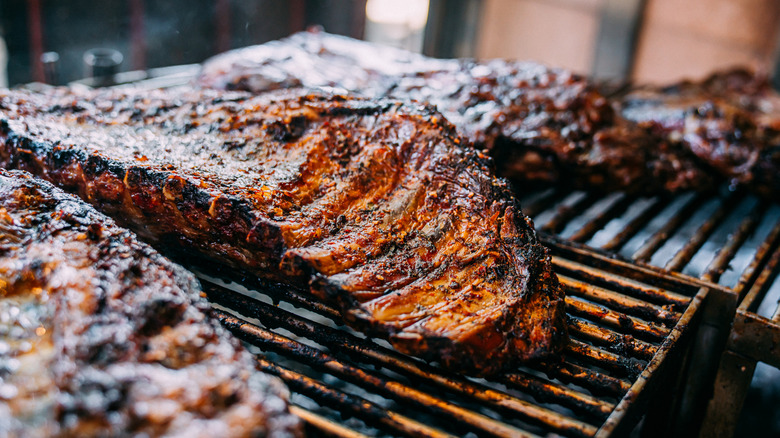
There is constantly food safety "noise" floating around on the internet — and it can seem that the definition of "the right" or "safe" way to cook or prepare something depends on who you ask. Indeed, some food safety tips are valid and worth knowing, though others are not only false, but following them could actually do more harm than good.
Take washing meat, like ribs, for example. Some people will wash fruit to remove any dirt or impurities, so why can't the same be said for meat? Well, washing meat in a sink (including chicken) is a bad idea because it spreads bacteria around and opens up the opportunity to cross-contaminate other surfaces, like the faucet and fridge handle, as you're cooking. Rather, cooking meat to the proper temperature will kill those pesky germs.
The proper internal temperature for ribs is technically 145 degrees Fahrenheit with a three-minute rest time, per the USDA, though many pitmasters will cook their ribs longer. This is because the collagen in the connective tissue starts to soften at 160 degrees Fahrenheit, yielding tender, juicy, and terrific ribs that are also safe to eat.
Other important food safety tips for preparing ribs
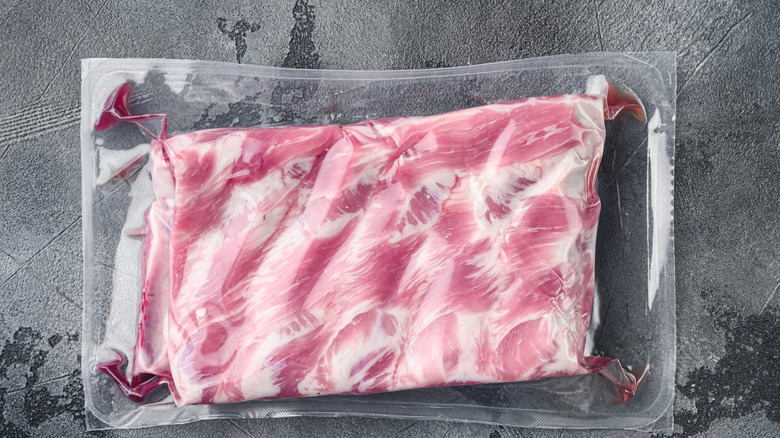
There are plenty of rib recipes worth trying, but if you don't follow proper food safety protocols, you could be setting yourself up for a less-than-pleasant eating experience. For one, if you are thawing frozen ribs, you should never leave them out on the counter at room temperature, as this causes them to sit in the food safety danger zone and puts them at risk of foodborne contamination. Defrosting in the fridge is generally thought to be the safest method, though it requires a bit of foresight.
Another important rib preparation tip is also about cross-contamination. When you're grilling a whole bunch of food at once, it can be easy to get your wires (err... tongs) crossed and pick up raw meat with the same tongs you use to serve ready-to-eat food, like grilled veggies. As such, we recommend color-coding or separating raw tongs and plates from the ones you use for ready-to-eat food to prevent cross-contamination.