

Why Charcoal And Gas Grilling Call For Completely Different Seasoning Strategies
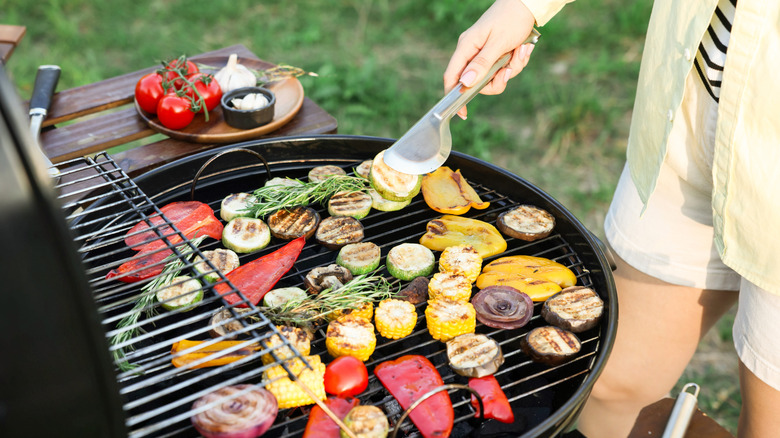
When warm weather finally arrives, our thoughts inevitably turn to outdoor grilling. Nothing screams summer more than a perfectly grilled burger and an ice-cold bevvie. And depending on whether you have a gas or charcoal grill, it's essential to know how to season your food long before it hits the grates. Both grills cook over open heat, but they create fundamentally different flavors. Of course, there are pros and cons to charcoal versus gas grilling. Simply put, charcoal delivers flavor, while gas primarily contributes heat. It's an important distinction to keep in mind when you're thinking about marinades and spice blends.
Charcoal grilling naturally produces smoke and tiny amounts of aromatic compounds. Plain charcoal contributes a subtle toastiness, while wood chunks can create deeper, more complex flavors ranging from a sweet smokiness to full-on campfire vibes. Certain foods cook better on a charcoal grill, like brisket, potatoes, and whole legs of lamb. Flavor-wise, charcoal does a lot of the work for you. You can keep your seasoning strategies pretty simple.
Meanwhile, a gas grill burns relatively clean and evenly, which is great for temperature control, but you're missing out on any smoky flavor. If your seasoning is weak, your final product may taste a little flat. This means you can go all-out with flavors, whether that's a bold rub, heavy herb use, or any of these grilling marinades for steak and chicken. Remember that the best foods to cook on a gas grill are foods that cook quickly and benefit from precise temperature control, like vegetables and fish.
Adjust your seasonings based on grilling method
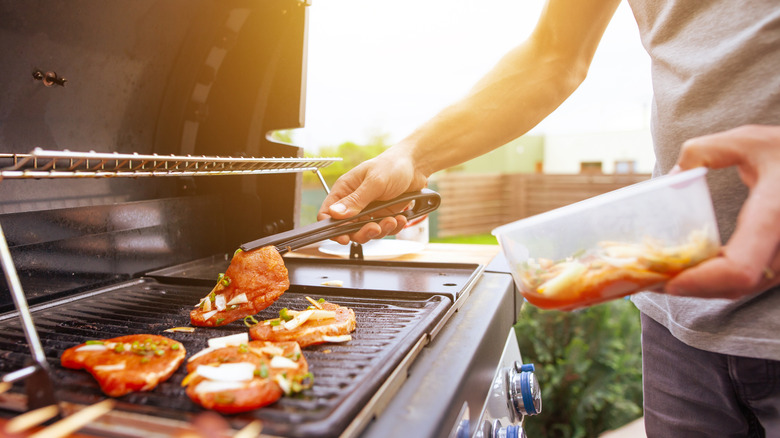
The two styles of grills also create different textures for your food. Charcoal grills typically have a direct, more intense heat, especially if you're cooking right over coals. That strong heat can really bump up your crust formation and get extra-good charring. Because you're getting so much flavor this way, your seasoning can be very simple, which is why acclaimed pitmaster Chris Lilly seasons meat with just salt and pepper on his charcoal grill. Whereas with gas, there's no smoky, wood-burning flavors to catch, so you can go harder on seasoning. When cooking on a gas grill, Chef Robert Irvine marinates his ribeye for hours, then tops it with grilled jalapeños and garlic.
Serious grillers like to play with both types of grilling, depending on the situation (and their finances and outdoor space). If you're craving campfire flavors and don't mind taking the time to build and maintain your heat, cook with charcoal. You won't have to worry over multi-ingredient marinades or homemade dry rubs because the wood fire is doing all the work. If you want weeknight convenience and controlled cooking, go with gas. You can indulge your inner chef by whipping up the absolute best marinade for BBQ chicken before firing up the gas.
Just remember that each method benefits from seasonings suited especially to it. Once you've got your seasoning strategy down, you'll be able to relax at the cookout instead of sweating over the coals.