

Why Do Spices Clump Together And Are They Safe To Use?
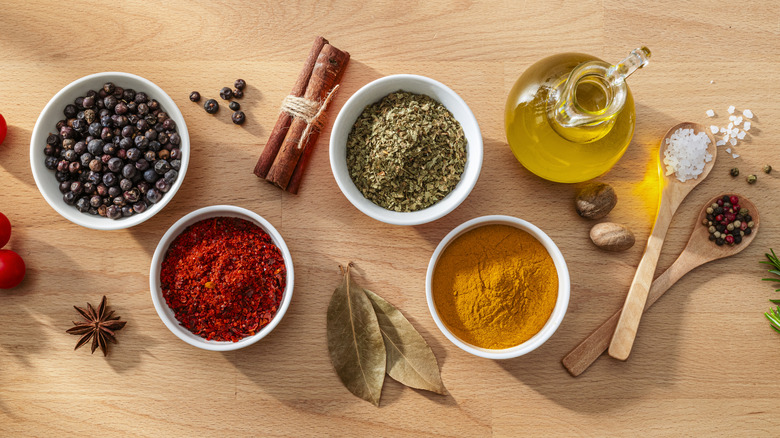
Most people have a wide assortment of spice jars in their cabinets, many of which may be expired or beginning to clump together. If this sounds familiar, you may have wondered if those ground spices clinging together in small chunks are still good to use, or if they are even safe to consume. Luckily, chances are that your spices are just suffering from a bit of exposure to moisture and, apart from being more difficult to work with, clumpy spices are usually still perfectly fine to eat.
Moisture in the air is the biggest culprit behind why ground spices begin to clump together, especially with finely pulverized spices like cinnamon, cumin, or cayenne. Whole spices and seeds, thankfully, tend not to bind together so closely when moisture is introduced to them. Some ground spices that have an abundance of natural oils, or are simply part of a spice blend, can also eventually begin to form small clumps over time, regardless of the moisture in the air. The good news is that unless they are well past their expiration dates and showing obvious signs of spoilage, ground spices that have clumped together in their jars are still completely safe to use and to consume.
If you're guilty of shaking spices directly from the jar into a pot of simmering water or sauteeing aromatics, that's a major reason why they can start to meld together. The steam wafting up from the pan, even if it's barely a visible wisp, can make its way into the container and cause granules to cling to one another.
Moisture is the enemy in a pantry
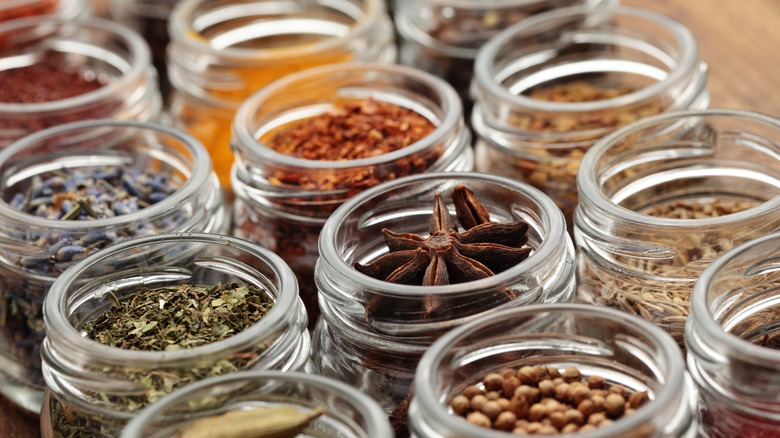
The easiest way to keep your spices in tip-top shape is by keeping your jars away from the heat and moisture of the stove, and to use a measuring spoon when adding ground spices to a recipe. Even easier, if you don't need precise measurements, simply tip the jar directly into your palm and toss the seasonings into your dish that way. When storing spices, make sure that they are in airtight or well-sealed containers, as this can help prevent any humidity or moisture in the air from seeping into your spices and causing them to clump.
If you live in an especially humid environment, consider employing an extra step to remove excess moisture in your pantry or spice cabinet. While we won't suggest a full-on dehumidifier running at all hours in your kitchen, you could place a few silica gel packets or activated charcoal moisture absorbers on the shelves of your pantry area. If you do use silica gel packets, be absolutely sure that neither you, nor any other humans (and even pets), consume the packets. For a less expensive and more natural option, rock salt also acts as a DIY humidifier. It's easy to leave in a small bowl or open container in the back of your pantry, as is a humidity-reducing box of baking soda.