

White Vs Green Cabbage: Is There A Difference?
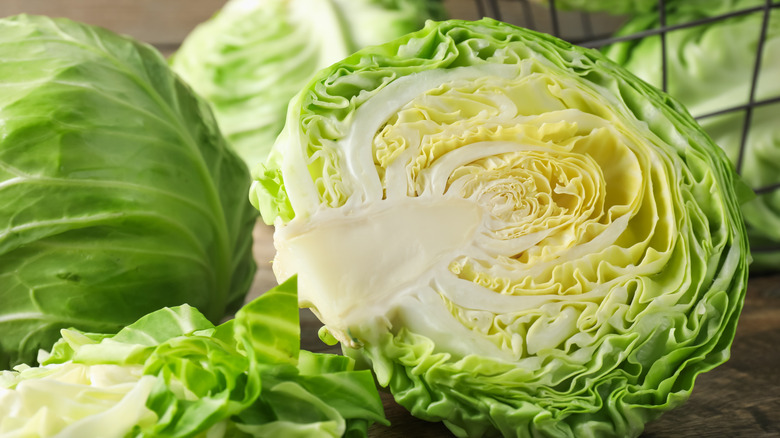
Cabbage is one of those vegetables that comes in a variety of colors, textures, and tastes. In fact, there are four main categories of the cruciferous vegetable: Red, savoy, green, and napa. You may have seen these varieties at the grocery store and wondered why none are labeled white cabbage since some are so pale green they almost look white. Turns out, green and white cabbage are technically the same thing even though they're sometimes marketed as two separate vegetable varieties.
The reason white and green cabbage are used interchangeably is mostly thanks to the scientific name for the leafy vegetable — Brassica oleracea var. capitata f. alba. Alba is the Latin word for white, and has been added to the end of the name to help describe how parts of the vegetable can grow very light in hue, especially on the inside. Basically, the less light the cabbage gets, the whiter it will appear as it will produce less chloropyll. Ultimately, both green and white cabbage refer to the same thick, round bushel of leaves you'll find at most farmers markets and grocery stores. After all, when people picture a cabbage, this variety is most often what comes to mind.
While other types of cabbage can take on a whitish hue, they're not colloquially known as such. Napa cabbage, also known as Chinese cabbage, can have light stems, too. But this variety grows taller and has leaves that look more like lettuce than traditional cabbage does.
Different dishes call for different types of cabbage
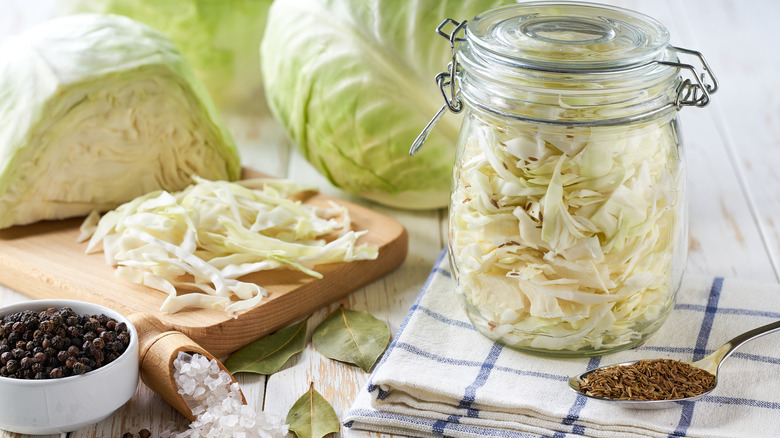
Because there are so many cabbage varieties (more than 400 worldwide) there are also specific types that are best for certain dishes. Experts say green is the absolute best cabbage variety for homemade sauerkraut, thanks to its crisp leaves and slightly peppery flavor. It's what's used to make sauerkraut in Germany, where, they almost exclusively call it weißkohl, which translates to, you guessed it, white cabbage!
Green cabbage is also ideal for classic cabbage soup. Instead of finely chopping and slicing the leaves like you would for sauerkraut, you add long strips of the leaves to the soup base, which can withstand the lengthy simmering process that melds all the flavors together. You can even use green cabbage to make plump cabbage rolls filled with savory meat and veggies, and topped with a tomatoey sauce. You can also add herbs, spices, and gingersnap cookie crumbles — the secret sweet ingredient stuffed cabbage rolls beg for.
If you're hoping to make Asian-inspired cuisine, napa cabbage is the best bet. The leaves are tender, more easily absorb flavor and sauce, and are similar to bok choy and other vegetables used in Korean and Japanese dishes. Kimchi, a Korean fermented cabbage dish made with chili powder and garlic, is also made with napa cabbage, as well as some dumpling mixes and hot pot platters.