

The Best Temperature For A Perfectly Cooked Medium-Rare Skirt Steak
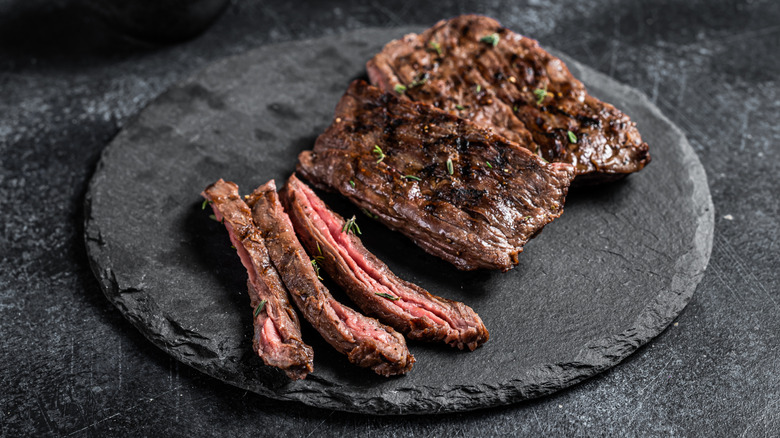
While skirt steak used to be a less expensive butcher's cut, it's now gained popularity and is no longer a secret, nor is it particularly affordable these days. Given the rise in beef prices over the last five years, it's safe to say that you want to take extra care when cooking steaks so that you get the most for your hard-earned money. When it comes to skirt steak, we think it's best when cooked a perfect medium-rare. In fact, out of all our favorite tips for the best skirt steak, cooking it to a precise temperature may be the most important.
Skirt steaks are wonderful because they cook quickly and have a delicious amount of fat and marbling, although they are not generally as tender as other fattier cuts of beef like a ribeye. As such, the steaks are often used for fajitas or carne asada tacos, sliced for steak sandwiches, or even piled onto a hearty breakfast plate of steak and eggs. For most people, the ideal temperature for a skirt steak is 135 degrees Fahrenheit, as cooking it to medium or higher will usually result in a tough and chewy bite.
To ensure that the final temperature of a skirt steak never soars above 135 degrees Fahrenheit, it's imperative to let the meat cook to a temperature of at least 125 degrees Fahrenheit (but no higher than 130 degrees Fahrenheit), before removing it immediately from the grill or heat source. Although cooking a steak doesn't need to be a high-tech experience, using an instant-read digital meat thermometer is extremely helpful for home cooks wanting to reach an exact temperature or level of doneness.
Skirt steak needs high heat for a short amount of time
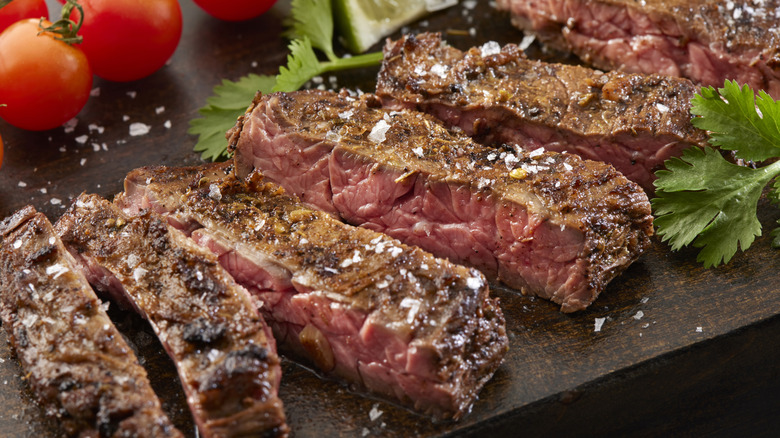
Due to the thinness of the cut, skirt steaks need minimal cooking time. This is particularly true for those who prefer their steaks medium-rare, as the slender skirt is dangerously easy to overcook. Evidently, the ideal way to cook the steak is to sear it over very high heat for a brief amount of time. This cooking method allows the flat cut of beef to get a nice sear on the outside without having to press down on the meat or flip it multiple times.
As is the case when cooking most meats, but especially important when dealing with a desired doneness for steak, you must remember to account for carryover cooking after the protein is pulled from the heat source. All meat will continue to rise in temperature after it's off of the heat, and although the exact figure will vary greatly depending on many factors, carryover cooking means that a steak's internal temperature can increase anywhere between five to ten degrees Fahrenheit while resting.
Resting a steak is necessary not only for the carryover cooking to complete, but also to preserve juiciness — and to not disappoint the beloved Anthony Bourdain. Given that internal temperature could soar several degrees as steak sits, it's essential to keep this in mind while searing a thin skirt to avoid overcooking. When you're finally ready to serve your medium-rare skirt steak, remember to slice against the natural grain to get the most tender meat possible.