

Master The Art Of Charcuterie Boards With The Simple 3-3-3-3 Rule
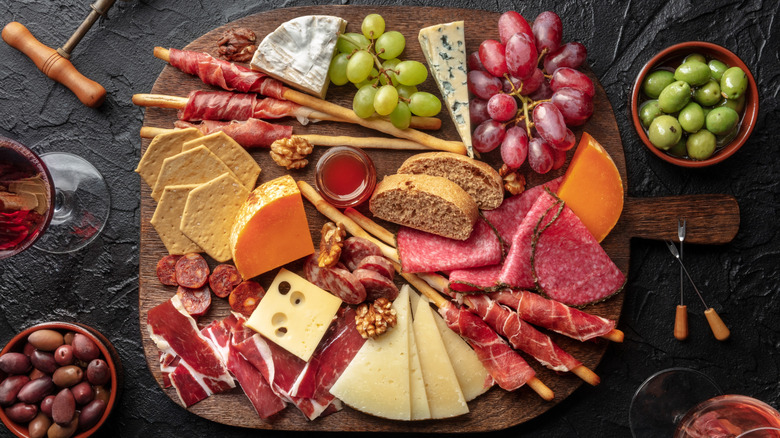
Charcuterie and cheese boards are one of the easiest things to serve when entertaining. Whether it's for an intimate party of two or a big spread for a crowd, a cured meat and cheese board is an interactive dining option that pleases everyone. But if you're intimidated by the gorgeous grazing tables you've seen on social media and have no idea where to start to build your own charcuterie board, go for the 3-3-3-3 rule: include three cheeses, three meats, three carbs, and three accompaniments.
This straightforward guide will help you achieve a balanced, visually appealing board that combines a variety of tastes, textures, and colors. The great thing about this idea is that it gives you flexibility to choose things you like and lets you get creative. And yes, there are a lot of choices when it comes to picking the best types of meats and cheeses for your charcuterie board, but take a deep breath and follow these simple tips.
First, start with the right size and shape of board. You want something attractive, so if you don't have anything on hand, consider investing in an item specifically designed for the purpose. On a budget, a nice wooden or bamboo cutting board will do just fine. You could even repurpose a slate or marble tile as a surface for your cheese and charcuterie creation. Clean it well, of course, and don't use your good kitchen knives on these surfaces, as it could damage the knives' edges.
That said, you will need various small knives for cutting and spreading, as well as ramekins or little bowls and spoons for condiments, and forks or tongs for the meats.
Building your grazing board the 3-3-3-3 way is easy
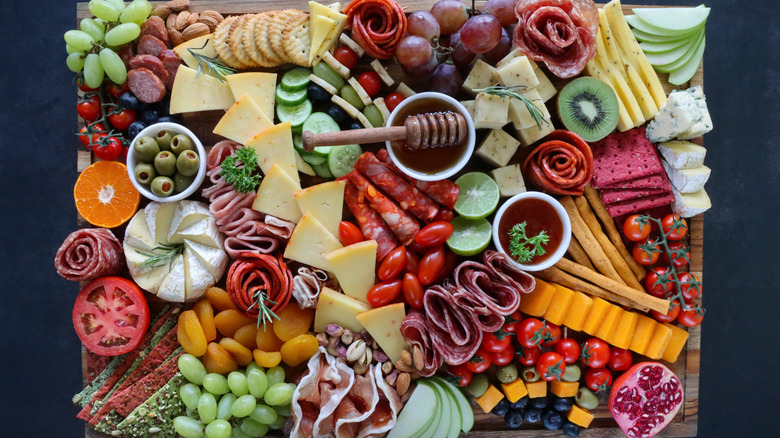
Start by picking the three meat products. After all, charcuterie is an encompassing term for prepared meats, which are usually cured or smoked and served cold. The word comes from the French chair cuit, which literally means "cooked meat." Hams, sausages like salami and chorizo, salted and air-dried cuts such as bresaola, and classics like pâté and terrines offer you a wide range of mild, spicy, salty, and peppery options with different shapes and textures.
Then, choose three of the best cheeses for a charcuterie board — one soft, one semi-hard, and one hard to add diversity. You can leave soft cheeses whole, and cube or slice the firmer ones, as different shapes provide eye appeal and make it easier to graze.
The condiments are just as important. Think about the flavors, textures, and look of your meats and cheeses, and find things that will complement and enhance them. Mustard, chutney, and fruit preserves are excellent accompaniments, while vinegary pickles are a superb counterpart for the salty, fatty meats and cheeses, and fresh fruits and nuts add color and crunch.
Last but not least, your starches also matter as they are the vehicle in which the main components will be consumed. A variety of crackers, chewy baguette slices, and items like bagel chips, pita triangles, or breadsticks are foolproof. And don't overlook some less traditional, underrated food items for your next charcuterie board.
If you have a large crowd and a big board (or two), you can double up on the 3-3-3-3 to offer even more selection. You can even create a separate board with mushroom pâté and nut cheeses for your vegan and vegetarian guests.