

The Mistake To Avoid When Pan-Roasting Duck Breast, According To An Expert
We may receive a commission on purchases made from links.
Duck breast doesn't grace our tables in the way that chicken or turkey does, the price and the richness making it more of a special occasion meat. As such, home cooks might not be familiar with the best way to prepare it, often ending up with a result that's either chewy or dry. Pan-roasting duck breast will give you the best level of control, but it needs to be done right. Turning to an expert for advice, Tasting Table spoke with Garrett Brower, Chef de Cuisine of Bresca in Washington, D.C. about where people go wrong when cooking duck.
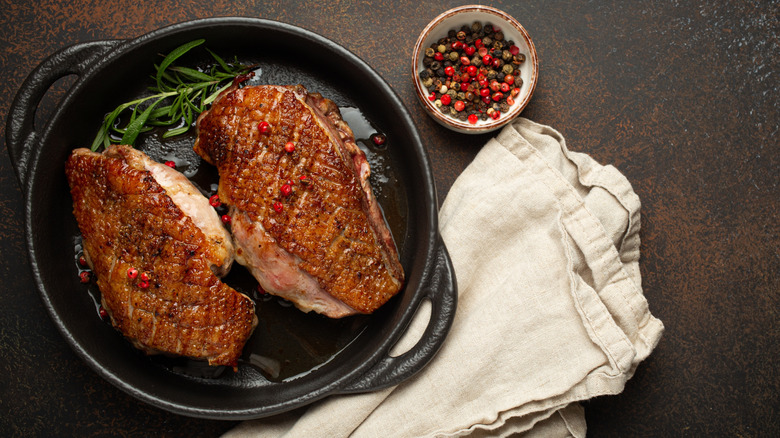
In this exclusive interview Brower explained, "A common mistake I see at home is pan-roasting a duck breast with too high heat, so that the thick layer of fat doesn't render completely before the flesh is cooked beautifully." Duck doesn't need to be cooked all the way through like chicken, but he underlines that it does take time for fat to render out. Brower continues, "A beautiful pan-roasted duck breast will be medium-rare to medium (preference depending), with a crispy shell of skin nearly in contact with the flesh. If we don't take our time, and use a pan that is too hot, a thick layer of chewy fat will remain between the flesh and skin."
Duck breast should be added to a cold pan, skin-side down, then placed over medium-low heat. Don't be tempted to turn the heat up to get some color on the skin — this will develop with time. Another mistake you're probably making when searing duck is moving it too quickly. You'll need leave the duck breast to cook without flipping it for around 15 to 20 minutes.
More tips for the best pan-roasted duck breast
Brower's preparation for duck starts long before it's time to cook. He revealed, "The best way I know to cook duck, whether I'm at home or in the restaurant, is to purchase a whole bird, remove the legs, dry age the crown, glaze, roast and rest it!" As he explains, "Dry aging takes approximately two weeks and produces a firmer texture, intensified flavor, and crispier skin."
While you might not have the time to dedicate weeks to a single meal, even a couple of days of dry aging duck breast in the refrigerator will help you achieve a perfectly crisp skin. If you've bought the duck breast the day you plan to cook it, salting the skin as far in advance as possible will also help dry it out. It can even make the meat underneath more tender.
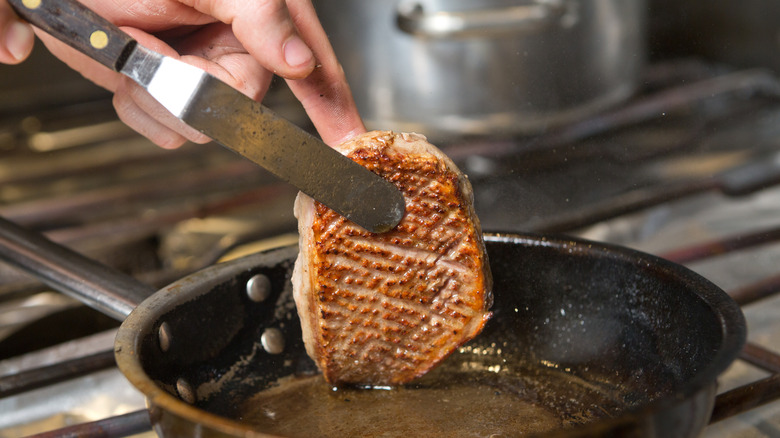
The crosshatch pattern you often find on duck breast served in restaurants isn't just there for aesthetics — scoring the skin will help the fat render more evenly and quicky. Use a sharp knife to slice through the skin and into the fat, but avoid going as far as the meat. Alternatively, if you have a tool like this Wutfly Sausage Pricker, you can create tiny holes in the skin that will give you the same effect. Want to test a few of these tips for yourself? Try this seared duck breast with glazed sweet potatoes that makes use of the rendered duck fat for extra flavorful spuds.