

The Only Way You Should Be Buying Grocery Store Steaks, According To Morton's Steakhouse
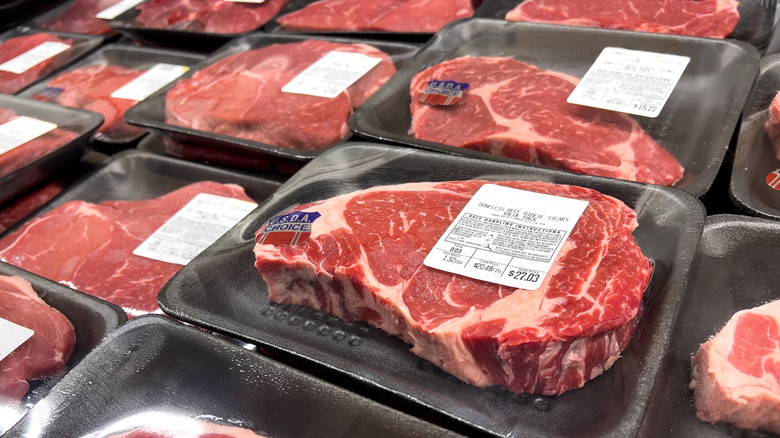
Morton's Steakhouse claims to serve "the best steak anywhere," but if you're not ordering it at one of its restaurants, the chain offers some surprisingly old-fashioned advice for buying steak: "Buy your beef from a butcher, reputable catalogue, or online service." Basically, go to those who know. "If you end up at the supermarket," Morton's advises that you "ask the butcher to cut up the meat for you instead of buying the pre-packaged cuts." The chain is drawing a subtle, but important distinction. Grocery steaks are not automatically bad, and many supermarkets employ skilled butchers. But there's a meaningful difference between selecting a shrink-wrapped cut from a refrigerated shelf, and speaking directly to someone whose expertise can help you make the best dinner possible.
For most of human history, businesses specialized. Cobblers repaired shoes, fishmongers sold fish, and butchers broke down animals, all from their own storefronts. The modern, big-box retail system gradually consolidated those roles into centralized spaces, optimized for scale and speed. You can now conveniently buy socks, batteries, strawberries, shampoo, lawn chairs, ribeyes, and a bouquet of flowers all under the same fluorescent lights. But butcher shops (and dedicated counters at supermarkets) still exist, and even though it may require an extra stop, they're worth it.
Butchers preserve an older form of commerce, offering conversational expertise and bespoke products. You can ask your butcher questions, request a thicker cut or more marbling, have them trim the fat, and even ask advice about preparation and recipes. There are a lot of different cuts of steak, and it's fun to explore them; having a skilled guide makes it even better.
Speak to the butcher at the counter for custom cuts
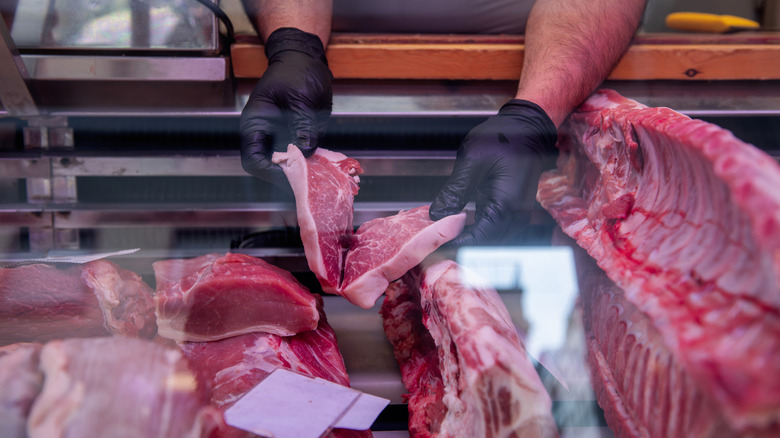
Steak, specifically, benefits from intentional interaction because small decisions can dramatically affect the final meal. The thickness of the cut influences how easily a steak develops the perfect crust, fat distribution changes texture and flavor, and bone-in cuts hold heat differently from filets. The issue with pre-packaged grocery store steak — and what Morton's is likely hinting at — is standardization.
Pre-packaged steaks are customized in advance, hours or days before you even arrive at the grocery store, and are prepared for inventory consistency and shelf stability. Once they're wrapped in plastic and placed in refrigerated displays, the meat interacts with oxygen and moisture, and the clock starts ticking. This doesn't inherently ruin the meat, but it can gradually dull appearance and texture. More importantly, your choices are limited to whatever the store decided has the most mass appeal, with your only options being basic cuts with the lowest common denominator of thickness and trim. Working with your supermarket's butcher, however, gives you specificity and flexibility.
Morton's also mentions meat catalogues and online services in the same breath as butcher shops because not everyone has access to a butcher. Meat delivery services might seem a little strange at first, but modern technology allows for the safe transport of refrigerated and frozen goods, and these services actually operate according to the same philosophy as traditional butcher shops in that meat is the focus of their business. Some work directly with ranches that specialize in dry-aged or grass-fed beef, cultivate heritage breeds, or offer highly specific cuts. The internet may have flattened many independent specialty stores, but it's also created new ways for niche producers to directly reach customers again.