

7 Tips From A Pastry Chef For Making Pies For Summer Cookouts
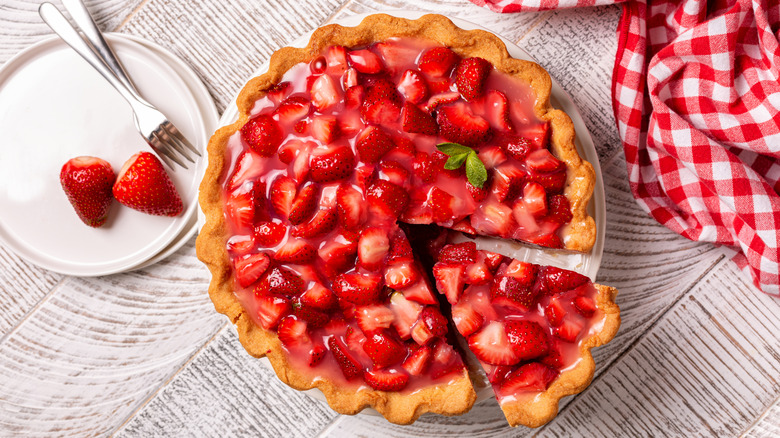
'Tis the season, dear reader — the season when you're getting invited to cookouts every other weekend, and all the attendees are begging you to bring your grandma's famous fruit pie. What's a simple request to them is actually a pretty big task to you, especially when summer heat comes into play. The only kind of baking your pie should go through happens once, in an oven. Baking under the summer sun is generally not the move.
That said, when you bring your expertly-made pie to a barbecue, it will inevitably be sitting out for at least a little while. Not all is lost — there are plenty of precautions you can take to keep your masterpiece in tip-top shape, even when constant refrigeration isn't an option. We got together with Kristina Schlegel, pro pastry chef and the founder of the baking tool brand Make Bake, to get her top tips for baking summer cookout pies. Here's what she had to say.
Fruit pies can be prepped in advance
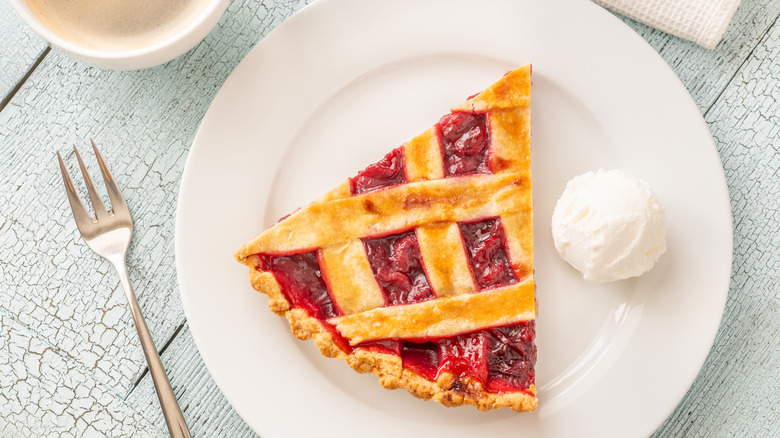
First off, Kristina Schlegel gave us a tip for the busy bee — fruit pies can easily be prepped in advance, so you don't have to worry about doing all the labor the day of your cookout. If you're bringing multiple dishes or are hosting the cookout yourself, this tip will definitely come in handy. The best pies to make when you need to prep ahead of time are fruit pies.
Fruit pies have a fairly generous lifespan. Plus, they just so happen to bring the perfect vibe to a summer cookout, Schlegel noted. "The sweet, bright flavors of berries, peaches, cherries, etc. are perfect for summer," she told us. She also suggested that it might even be better to make fruit pies a day or two ahead of time — they don't necessarily taste best the day they're baked. "Honestly, fruit pies often taste even better the next day because the flavors have more time to deepen," Schlegel told us.
Hopefully this takes a little bit of weight off your chest as you're planning your cookout prep. Make you strawberry pie a day in advance of the big event, or assemble the whole thing and pop it in the freezer — Schlegel also says baking pies straight from frozen is another great way to keep them fresh while getting your prep done in advance.
Don't cover your pie too early
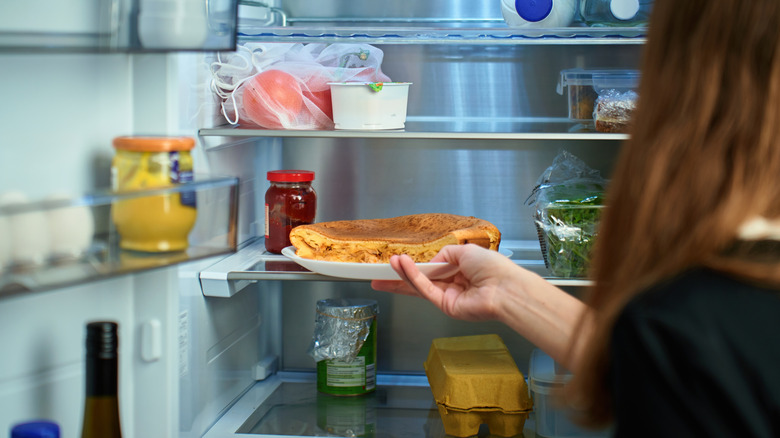
Sure, you might be in a rush, but Kristina Schlegel had one crucial tip if you want your pie to be in tip-top shape for a cookout: Don't cover it too early. We know, it's a little counterintuitive. Won't your pie cool off faster if you cover it and put it in the fridge ASAP? Nope. In fact, following that practice could totally sabotage your bake.
Rather, you should wait for your pie to be completely cool before covering and storing it. Why? Schlegel's explanation makes so much sense: "Sealing it too early traps steam, and refrigeration can add moisture that softens the crust and ruins that flaky texture." Any fan of "The Great British Baking Show" has learned about the dreaded soggy bottom, and it turns out that covering your pie too early is a one-way ticket to that particular disaster.
Make your own pie crust if you want to impress
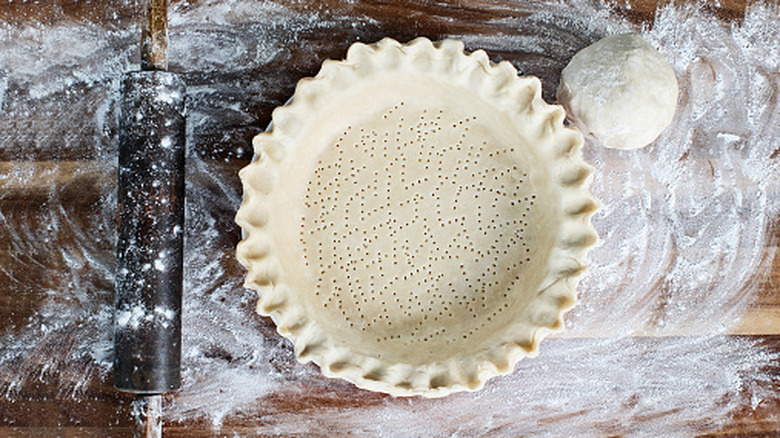
The verdict is in, folks. As easy as it might be to opt for a store-bought pie crust, if you really want to pull out all the stops with your bake, you should definitely make your own crust, simply because it'll always be superior to a store-bought crust. Kristina Schlegel explained that this is due to all of the stabilizers and emulsifiers commonly used in store-bought crusts — the addition of these ingredients often keeps the crust from being ultra-flaky.
Schlegel was also quick to demystify the concept of crust-making. She said that making your own pie crust "sounds scarier than it really is." Best of all, you have plentiful time to practice, because pie crust freezes incredibly well — in fact, Schlegel told us that "You can make it weeks ahead and keep it in the freezer, then move it to the fridge the night before you need it."
This leaves plenty of room for error. Make your first attempt at a pie crust a few weeks before your cookout. If it's a success, pop it in the freezer until you're ready to bake — if it's not, try again a couple of days (or a whole week!) later. Pretty foolproof, in our opinion.
Consider making hand pies instead of one large pie
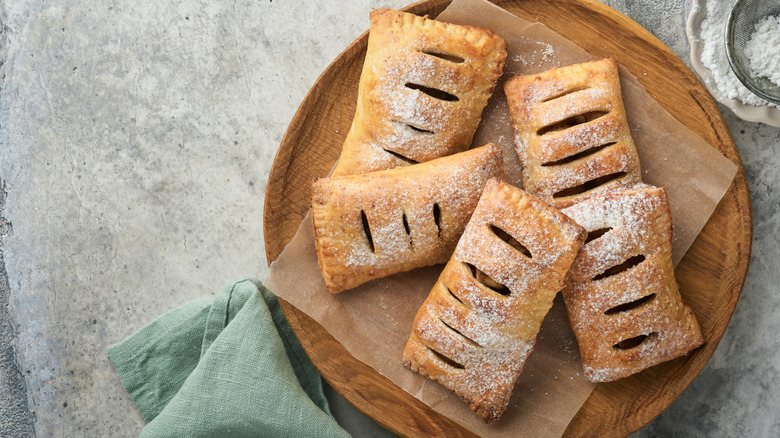
Should you still be daunted by the prospect of baking cookout-ready pies, Kristina Schlegel offers an alternative that we find pretty appealing: Instead of making one big pie, go for individual hand pies. Not only does this mitigate some of the potential problems that can come from a big pie sitting out all day, but it will also let all the cookout guests have their very own pie. Plus, you can set half out to start with, and keep the other half inside to restock as necessary.
Schlegel lists a wealth of reasons to opt for hand pies. "Hand pies are my personal favorite for cookouts because they're portable, no-slice, no-fuss, and every guest gets their own little pie. ... Plus, the lower filling-to-crust ratio helps avoid the dreaded soggy bottom." She also mentions that hand pies are particularly popular with kids.
Even better, hand pies really aren't that complicated to make, and Schlegel has a little tip for those new to the hand pie game: "My favorite trick is using a graduated cookie cutter set and cutting the bottom crust one size smaller than the top." This will let you load the filling on the bottom crust. Your top crust, if it's cut a little bigger, should leave plenty of space to dome over the fillings while still sealing with the bottom crust.
Add bright ingredients for extra freshness
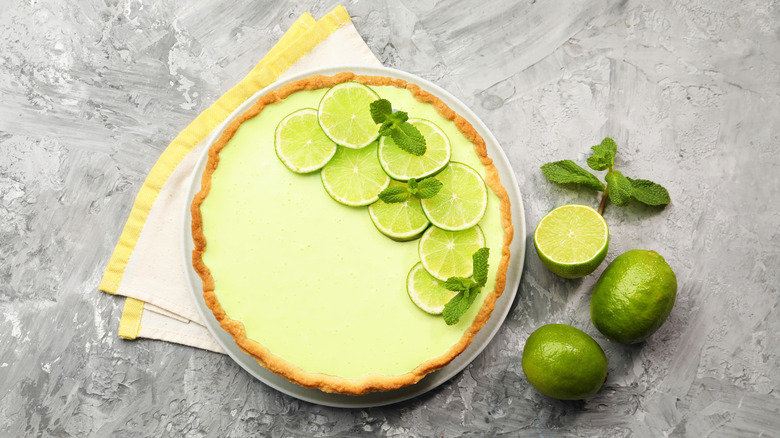
When you bring your pie to a cookout, it should ideally feel like it just came out of the oven, even if you've prepped it days in advance. To that end, Kristina Schlegel has a few foolproof tips to keep your pie from tasting stale or boring. First, she reminded us that two things play into a pie's "freshness" perception: taste and texture.
In terms of taste, a super easy way to freshen up a pie is to add bright, herbal ingredients. "Strawberry mint pie is a favorite in our house during the summer," she said, noting that citrus fruits like lemon can also be incorporated into your dessert to amp up its fresh appeal. If you want a last-minute quick fix to freshen up a pie you made yesterday, you could always grate some citrus zest or add fresh herbs to the top of your pie.
In the case of hand pies, Schlegel suggests a little baker's trick: "Topping them with coarse sugar before baking adds crunch and texture that makes the whole bite feel more 'just baked,' even after sitting out for a bit." Basically, if you have a trick to make your dessert taste crispy even when it's not fresh from the oven, that can still give the illusion that you baked your pie mere hours ago.
Avoid dairy-based pies
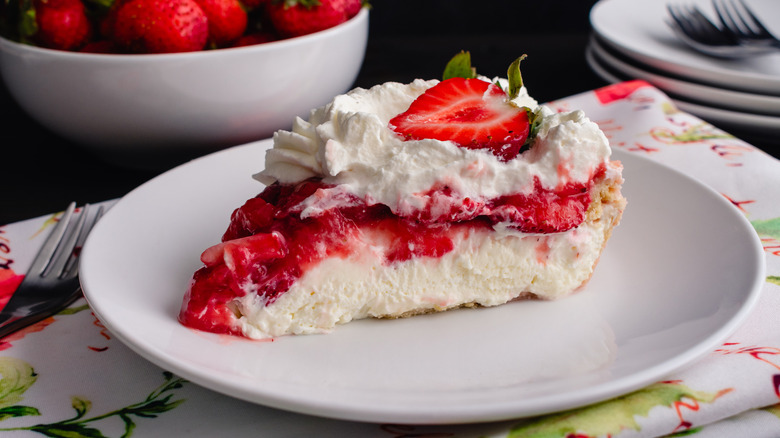
We've talked about a lot of "to-dos" to make sure your cookout pie journey is a success, but we can't leave out a valuable "don't" tip: Definitely don't bake a dairy-based pie. Sure, that custard pie topped with whipped cream looks incredible right out of the fridge, but imagine it after sitting in the sun for an hour or two. If you're imagining a container full of pie soup, you've got the right idea.
It doesn't matter if your neighbor begs you to bring a chess pie to her gathering. Your only move is to politely decline and opt for a fruit pie instead. If she still insists, remind her that it's not just an issue of the pie turning to mush, according to Kristina Schlegel — food safety also must be kept in mind. "Custard-based pies ... can curdle in the heat, and dairy-heavy fillings that sit out for more than a couple hours can become a food safety issue." Save those pies for indoor gatherings with a refrigerator available. If you're bound and determined to bring that custard pie, keep it in the fridge, and be willing to go back and forth when guests want a slice.
Bake your pies in a dark metal pan
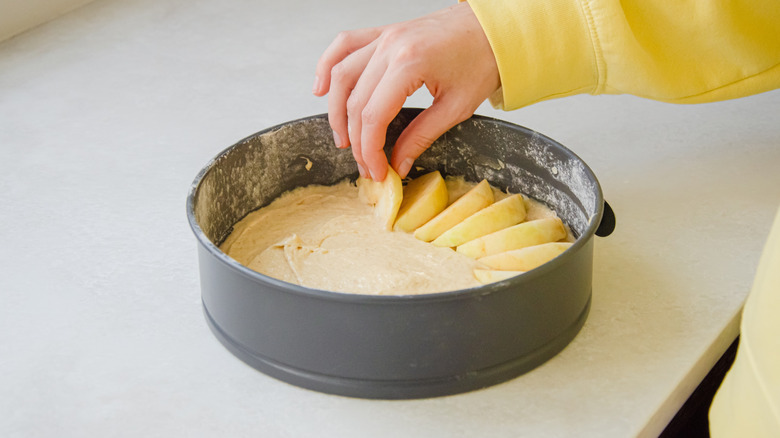
Last but certainly not least, another tip to keep your pie tasting fresh even after sitting under the summer sun is to make sure it's properly baked in the first place. Kristina Schlegel suggests you ditch the glass and ceramic pie dishes — they may be gorgeous, but they're not the best conductors of heat. Even though your pie may be perfectly baked on top, you still run the risk of a hopelessly soggy bottom.
What's a baker to do? Fortunately, there's a pretty foolproof solution. Schlegel suggests, "One of the easiest fixes is using a dark metal pie pan. ... Dark metal conducts heat better, which helps the bottom crust set and crisp up faster." Moreover, she suggests varying the temperature during your bake. Start at a high temperature (around 425-450 degrees Fahrenheit) for five to 10 minutes to kickstart the crust cooking, then lower the temperature, and raise it again about five minutes before the pie is done baking. It may sound like a pain, but it's worth it if it means you manage to avoid that soggy bottom!