

Why Some Olive Oils At The Grocery Store Can't Legally Be Called 'Extra Virgin'

Chances are that when you reach for a bottle of olive oil, it's going to be extra virgin. Even if you're not well-versed in the ins and outs of the different oil grades, extra virgin olive oil (or EVOO) has become synonymous with top quality. Extra virgin olive oil is the result of pressing the olives without heat or solvents, ensuring that the flavors and aroma of the fruit are not degraded in any way.
Beyond this, each country or producing region has its own set of standards used to assess the oil at a chemical level to determine if it meets quality requirements to be sold as true extra virgin olive oil. Oils that don't meet these standards are instead sold as virgin olive oil, olive oil, or refined olive oil.
For U.S.-certified extra virgin olive oil, the USDA requires that the olive oil have a maximum free acidity of 0.8% and that the taste and aroma are free from any sensory defects, as determined by a panel of tasting experts. The rules for California-produced oil are slightly more stringent, demanding a maximum acidity of 0.5%, and require that the harvest date be displayed on the bottle.
The issue is that although the standards are high, obtaining official certification is entirely voluntary. The USDA sets the guidelines for what constitutes extra virgin olive oil, but does not enforce them directly, instead relying on brands to adhere to what they call "truth in labeling." An independent test done in 2015 found that 60% of supermarket oils tested didn't live up to the standards for extra virgin olive oil, though a more recent study done in 2024 found that just 11% of tested oils fell short.
How to choose an olive oil
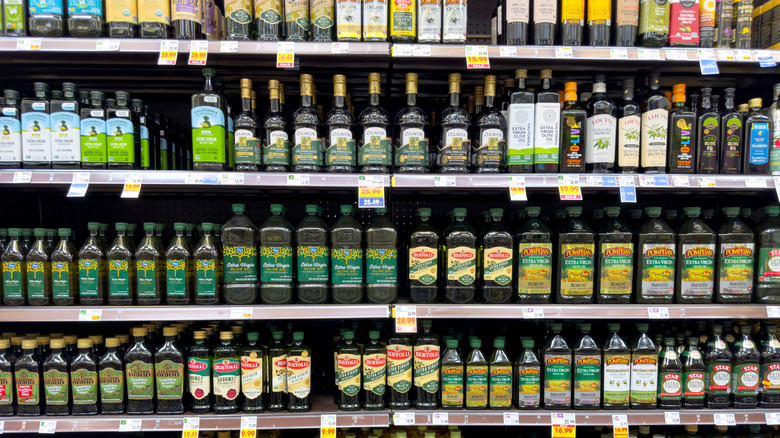
With this in mind, you might be concerned that your olive oil purchase is something of a lucky pick, but there are some things that can help you be a more savvy oil shopper.
First of all, look for the certification on extra virgin olive oils rather than just how the oil is labelled. This will either be from the European Union, the COOC (California Olive Oil Council), or the IOC (International Olive Council) for oils produced outside the U.S. This confirms that the olive oil has been tested and approved by the relevant ruling bodies. Don't be fooled by terms like pure olive oil or extra light olive oil, which are more about marketing than having any specific meaning.
Look for the harvest date rather than the best before date, and pick an oil that's less than a year old if you want the best flavor. Those without a harvest date listed can be given an expiry date of up to two years. Olive oils that specify the estate where they're produced aren't necessarily a guarantee that they meet extra virgin standards, but this does offer an additional level of transparency. Cost can also be an indicator of quality. If you see oil at a price that's too good to be true, it probably is.
Finally, consider if it's actually extra virgin olive oil that you want. Extra virgin will offer more complex flavors, but it's ideally used as a finishing oil and not for cooking. Regular olive oil has a higher smoke point and a more neutral taste that's a better fit for frying or roasting.