

Cabernet Sauvignon Vs Merlot: What's The Actual Difference
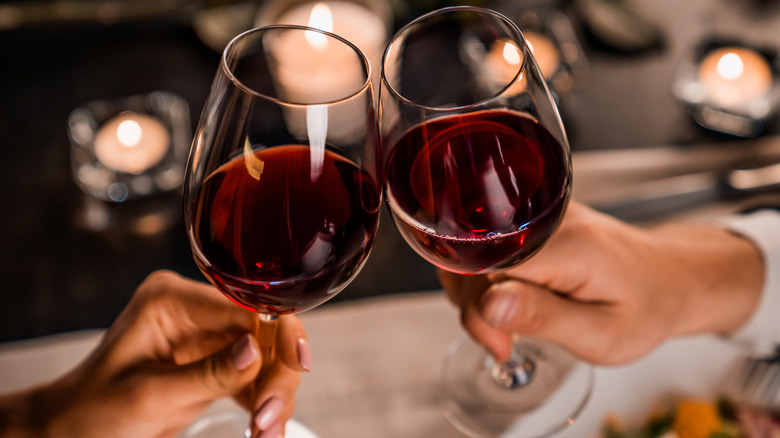
You don't need to be a wine aficionado to be familiar with two of the most popular red wines — cabernet sauvignon and merlot. These robust reds are on every supermarket shelf, in convenience stores, and almost always available at a bar or party. While these grape varietals are similar — both are descendants of the cabernet franc grape — there are distinct characteristics that make each of them unique.
Both cabernet sauvignon and merlot are Bordeaux varietals native to Southwest France. This famous wine producing area is comprised of six winemaking regions, each with its own terroir. This climate and soil diversity has helped cabernet sauvignon and merlot grapes adapt and thrive in vineyards all over the world, adding to the widespread availability of the wines and the diversity of profiles from one winemaker to another.
Both wines are dry, have deep dark color, and do well when aged in oak. More famously, they play together extremely well, and winemakers combine them in various percentages — sometimes including other grapes like cabernet franc, malbec, petit verdot, and sangiovese — to create beautiful Bordeaux blends and Super Tuscans.
As much as they have in common, cabernet sauvignon and merlot have subtle differences in taste, structure, body, acidity, and amount of tannins, which affect their aging potential and dictate the best food pairings for each. Here we'll give you a basic guide to distinguish the two varietals, so you can get to know them better and decide how each will best fit the occasion at hand.
Merlot — an easy going, food friendly fan favorite

In a survey conducted by Tasting Table in 2022, merlot placed as the favorite red wine with nearly 30% of respondents choosing this ruby-colored, medium-bodied, fruit forward red wine over all others. Merlot is more approachable than cabernet, with a smooth velvety texture, and juicy flavors of plum, blackcurrant, blackberry, and blueberry, although it can develop notes of chocolate and spices when made from riper grapes and when aged in oak.
Merlot's flavor profile will also depend on the region in which it's grown and vinified, giving you a wider palette from which to choose. Because it has lower acidity and softer tannins, it's well suited for drinking as a young wine, which makes it ideal for enjoying on its own, paired with a wide variety of foods, and as one of the best red wines for cooking.
Try merlot with roasted, earthy, and savory dishes, semi-firm and medium-aged cheeses, charcuterie, mushrooms, barbecued meats, pizza and pastas. Avoid pairing anything overly sweet, but chocolate and berry desserts should work as long as the sugar is subdued.
Cabernet sauvignon — complex, serious, and beloved worldwide
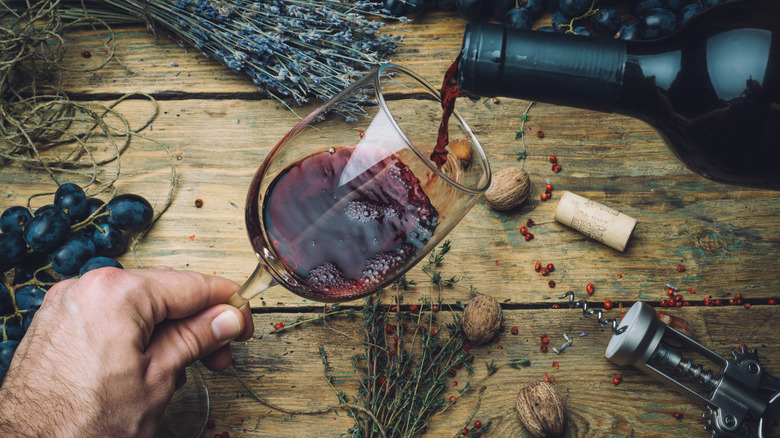
Wine connoisseurs and collectors are among the many who consider cabernet sauvignon the premier red wine varietal. Big, bold, full-bodied, dry, and strong, cabernet's robust characteristics are a product of the natural qualities of the grapes. A descendant of sauvignon blanc and cabernet franc, cabernet sauvignon grapes are one of the smallest of the wine making varieties, with a thick, dark purple skin and a high skin-to-pulp ratio. These qualities lend cabernet its characteristic inky color, deep flavors, and high tannins, which become softer as the wine ages and contribute to its longevity in the cellar.
Depending on where it's grown and vinified, cabernet sauvignon can display a variety of bouquets and flavor profiles, from herbaceous, earthy notes to ripe red fruits like plum and cherry. Green bell pepper, violets, and mushrooms are also characteristic in some cabernet, while tobacco, smoke, vanilla, and woodsy hints are imparted by the oak barrels in which it rests.
Because of its intense tannins and high acidity, cabernet is the ideal counterpart to rich, savory, fatty foods — that's why steak and cabernet is one of the classic wine and food pairings — as salt and fat help to mellow the tannins. Red meats, charcuterie, aged cheeses, and pastas with tomato sauce are ideal matches.