

If Deli Meat Looks Like This, It's A Red Flag And You Should Shop Somewhere Else
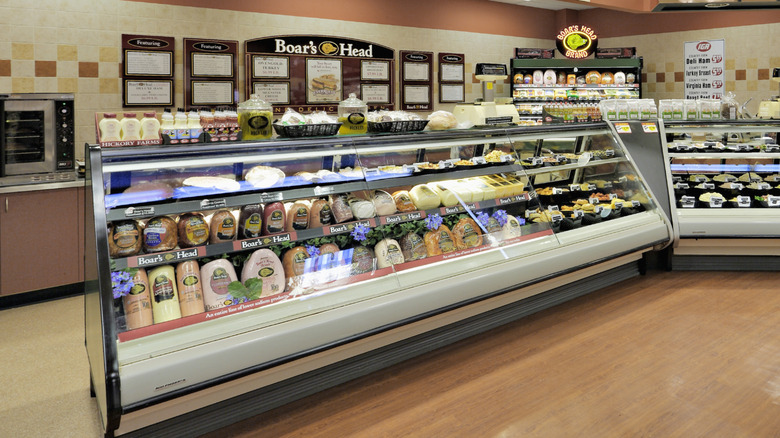
If hitting up the deli counter is part of your weekly grocery shopping routine, there are quite a few unwritten rules you should be aware of before making a purchase. From ensuring that each type of meat is being sliced with a different blade, to avoiding the deli during peak hours, it's crucial to take the proper steps to avoid bad-tasting meat, or worse, foodborne illness. Luckily, it's pretty simple to recognize meat that shouldn't be consumed. In an interview with Tasting Table, chef and food safety expert Mark McShane, who holds a Level 3 Food Hygiene Certificate, shared why dried-out edges on deli meat slices are an immediate red flag.
"I take a very serious view of any dried-out areas around the edges of the deli meat I purchase," McShane said. Properly-stored deli meat is generally good for about two weeks in the fridge, but if you purchase a pack — either pre-packaged or freshly-sliced — and you notice it's dried out, that could mean that it's not very fresh, according to McShane. Many sources warn against consuming slimy deli meat, and while this is often an indicator that it has gone bad, it doesn't always mean that it's rotten; in fact, it might still be good to eat. However, if the edges of the meat are hard, crusty, and dried out, that's a telltale sign that it's spoiled and should be discarded.
Don't be afraid to ask questions before purchasing deli meat

If you have a strange feeling about the deli you're visiting, Mark McShane recommends asking questions to the staff at the counter to ease your mind — or to help you decide to shop elsewhere. "If you ever feel uncertain about the freshness of your product, there's nothing wrong with politely asking questions such as, 'When was my product last sliced? And how frequently does the case get restocked?" he says. How the deli staff answers your questions should give your insight into whether or not it's a deli to be trusted.
In addition to McShane's examples, there are other red flags to look out for at your deli, which can be assessed by asking questions to deli staff. One important detail you should definitely ask about is the temperature of the deli case. If there's no thermometer, that's not a great sign, since this is a simple way for staff to tell if the meat has entered the "danger zone" — that is, between 40 and 140 degrees Fahrenheit, according to the USDA. This is when harmful bacteria are able to grow, leading to foodborne illness, so if your deli case's temperature is within this range, it should be avoided at all costs.
Overall, in order to know what questions to ask deli counter staff, it's important to familiarize yourself with the red flags and unwritten rules of ordering deli meat. This will help you truly understand proper food safety practices and how to distinguish between a good or a bad deli — and it could even spare you from getting sick.