

Your Ice-Cold Glass Is Making That Premium Beer Taste Cheap
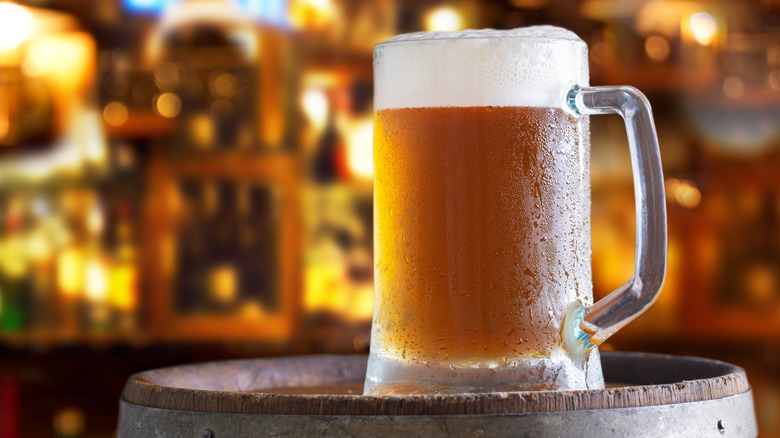
On a hot summer day, the thought of an ice-cold beer served in a frosty mug is so appealing. But in reality, you should think twice about this practice if you care about the flavor and quality of the beer you are about to drink. That's because the cold temperature affects the flavor and texture of the brew, and an ice-cold glass can suppress the primary qualities of a premium beer.
With the revival of craft brewing in the U.S. and the growing selection of imported beers, the options for carefully crafted brews are widespread. There are many types of beer out there, with their own characteristics and flavor profiles. Each style has specific palate notes and volatile aromatics, which are masked when the brews are served too cold.
So, why would you order a nice craft beer only to ruin it by erasing its flavor? Not to mention the fact that, while in the freezer, the glass can absorb unwanted flavors — think of your home freezer and how food that's been in there too long ends up tasting. Moreover, a beer poured into a frozen glass will likely overfoam, as the ice crystals in the glass will cause the beer to release carbon dioxide, leaving you with a pour that's more foam than actual beer.
Cheaper macro brews (we won't name names, but you know who they are) are lighter in body and lacking in flavor — some actually taste horrible — so drinking out of an ice-cold glass with a squeeze of lime can make them more palatable. If you're sitting outside on a hot day chugging a mass-produced brew that's meant to be more refreshing than flavorful, a frosty glass will do the trick.
There are better ways to enjoy a premium craft beer
The ideal serving temperature for most beers ranges between 35 and 60 degrees Fahrenheit — depending on the style you're serving — which is perfect if you want to enjoy the beer chilled while retaining all its flavor nuances and complex aromas. Lighter lagers and pilsners are best served at the lower end of the range, while richer ales benefit from a higher temperature to reveal their balanced profiles of malt and hops.
You know that popular myth that British beer is served warm? That's because in Britain, traditional cask ales — also known as real ales — are served at cellar temperature, which is around 50 to 55 degrees Fahrenheit. To visitors from the U.S., this seems warm compared to the cold megabrews to which they are accustomed. In the U.K., these popular brews are correctly identified as lagers, as opposed to ales.
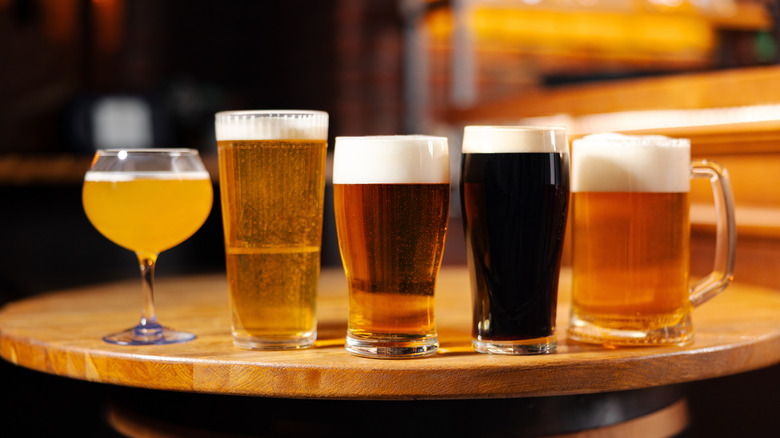
Aside from the difference in temperature, the shape of the glass in which it's served is important. That's why popular craft beer styles are served in different vessels, as the shape of the glass truly affects our perception of the aromas, flavor, and texture of the beer. A tall, slim glass showcases the light color and carbonation of a pilsner, while a snifter concentrates the aromas of a stout, and a classic pint glass is perfect for an easy-drinking IPA.
In the end, your beer is yours to enjoy as you please, but there's a time and a place for everything. And, as it turns out, the freezer is not the right place to store your glass at any time if you want to enjoy every sip of a premium beer.