

The Reason Orange Juice Has Vitamin D - And Some Doesn't

We may receive a commission on purchases made from links.
Orange juice might be the most confidently healthy thing most people drink on a regular basis. The color alone feels nutritious. But for all its vitamin C and natural goodness, there's one micronutrient it simply doesn't have — and most people would never think to look for it. Oranges, for all their wholesome reputation, contain no vitamin D whatsoever. Not a drop.
The vitamin simply doesn't occur in citrus fruit, and the reason comes down to chemistry. You see, Vitamin D is a fat-soluble substance, meaning it only ever shows up in fatty foods — think oily fish, egg yolks, liver, and offal (Metabolites). Orange juice is made up of mostly water, so there was never any mechanism for the vitamin to hitch a ride in it. For most people, sunlight does the heavy lifting — your skin manufactures vitamin D when it gets UV exposure. But if you're spending your days indoors or dealing with perpetual winter, diet or supplements need to step in (National Institutes of Health).
Interestingly, this is the sole department where mass-market OJ might have an edge over the tastier, hand-squeezed counterpart. Since the early 2000s, brands like Minute Maid have been adding D2 or D3 to select carton varieties. According to the American Journal of Clinical Nutrition, your body absorbs this added vitamin D from fortified juice with roughly the same efficiency as from a capsule. Not every product gets this treatment, however, so if this is important for you, check the label for something like "Vitamin D Added". Takes just two seconds!
Vitamin D isn't the only thing manufacturers add to OJ
As you browse, you're bound to come across cartons like these Organic Orange Juice by 365 by Whole Foods Market — besides vitamin D, it also comes with calcium added, as well. Raw orange juice naturally contains some of this bone-building mineral (about 9 milligrams for every 100 grams, per USDA), but manufacturers add extra anyway for a bigger nutritional punch. For people avoiding dairy or cutting back, fortified OJ becomes a legit source of both vitamin D and calcium.
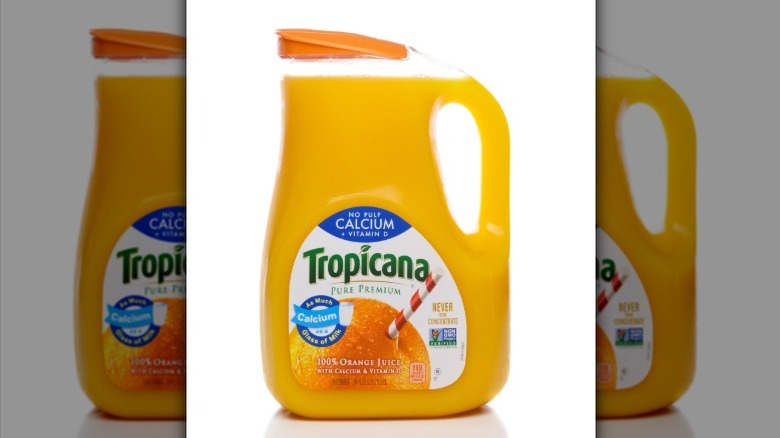
The catch is that fortification isn't standardized across the industry, so two cartons of "100% orange juice" with "Vitamin D+Calcium Added" sitting an inch apart on the same refrigerator shelf can tell very different nutritional stories. Take 365 Organic OJ above as an example — it delivers 25% of the daily value for both vitamin D and calcium per serving. Simply Orange's Medium Pulp variety comes in at 15%, while Tropicana fortified OJ lags behind at just 10%. Who would've thought the healthiest thing you can do in the OJ aisle is actually read what's in the bottle?