

Why Your Wood-Fired Food Tastes Bitter (And How To Fix It)
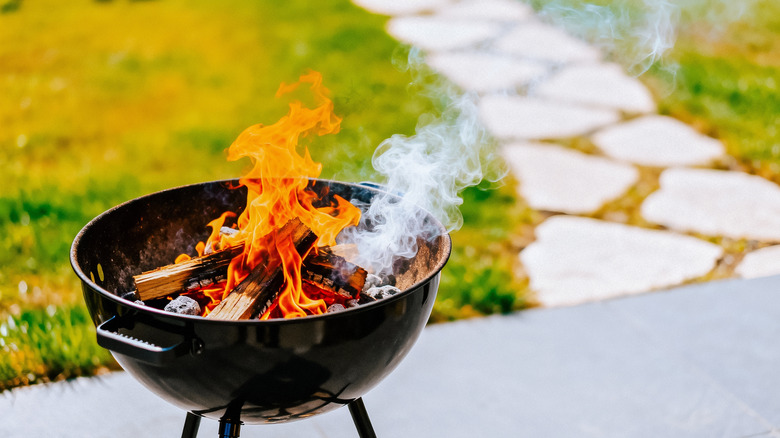
There's really no substitute for wood-fired cooking. It can add so much incredible depth and flavor to your food, which is one reason why wood-fired pizza tastes so much better than the oven. But if the flavor turns harsh, acrid, or bitter — something isn't right. The good news is that bitter smoke flavor can be easily fixed once you understand what's going on.
We asked Chef Victor Rivera, culinary director at Bazaar Meat, for his expert advice on cooking clean with fire. "Bitterness usually comes from dirty smoke or improper fire management," he explains. "If the wood is not fully combusted, it produces thick, white, sooty residue that can coat food and impart a harsh flavor." Dirty smoke can happen if you use softwoods like pine, cedar, spruce, or coniferous varieties with high resin because they tend to create sharp, unpleasant flavors when burned. Other types of wood you should never use when grilling or smoking include fresh or chemically treated options.
Rivera instead recommends "using properly seasoned hardwoods" like oak, hickory, maple, and cherry, which produce a balanced smoke with nuanced flavors. He also suggests "letting the fire establish before beginning the cooking process." Many beginners mess up by putting food over the fire too early. Rivera says to focus on "cooking over glowing embers rather than active flames and looking for clean, thin blue smoke." Good airflow keeps the smoke combusting, so don't pile logs too closely or overload your smoker; that fire needs to breathe.
Use the right wood and keep that grill clean
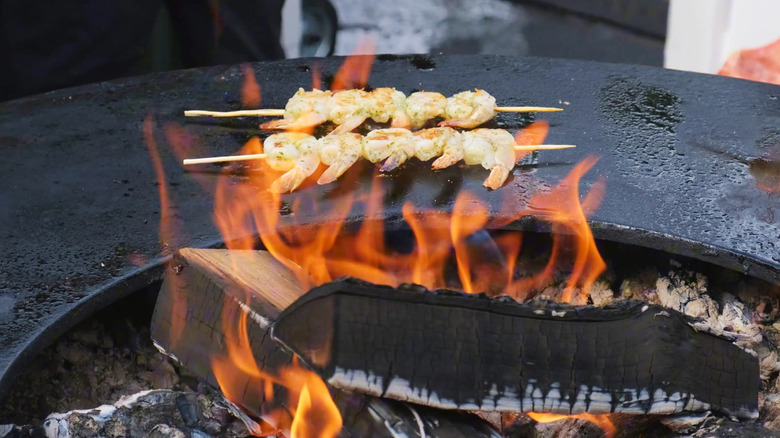
Even though cooking with large, dramatic flames seems appealing, that kind of fire is unpredictable and can send off sooty flames. "Create heat zones within your grill so food can move away from flare-ups," advises Rivera. If your ribeye is still tasting bitter, you'd do well to remember the last time you cleaned your grill. It's a huge mistake not to clean your grill immediately after cooking, so if you're guilty of skipping this chore, get to work scrubbing out old drippings and caked-on residue from cookouts six months ago. When those nasty bits catch fire, they'll only produce rancid smoke.
Depending on the type of protein you'd like to grill, it's also worth tailoring your wood choice towards that. More delicate foods like chicken, seafood, and vegetables take on smoky flavor quickly that can overpower. Heavier, fattier meats like brisket and pork butt are better able to absorb big, smoky flavors. Since not all woods work for all foods, it's essential to know when to use lighter versus stronger woods for the best barbecue.
Luckily, bitter flavors can be tamed after cooking, too. As Rivera recommends, "Acid and fat are your best friends to fix the wood fire, which assists the rebalance of bitterness." He adds, "Citrus, vinegars, olive oil, yogurt-based, or herb-based sauces can soften harsh, smoky flavors." But, tragically, some wood-fired food just can't be saved. Rivera cautions, "Sometimes, trimming burnt portions is the best and only solution."