

The Biggest Mistake People Make With Wood-Fired Grilling
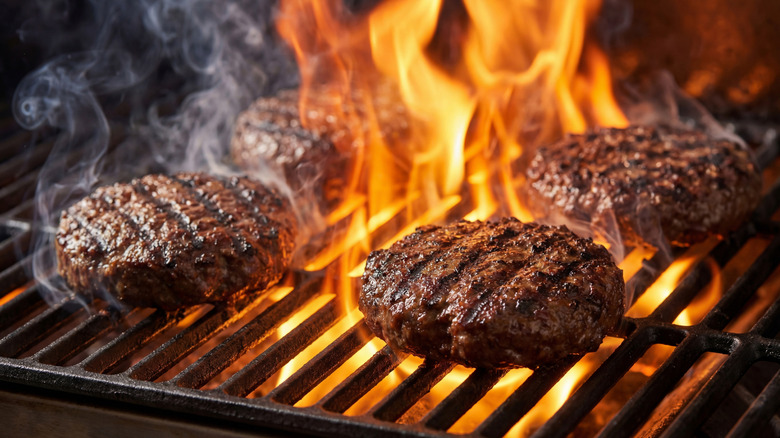
Outdoor cooking aficionados like to argue about whether charcoal, wood, or gas is best for grilling, yet the truth is that all three can produce beautifully grilled food, so long as you learn the differences between them. It's especially important to know how to control a wood fire, lest you char your food black. To help you dodge a flaming failure, we spoke with chef Victor Rivera, culinary director at Bazaar Meat, about how to avoid unexpected grilling pitfalls.
"One of the biggest mistakes is treating a wood fire like a gas grill," Rivera reveals. Gas grills are popular for providing consistent heating and easy controls — you can set them to a temperature, and they'll stay there. A wood fire may add more flavor, but it takes significantly more effort to keep steady. Otherwise, your grill will heat unevenly. "Fire is always changing," the chef points out. "Uneven heat can leave food raw in some places and burnt in others. Proteins can tighten and dry out before the interior is properly cooked, while vegetables may char on the outside without becoming tender."
How do you avoid scorching your grilled chicken, steak, or veggies over an unpredictable fire? Chef Rivera cautions home cooks to avoid grilling over strong flames, instead noting that it's better to coax your meat over embers. "Knowing and managing your heat zones is key to success," he adds. The pro chef offers more intel on how to create and use heat zones for more consistent grilling, plus other wood fire mistakes to be aware of.
Cook your food evenly over a wood fire
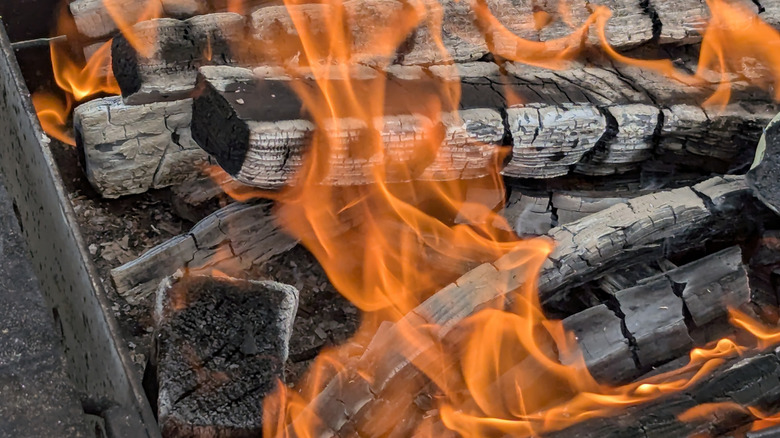
From thick steaks and thin fish filets to delicate veggies, different foods need different grill times and temperatures to avoid overcooking. This is why it pays to use a two-zone grilling method by building a hot fire on one area while leaving the other side with little to no flame, creating gentler, indirect heat. Rivera shares that you can (and should!) use even more zones to up your grilling game. "Build a multi-zone fire with both hotter and cooler areas," the chef instructs. "Move embers as needed and rotate food often, adjusting thickness and heat intensity."
To make a spot on your grill hotter, concentrate more of the wood (and therefore the embers) in that area. To make it cooler, take that fuel away. Many grills even come with vents that let you fuel or tame flames by controlling the flow of oxygen. Additionally, flipping and rotating food from steaks to kebabs to vegetables aids in even cooking and caramelization.
Rivera adds that "failing to fully preheat the grill, uneven coal distribution, [and] overcrowding" will also foil your fire-grilled foods. A lukewarm grill won't brown and sear ingredients properly, and your food will dry out if you let it sit over the wood the whole time it heats up. Overcrowding, on the other hand, makes it harder to move foods from zone to zone and keep track of doneness. In the end, being attentive and adaptable wins the cookout.