

The Expert Brisket Trick That Can Lock In All The Juicy Flavor While It Smokes
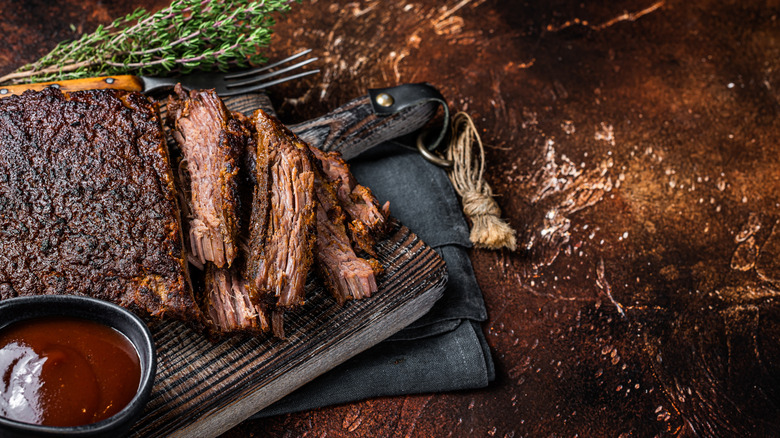
For such a prized piece of meat, brisket comes with a lot of caveats. You've heard it before: follow the 3-2-1 rule for perfectly cooked brisket, never heat it at more than 225 degrees Fahrenheit, cook for at least one hour per pound. These guidelines ensure that you get end up with the best brisket, including the one that suggests smoking the meat in a specific position.
When placing a steak or hot dog on the grill, you may not pay much attention to what side goes down first. When smoking brisket, however, it's important to keep the fat side down. According to Jack's BBQ on TikTok, laying the fatty side down on the smoker yields the best results — and celebrity chef Robbie Shoults agrees. The owner of Marshall Mercantile and High Horse 1898 and third-generation owner of Bear Creek Smokehouse, Shoults explains that this positioning keeps the meat protected during the lengthy cooking process.
"Smoking a brisket fat-side down is really about managing heat more than building flavor," the chef reveals. "That fat cap acts like a shield, helping protect the meat from direct heat so the bark develops steady instead of getting scorched early." Brisket is relatively lean, so it does best with heat that comes from a distance. The thick fat absorbs the hot blast of smoke, allowing the meat to cook evenly without drying out.
Your brisket doesn't have to stay fat side down
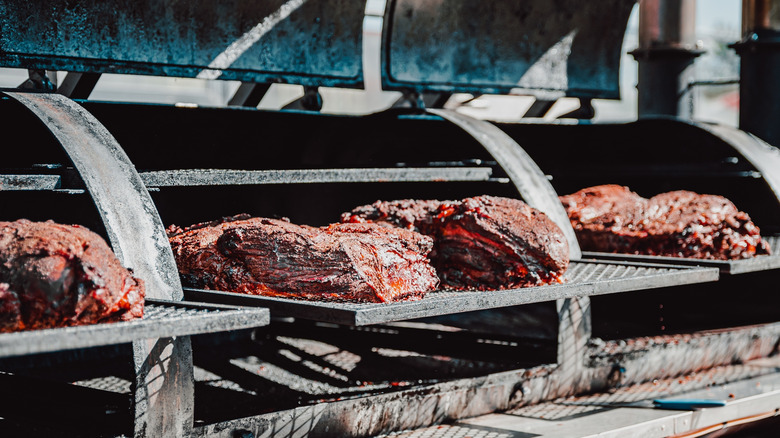
Patience is a key component for the perfect brisket, so that may translate to a hands-off approach when it comes to smoking. However, Shoults adds that the cut may benefit from some gentle disturbance — if done correctly. "Flipping after several hours can help even out the cook if one side is taking more heat," he explains, "but it can also disturb the bark once it starts to set, so timing matters."
If the brisket is undergoing the barbecue stall — the point at which the temperature of the meat remains stagnant or starts to drop — changing its position can help even everything out. "Moving it to a hotter part of the smoker to finish is a tool some pitmasters use to help push through the stall and tighten the bark," Shoults notes. "Done right, it can improve texture and rendering." Flipping can give the faced-down side a beat to take in some moisture while the other side can develop its crust.
Still, the celebrity chef stresses that flipping at the wrong time, like when the bark hasn't fully set, could mean less than stellar smoked brisket. "It can dry the brisket out or make the bark too tight," he notes. "At the end of the day, it comes down to control and patience: low and slow gets it done." If you don't have a traditional smoker, don't fret. You can also smoke your brisket on the grill.