

The Myth About Recycling Food Plastic Everyone Needs To Stop Believing
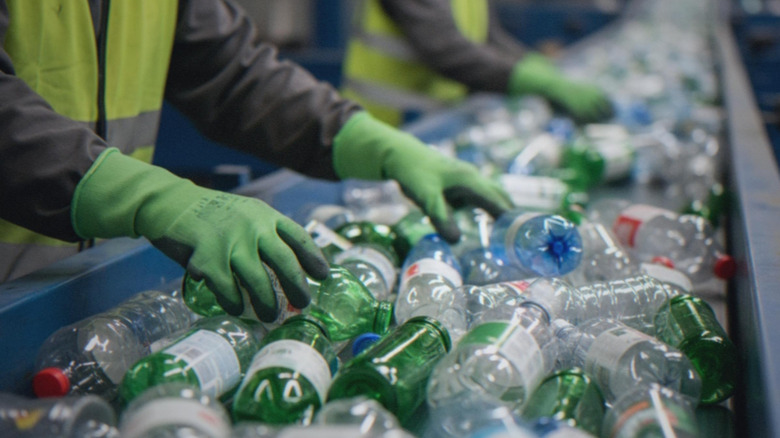
Recycling can be a complicated business, and plastic recycling makes it even harder. The biggest issue for most Americans is that recycling laws vary greatly between different cities and states — not just how you recycle, but what you can recycle. Plastics further complicate things, because the thousands of different potential chemical compositions greatly affect how recyclable they are. So, you might have been making the assumption that as long as your food plastic had a recycling symbol on it (the one with the triangle of arrows), it was recyclable. Well, think again.
In the United States, there are seven different categories of recycling labels for plastic, easily identified by the number 1 to 7 inside the triangular symbol. Yet many of these categories cannot be regularly recycled, despite the label. In practice, the only widely recyclable plastics are those with labels 1 and 2, although it is becoming more common for collectors to accept plastic No. 5 as well. In general, the higher the number, the tougher the plastic is to recycle, hence why some people try to avoid food packaging made out of plastic No.7.
That's because, to the plastic industry, those codes don't actually mean recycling; they are known as resin identification codes (RIC). An RIC simply identifies what type of plastic was used in the container and is a way of communicating that to recycling plants, not a promise of recyclability. If that seems confusing, you are not alone. A survey from the Consumer Brand Association in 2019 found 68% of Americans believe anything with the symbol is recyclable, and the labeling system has been criticized for using symbols that can seem actively misleading.
Not every piece of food plastic with a number recycling label on it can be recycled
It's bad enough that people are being confused into thinking something they are buying is more recyclable than it actually is, causing more plastic waste, but wrongly recycled plastic also makes the whole system worse. Having the wrong kinds of plastic in with your recycling can contaminate batches. At best, this means recycling facilities have to spend tons of money doing extra cleaning and sorting work. At worst, it can mean entire loads of recycling may be rejected, even if they contain lots of truly recyclable material.
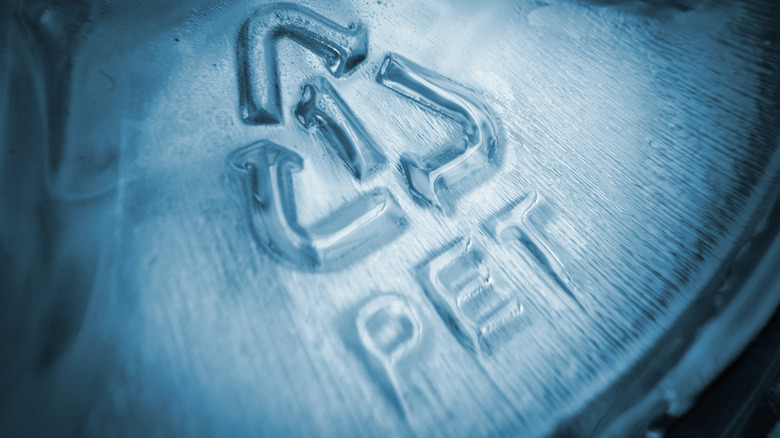
So what are the two main resin classifications, No. 1 and No. 2, that are actually recyclable? Plastic No. 1 is polyethylene terephthalate, or PET, the most common material for beverage bottles, cooking oil containers, condiments, and food containers, among others. Plastic No. 2 is high-density polyethylene. These are non-transparent plastics commonly found in bottles for shampoos and households cleaners, but they are also used for milk jugs or yogurt tubs.
Plastic No. 5 may be recyclable depending on your local rules. This is polypropylene, found in things like plastic straws, single-use yogurt cups, ice cream tubs, medicine bottles, and toys. The remaining plastic numbers are worth looking up to make sure there are no specialized ways to recycle them, like Plastic No. 4 (low-density polyethylene), found in plastic bags. Twelve U.S. states have completely banned plastic grocery bags as of 2026 due to recycling challenges. These bags can be returned to grocery stores but shouldn't go in your recycling bin. Ultimately, if you want to recycle in America, be prepared to do some research.