

At Some Breweries, Every Season Tastes Different, Thanks To One Small Detail
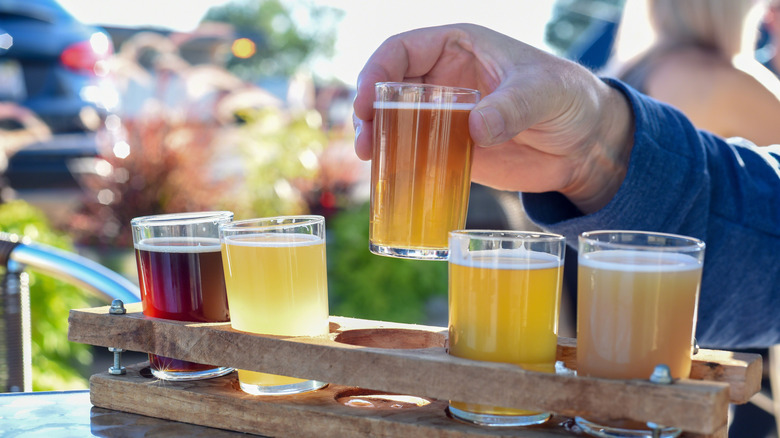
Craft breweries offer up so much more than the big beer conglomerates like Anheuser-Busch. Whether it's using local ingredients, supporting their community, or doing smaller production runs, microbreweries often offer a more interesting, layered story than options like your standard Coors Light or Budweiser. It's no accident that their seasonal beers especially stand out for their commitment to regionality, showcasing ingredients that are deeply tied to place. For Josh Penney, head brewer at Threes Brewing in Brooklyn, that approach has become increasingly important.
"Regionality is a huge part of a lot of breweries' DNA," he explains, "and some very unique ingredients are often foraged for a beer, and the result is something so different that it's very difficult to recreate elsewhere." The idea that a beer should reflect the place where it's made is a key cornerstone for craft brewers like him. The result is that every season will taste a little different depending on where you are. A brewery in the Gulf South might incorporate satsumas in the December growing season, while a New England brewery might instead experiment with maple syrup during the colder months. Meanwhile, there are always fruit beers and shandies to keep you cool during the summer.
"There are a lot of incentives to using locally sourced ingredients," Penney notes. "The obvious one is cheaper shipping and a lower carbon footprint." That local connection helps out your community, too. Many breweries now partner with nearby growers and farmers to source ingredients, creating a mutually beneficial arrangement that keeps money in the local economy.
Regionality gives smaller breweries a way to stand out
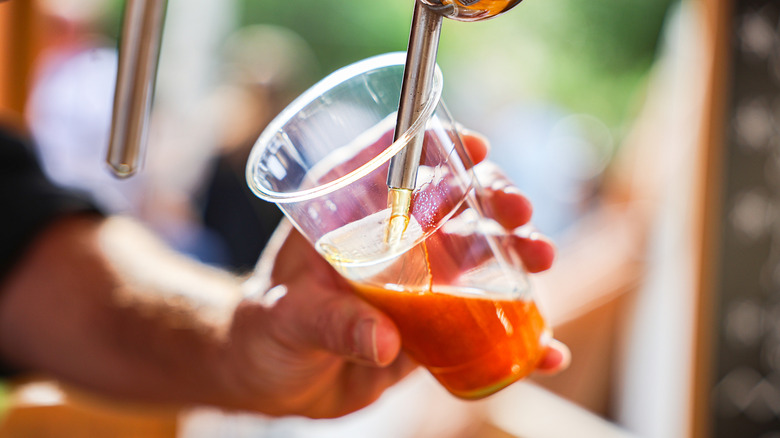
A regional approach has become increasingly important in craft brewing as consumers look for experiences and tastes that feel authentic, not mass-produced. As craft beer struggles to remain popular, creating one-of-a-kind beers is not only good for the community, but it's good for business as well. To be sure, hyper-local sourcing isn't really new. Similar to wine, beer has historically been tied to agriculture and geography. Before we had modern refrigeration and access to global shipping, brewers were limited to what was available nearby and what was in season. Vikings made beer with local botanicals like juniper berries and bog myrtle.
Thanks to talented brewmasters working at smaller microbreweries, we can capture fleeting flavors like seasonal fruit and flowers in a beer. Josh Penney agrees and knows just where to go for different takes on a beer's terroir. "Two of my favorite breweries that do a lot of local sourcing are Fair Isle in Seattle and Fonta Flora in North Carolina," he recommends. "Their beers have a definite sense of place and beauty." Some of the best breweries across the U.S. also practice highlighting their local nature's bounty.
Of course, brewing with seasonal, local ingredients has its challenges. Any kind of agricultural product is subject to drought, storms, or simply bad harvest conditions. But for many small breweries, that kind of unpredictability is just par for the course. The best craft beers aren't meant to be a standardized product, but rather a living reflection of the season itself.