

11 Key Italian Restaurant Words And Phrases To Know
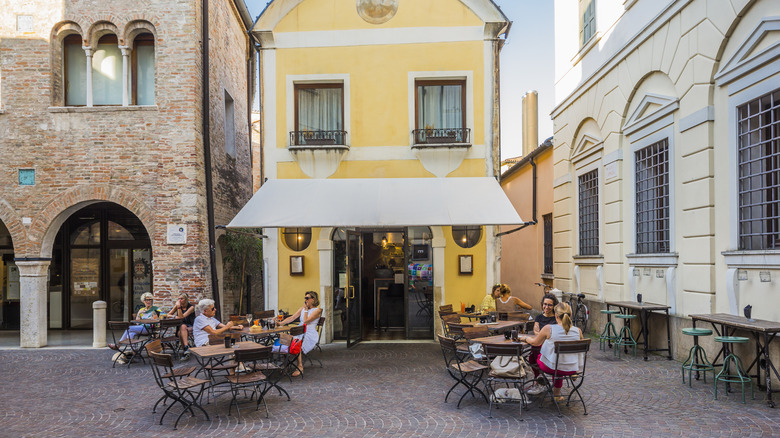
Italian restaurant culture is about more than just going out to grab a bite to eat. The food is certainly the most important aspect of the experience, but other elements are not to be dismissed out of hand. For instance, the pace is important, with Italians tending to take their time, including at lunch, where many office workers might go out and enjoy a prix-fix lunch menu with colleagues instead of shoving a sandwich down their throats at their desks. This is no joke: Back when I worked in offices in Italy, where I grew up, everyone that worked together would gather for lunch either at a restaurant or in a conference room to eat their meals brought from home, partaking in a leisurely dining experience as a group.
With all this fanfare comes a specific vocabulary, some of which has made its way into the American lexicon, and some of which still eludes us. At Italian restaurants, specific words appear at various stages of the meal, with things like cicchetti or aperitivo appearing around the beginning of an evening, al sangue somewhere in the middle, and caffe' corretto toward the end. Saying such words in the wrong context, or if they're not mentioned at all when the occasion merits, can elicit confused stares from wait staff, which is why we've put together a handy list of important terms that will help you order at an Italian restaurant.
Agriturismo
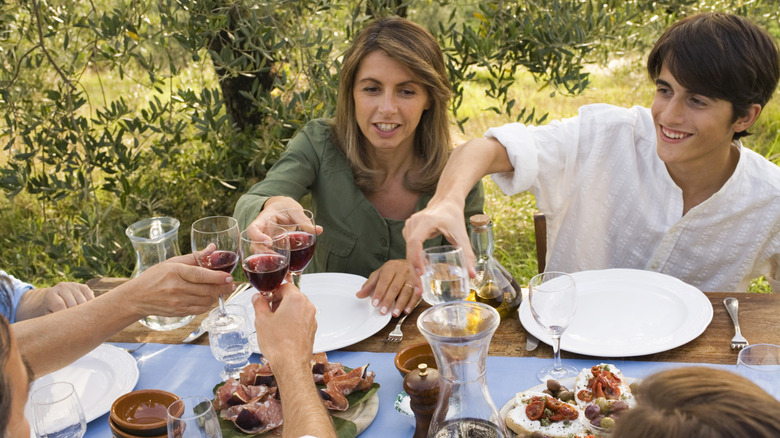
Less frequently than some of the other menu terms you'll see, agriturismo is a term that refers to a farm which has room for guests -– essentially what we in America might call a farmstay. And like a farmstay, more often than not, there will also be food at an agriturismo. This may take the form of a restaurant with regular opening hours or a restaurant that only serves food by appointment or for specific events.
The key, though, is that the food being served has been grown, gathered, on raised on the farm. For instance, at an agriturismo you might find sausages made on the premises from pigs raised on the farm. Or you might be able to savor grilled zucchini from the agriturismo's own garden. Most frequently, an agriturismo will focus on a specific product, such as olive oil which will then be used to prepare the food you are served. An agriturismo can also be a vineyard, where you will have the chance to sample wines made from the forefathers of the grapes dangling outside your window.
Trattoria
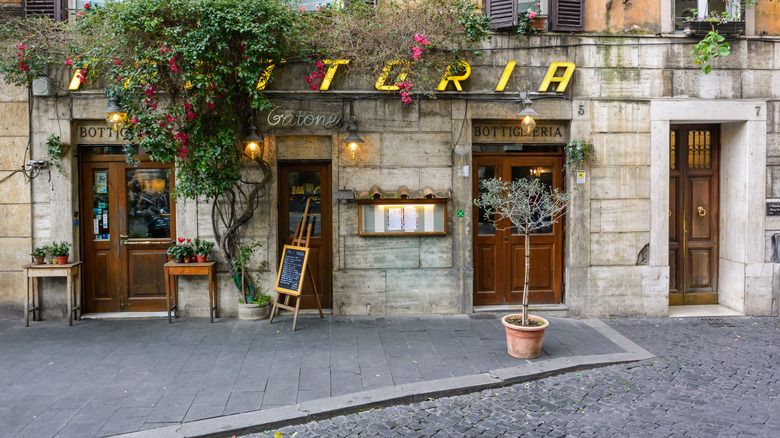
A trattoria is a type of restaurant in Italy that serves hyperlocal food, though typically, most restaurants in Italy tend to serve only food from their local region. The population has not been historically as mobile as it is in America, except perhaps for emigrants going to the New World or the U.K., which is why Italian regional food seems to travel more easily across the water than within the country.
Whatever the case, you will be sure to find the local food of whatever region you're in at the nearest trattoria. It's also likely to have a homey, family-friendly atmosphere, as many are family-run, and a menu packed with simple homemade offerings at reasonable prices for both lunch and dinner. Expect to find a more casual atmosphere than a typical restaurant, though the quality of the food can be just as excellent as any other type of establishment. Plus, even trattorie can be extremely popular, suggesting it's a good idea to make reservations if you find a particularly enticing one.
Al sangue
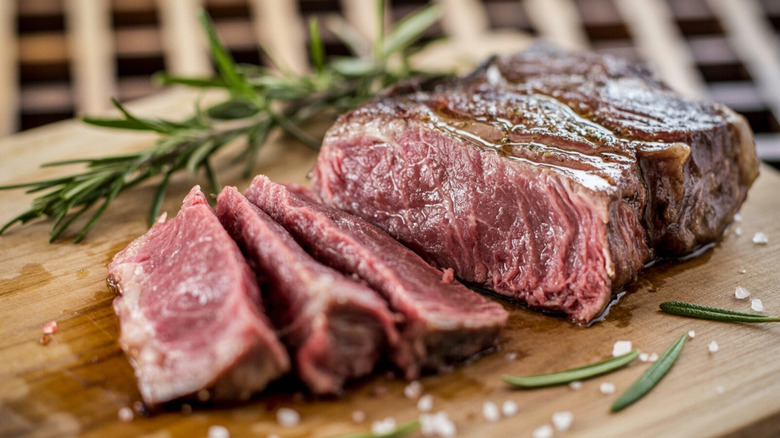
Many foodies and chefs will tell you that ordering a steak rare is the only way to go. Many of us at Tasting Table happen to agree with that assessment. But whatever your personal preference is, it's important to know how to say it in Italian so that you can order it at a restaurant (or steer clear of it, if you prefer your steaks well-done).
"Al sangue," meaning "with blood" is the very graphic but realistic term for a rare steak and blue rare steak (with the latter sometimes also being called cottura bleu). It denotes the pinkish reddish interior of a rare steak, and not actual blood, which is long gone from the meat by the time it makes it to your plate. Once you learn this term, you can use it to negotiate how well you want your steak done.
While the simple term "al sangue" means rare, you can also add qualifiers, asking for something that is more or less "al sangue." Alternatively, you can use the term "cottura media" for a medium-rare steak, or "ben cotto" for a well-done steak, though this might elicit the stink eye in Italy just as it does at fancy restaurants in America. Some things never change.
Cicchetti
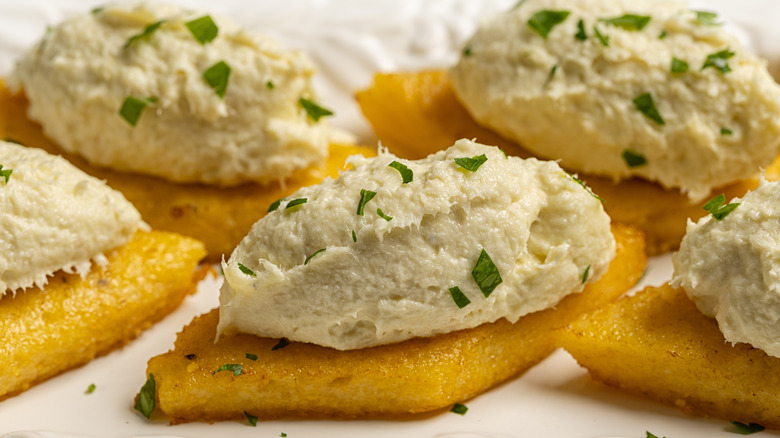
These dishes with a cutesy little name are small bites, like bocadillos or tapas. Like those, cicchetti have been proliferating in Italy in recent years, and it's not uncommon to find them on menus even in London or New York these days. Even so, everything has an origin story. In the case of cicchetti, it's important to remember that they have a rich history that evolved from the Provençal word "chiquet," meaning a small cup of wine, or more commonly, liquor. They traveled through the Italian region of Piedmont by way of the army, and landed in Venice, where the term eventually came to be known as food, rather than a beverage.
Once in Venice, cicchetti continued to evolve, sticking to the food element. Decades ago, common cicchetti would have involved nervetti (beef tendons) or tripe. Nowadays, they tend to cater more to modern palates, constituting, for instance, toasted bread or polenta with a variety of tasty toppings, like baccala' mantecato, a famous Venetian staple.
Aperitivo

This is a key term to know if you're ever invited out for a drink before typical Italian dinner time, which is about 8 p.m. If someone asks you out for an aperitivo anytime between 5 p.m. and 8 p.m., don't expect to have a meal (though snacks will most likely appear). Instead, the aperitivo is a time to blow off some steam after work, while also working up an appetite for dinner.
A range of different drinks and light cocktails are available for this mini-meal, but the most common include the Spritz cocktail made with Aperol or Campari, Prosecco, ice, and often an orange slice as a garnish. Another variation is made with white wine and soda water. Sometimes a simple glass of Prosecco can also be considered an acceptable aperitivo. But either way, you are not expected to drink on an empty stomach. In Italy, a drink is not to be had alone –- it is part of a meal. In this case, a snack, which can involve anything from a bowl of chips to a platter of small pizzas or focaccias. Enough to whet your appetite without filling you up.
Fritto misto
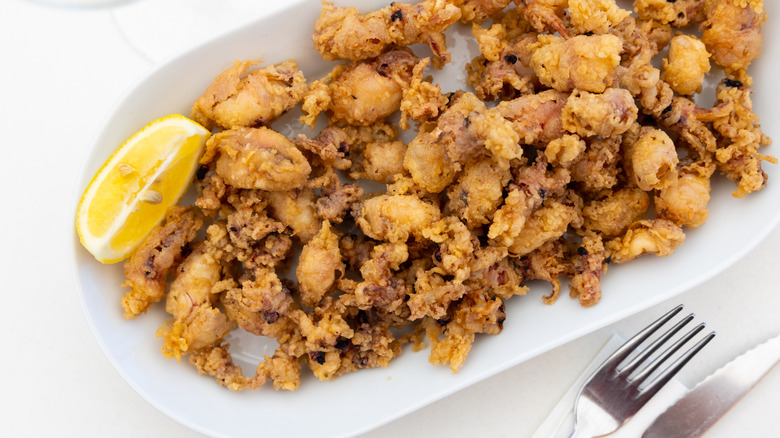
This literally means mixed fried food, but it most often comprises fish (usually a mix of mollusks, crustaceans, and small fish like anchovies), or fish combined with vegetables. That said, you might also come across the "fritto misto alla Piemontese," which is made with meat. If you see "fritto misto" without any qualifiers, expect shellfish, especially if you're by any of the coasts Italy is famous for.
The dish is not exclusive to any one region in Italy, like most Italian foods. Instead, it tends to be found all along the coasts, indeed, where fish is abundant. The frying can occur in batter, but the fish (or vegetable) is often just dipped in flour and then deep-fried. Like the vast majority of Italian dishes, simplicity reigns supreme, so you won't usually find much variation in this dish across the land. There is not a whole lot that can be done with just fish and flour, and that's precisely the point. As long as the ingredients are good, this dish is hard to beat.
Caffe' corretto

Caffe' correto term literally means "corrected coffee," where the "correcting" agent is invariably alcohol, as if there were something deeply wrong about coffee without it. A corrected coffee is a cup of espresso that contains a shot of something strong, like grappa, though liqueurs like brandy or sambuca are sometimes used.
Unlike in American coffee tradition, where people often drink the beverage early in the morning, even before breakfast, a caffe' corretto is to be consumed on a full stomach, after eating breakfast or after lunch, to minimize the effects of the alcohol -– this tipple is not about getting drunk. The tradition stems from 1950s northern Italy, when laborers who worked outside in low temperatures needed a little pick-me-up to better tolerate the freezing winter. Nowadays, the practice is not as common as it once was, but it remains widespread as a way to have a little extra fun when enjoying a coffee with friends.
Allo spiedo
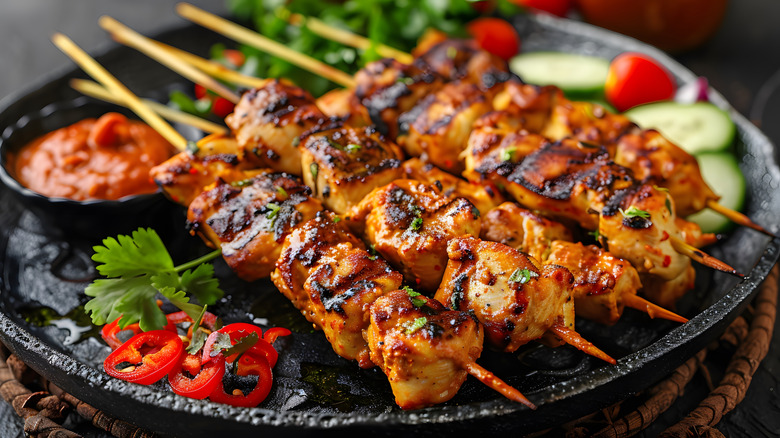
This refers to spit-roasted food, usually meat on a stick, much like shish kebab. It literally means "spit" or "skewer" and cannot be traced uniquely to Italy. That said, regional variations do exist, whereby each spiedo takes on the name of the region it comes from.
For example, there is a spiedo Veneto, from the northern region of Veneto, that must be cooked for at least five or six hours on an open fire. Meanwhile, the spiedo Bresciano, from the Lombardy region next door, must be cooked on embers. The Veneto spiedo uses lard where Brescia uses butter. If you move further south, the differences in styles become even more apparent. For example, in the southernmost region of Puglia, you may find the bombette, or little "bombs" (likely because of their shape) of meat stuffed with cheese and sometimes covered in bread crumbs before being skewered with a stick and cooked.
Alla griglia
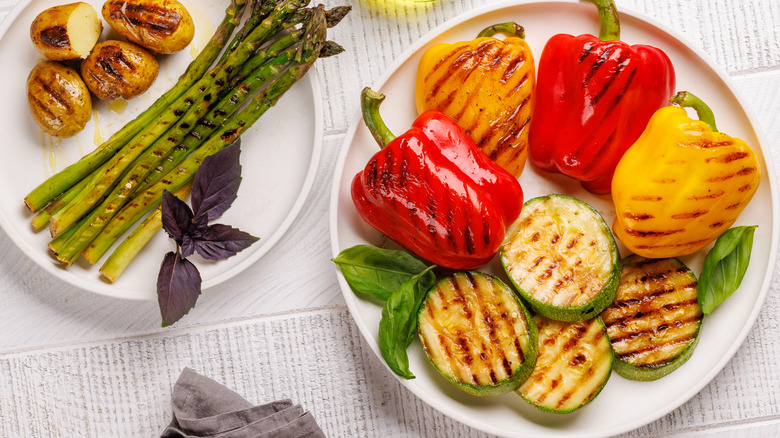
This phrase refers to foods cooked on the grill, or "griglia." You will often find this term in the meat or fish section, in the sides section, where it is typically used to refer to grilled vegetables, or as its own menu section, which might list a series of meat, fish, and vegetables cooked on the grill. While a grill is a grill is a grill, meaning there is no real regional variation at the grilling stage, there are differences across the country in which sauces are used to accompany the grilled foods. For example, in southern Italy, you might find the salmoriglio, a simple condiment made from olive oil, garlic, oregano, and lemon or vinegar). Elsewhere, you might find American-style barbecue sauces made with mustard, ketchup, or mayonnaise.
But ultimately, Italian grilled foods are all about simplicity, where no sauces are needed. Take the famous bistecca alla Fiorentina, for example. This is a large steak grileld over hot coals, salted after cooking, and served with nothing but olive oil and cracked pepper.
Alla griglia is not to be confused with "alla piastra," which is sometimes used interchangeably in English. In Italian, it actually refers to a griddle or flat top as opposed to the grates of a grill.
Al forno
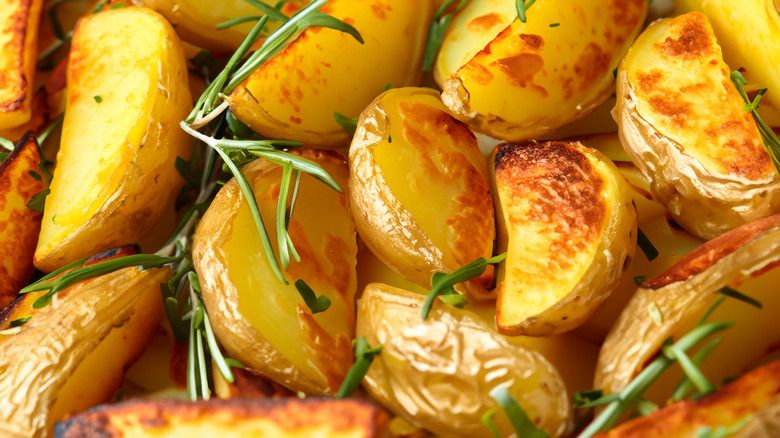
This term simply means baked. A range of menu items could be baked in the oven, including various meats and even pasta al forno, which is different from lasagna. But do beware of the false friend that is baked potatoes: "patate al forno" does not mean baked potatoes but roasted potatoes. That might have more to do with the slightly misleading nature of the English culinary terms: Only a native English speaker might know that a "baked" potato is cooked whole, but that to refer to cubed potatoes cooked in the oven, one must call them "roasted." In Italian, what we know as "baked potato" is called "patata in giacchetta," more akin to the British "jacket potato."
Also bear in mind that foods that are almost exclusively baked in the oven, like cakes or lasagna, won't come with this designation. In those instances, the fact of the "al forno" will be assumed, and any use of it would be redundant. One might bake a cake, but even in English, you won't find a restaurant menu that lists a "baked cake" in the dessert section, unless it is describing something very specific.
Coperto
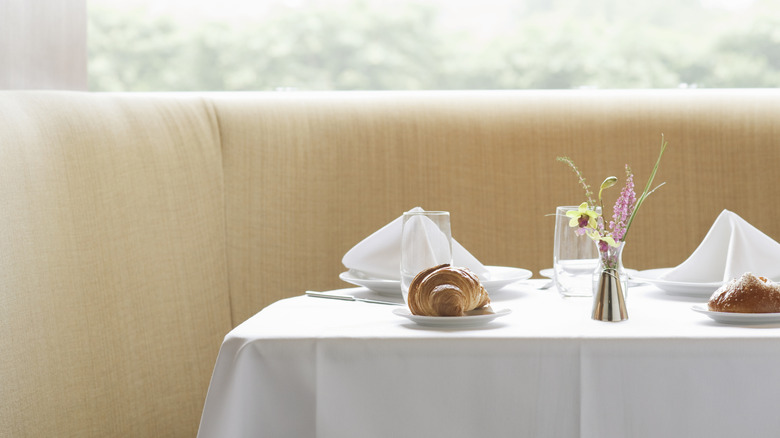
"Coperto" literally means cover, and in the case of a restaurant, it refers to everything that might cover a table: tablecloth, cutlery, salt and pepper, and sometimes bread. In America, the cost of most if not all, of these items appears to be folded into the overall bill you pay for your food. But in Italy, each diner is charged for them separately.
The practice goes back to the middle ages. Travelers who took shelter at inns along their path would have to pay a sort of cover charge to eat their own food on the premises. It seems that over time, this practice stuck, even though nowadays, diners don't bring their own food when going out to restaurants! Whatever the case, make sure the "coperto" is well advertised in the menu before you start to order your food. In theory, restaurants are not allowed to simply tack it onto the final bill without warning.