

This Aluminum Foil Trick Uses Wind And Light To Repel Pests In Your Vegetable Garden
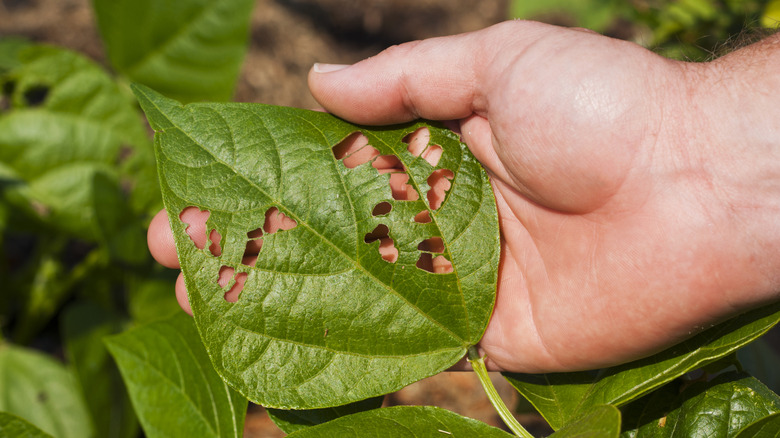
There are few things more frustrating to a gardener than putting in weeks of work to get your crops thriving, only for pests to come in and destroy them before harvest. Unfortunately, pests come with the territory, so you need to know how to remove or repel them before they start munching on your plants. Many gardeners try to avoid spraying edible plants with chemical pesticides and prefer to use natural pest control solutions instead, and one trick only requires a few scraps of aluminum foil.
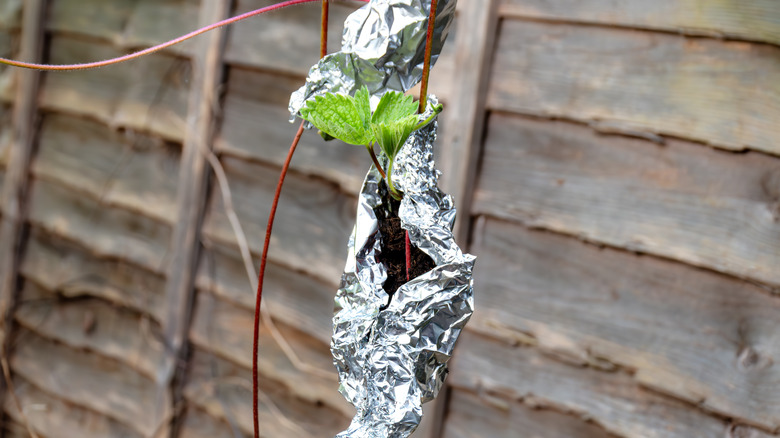
Simply tear the aluminum foil into strips and hang them around your vegetable patch. You can tie them to fences, trellises, plant supports, or even wrap them loosely around the stems of your crops. You can even attach the foil to stakes positioned around particularly vulnerable plants. Alternatively, roll the foil into small balls and use string to hang them near your veggies. This method isn't only effective against smaller pests, such as whiteflies and aphids, but it can also deter larger animals, like mice and birds. But how does it work?
Aluminum foil is reflective, and many pests become confused or disoriented by reflective surfaces, especially those that rely on vision to find food. The foil will also reflect sunlight, so when it's caught by the wind, it'll flash repeatedly and unpredictably. Some animals, particularly birds, perceive motion as danger, so they're less likely to hang around if they think there's a predator nearby. This approach won't repel every pest, and some may learn to adapt and ignore the foil, but it's a good trick to have up your sleeve as part of a broader pest management system.
More low-cost tricks to keep pests away from vegetables
While the aluminum foil hack can certainly help deter garden pests, it won't be enough on its own. Luckily, it's not the only cheap and simple pest control trick you can try using basic household objects.
For starters, it's always worth keeping a bottle of insecticidal soap spray in your shed or greenhouse. Just add a tablespoon of liquid castile soap to a liter of warm water and spray the leaves of your veggie plants to eliminate small, soft-bodied insects. There are also a number of hacks that are excellent for recycling trash. For example, if you've got a slug or snail problem, you can make a basic beer trap to draw them away from your precious crops — use a plastic take-out container, an old tin can, or even just bury the beer itself. And to defend your seedlings from slugs, why not cut the tops and bottoms off old plastic bottles to create a protective barrier around each plant?
To repel larger pests, you can try reusing old mesh produce bags as netting to protect your leafy greens, tomatoes, and berries from birds and bigger bugs. You can even set up a defensive perimeter with disposable plastic forks. Simply bury the forks prongs-up in the soil surrounding your vegetables, close enough together to impede sizeable pests like cats, rabbits, or squirrels. Pick white cutlery, and it will even act similarly to the aluminum foil, reflecting sunlight to confuse and scare unwanted visitors. Ultimately, the most effective approach to comprehensive pest control is a multi-faceted one, but it doesn't have to be expensive or reliant on harsh chemicals.