

Why Your Brisket Doesn't Taste Like A Restaurant's
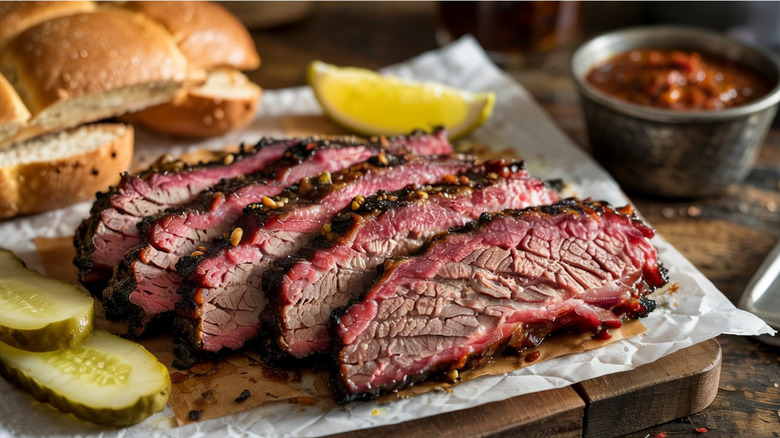
Brisket may be difficult to get right, but copying a restaurant version doesn't sound that difficult. The main challenge is managing the heat to get that perfect tender texture, which comes from smoking brisket long enough for the connective tissues and muscle fibers to break down, but at a low enough temperature to keep it from drying out. Beyond that a good brisket is a spice rub and smoke. Yet knowing the exact right temperature and time to smoke your brisket can still leave you short of what you get at your favorite barbecue restaurants. So we talked to Robbie Shoults, a celebrity chef, the third-generation owner of Bear Creek Smokehouse, and the owner of Marshall Mercantile and High Horse 1898, to ask why brisket made at home doesn't taste quite like the restaurant version.
Shoults says that despite knowing the right way to make a brisket, home setups make it harder to be consistent. "At home, you've got full control — but you're also dealing with more variables: your smoker, your fire management, your timing, and the cut of meat you picked out yourself." Even if you're careful, each one of those variables can change enough each time to make a meaningful difference in the result. "In a restaurant, brisket is usually cooked in larger smokers with steady, controlled heat, often by folks who are cooking it the same way day in and day out," he says. "That consistency makes a big difference."
Professional kitchens allow consistency and precision when smoking brisket
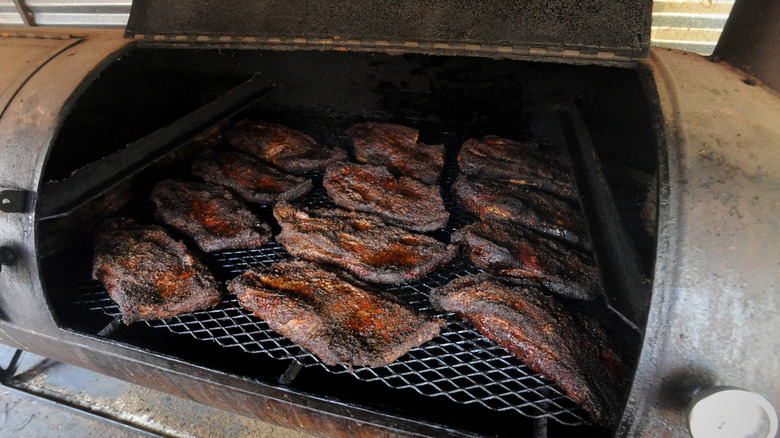
To get an idea just what kind of a difference professionals are working with, Shoults tells us that at his Bear Creek restaurant they run a 150-inch smoker. "You've got steady, even heat across a much larger cooking surface," he explains, "which helps brisket render more consistently and build a solid bark without the wild temperature swings you see on smaller home smokers." That level of control even extends to meat sources, as restaurants get a wider choice of hand-selected briskets, which they can cut to keep the size and fat consistent over time. You can't guarantee the same level of quality and reliability from a brisket you choose at the supermarket. "That combo — big, steady smoker like at Bear Creek and consistent beef — is a big reason restaurant brisket tends to taste better than at home."
And while you can learn everything there is about smoking the perfect brisket, don't underestimate how much a professional atmosphere helps standardize the work. "[In a restaurant,] they're also dialing in trim, seasoning, rest time, and holding methods in a way most home cooks just don't have the setup for," Shoults says. You may have your favorite brisket dry rub, but is it always prepared with the exact right ratio? Does your family and your life allow you to perfectly time out your brisket for 10-plus hours of smoke and rest? Pitmasters at barbecue restaurants certainly have skills, but they also have the infrastructure to do what you can't.