

How To Mix And Match Pellets So Smoked Brisket Tastes Exactly How You Want It
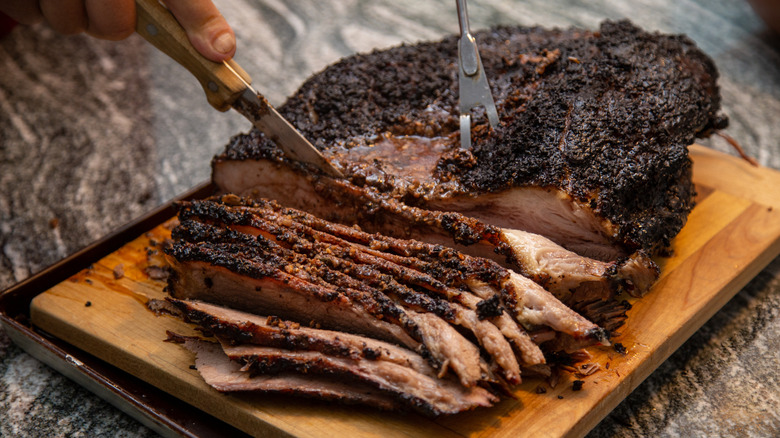
There are a lot of variables when it comes to smoking meat, and one that's often forgotten about is the type of pellet used. Those little nuggets of compressed sawdust not only carry heat, but they also impart a lot of flavor onto food. The process is similar to the aging of spirits in certain barrels — woods carry different aromas that impact taste and by changing the wood, you change the flavor profiles of your product. The great thing about this is that it allows for a lot of customization.
Tasting Table spoke to Robbie Shoults, celebrity chef and third-generation owner of Bear Creek Smokehouse and Marshall Mercantile and High Horse 1898, all about the best pellets for making smoked brisket. According to the expert, the key to achieving depth is combining different types. "A good mix of wood pellets doesn't just make one flat smoke flavor — it builds layers on that brisket," Shoults says. "Hickory or oak gives you that bold, beefy backbone, while pecan smooths it out with a touch of sweetness and a little color on the bark."
Applewood and cherrywood will add a mild fruity flavor, while mesquite is another option if you're hoping for something more robust with a strong, smoky taste. However, try not to get too crazy with your choices. "It's not about throwing everything in the smoker and hoping for the best; it's about balance," Shoults adds. "Get it right, and that smoke doesn't overpower the brisket, it brings it out."
Choose a neutral base for smoker pellets
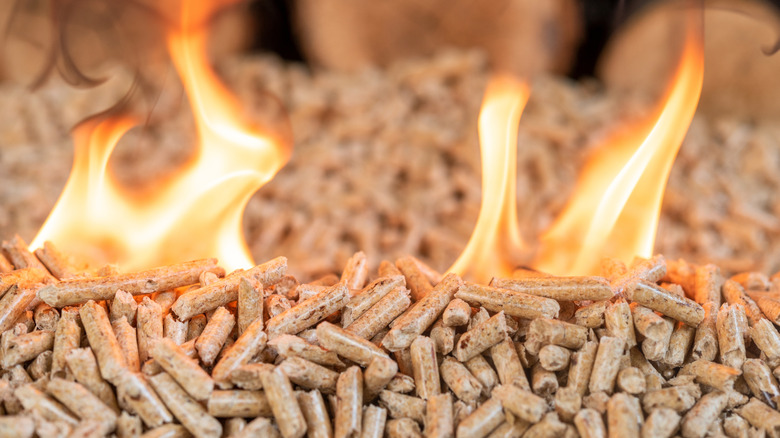
When grilling with wood pellets, Shoults likes to keep things "simple and balanced." The best way to do this is to pick one neutral base, like hickory or oak, and one sweeter layer. "Hickory or oak lays down that strong, classic smoke base that is especially good for brisket," the chef explains. "Then, you can bring in a fruit wood like cherry or apple to soften it up a touch and add a little natural sweetness."
Additionally, wood pellets also come in mild hardwoods like peach, orange, and pear, as well as maple and pecan. Shoults prefers pecan when working with something like hickory. "Pecan works really nicely with hickory because it takes that bold, heavy smoke and rounds it out without taking over," he adds. "It'll also give you a deeper color on the bark, which just makes that brisket look as good as it eats."
An equal mix of oak and cherry will also bring out the flavors of brisket, especially if you find the best cut. Purchase readymade blends if you like, but a handpicked mix typically imparts more flavor and color. The most important thing to remember is that you don't need to overcomplicate things. As Shoults concludes, "I like to remind pitmasters that, at the end of the day, it's all about balance, strong woods for bold flavor, and sweet woods for a smooth finish."