

You Can Salt French Fries Just Like McDonald's And Skip The Drive-Thru Altogether With One Step

There are two nonnegotiables when it comes to the perfect portion of fries: texture and salt. Fries ought to be crisp on the outside and soft and mushy on the inside. But it's the sodium hit, which flirts with the thin line between perfectly salted and over-salted that ensures that you keep reaching for just a few more fries until the box is empty. While you may get the occasional bag of soggy fries at McDonald's, they're almost always perfectly salted — and now you can recreate that same sodium hit at home using one simple trick.
From table and kosher to black and sea, the salt we consume comes in various shapes and crystal sizes. At home, it's likely you're using regular table salt or kosher salt for your fries. These are designed to be of a certain coarseness, so you don't end up over-salting dishes by mistake. McDonald's, on the other hand, uses extra-fine salt for their fries. You can either find these in stores under the label "popcorn fries" or make your own at home. Popcorn salt is characterized by its super-fine crystals that cling more readily to food.
The size of crystals also impacts flavor. The more easily salt dissolves on the surface of our tongue, the saltier and tastier our tongue believes the food is. Fine crystals dissolve more easily, giving McDonald's fries that distinctive sodium hit.
How to make (and use) popcorn salt
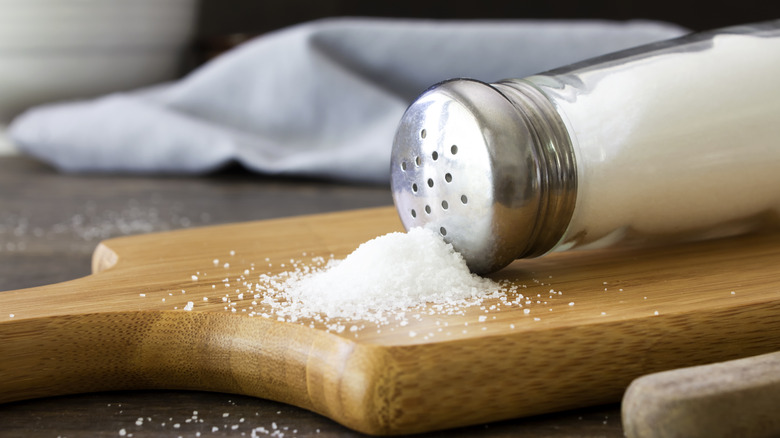
Even if you skip the McDonald's drive-thru, you can treat yourself to perfectly salted fries at home — McDonald's fries aren't what they used to be anyway. While you could level-up your fries by investing in the salt that makes movie theater popcorn so delicious, the fact is that popcorn salt is ridiculously easy to make at home. All you need to do is take some kosher salt or iodized table salt and blitz them in a blender or coffee grinder until the grains are ultra-fine.
When it comes to using popcorn salt, think beyond just sprinkling them on your homemade popcorn or fries. Your homemade popcorn salt can be used for anything from flavoring peanuts and almonds, or even simple roasted vegetables. In fact, some bakers prefer to use popcorn salt in their dishes since they dissolve more easily (and evenly) into their batter than regular iodized salt. This means your cakes and desserts will never have those annoying, over-salted pockets.
Of course, you will need to be a little careful when using this super-fine salt instead of regular salt. Packing density also factors in, as (due to the fine grains) more salt can be packed into the same volume, making it easy to add too much if you're someone who cooks by instinct. The rule of thumb, according to those online, is to use half the amount of popcorn salt than you would regular salt.