

What A Native Chef Wants You To Understand About Barbecue's Indigenous Origins
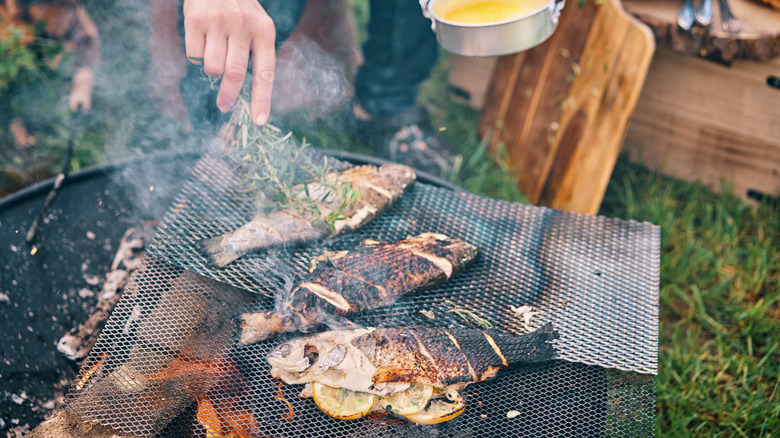
When you picture grilling and barbecue in the United States, you may conjure images of whole hogs slow-cooked for hours and hours, or massive beef ribs served alongside white bread and macaroni and cheese. While those foods are modern and commonplace in the nation now, most of the ingredients have only been available in the Americas for about 500 years and were adapted into Indigenous methods of smoking and barbecuing. In an exclusive interview before speaking on a panel in Los Angeles, Tasting Table spoke with Sean Sherman, a chef, author, activist, educator, and one of TIME's most influential people for 2023, about the deep Indigenous roots behind barbecue in the Americas.
Chef Sherman told Tasting Table that both Indigenous people and enslaved people forcibly brought over from Africa are to thank for modern barbecue. "All of that comes from a mix of African Indigenous peoples and American Indigenous peoples creating these food ways of slow smoking meats," Sherman said. "The process of slow cooking things over wood, over fire, and smoke, a lot of smoke ... you have, basically, a conglomeration of ... indigenous African and indigenous American food ways kind of coming together to create what we know as barbecue today," Sherman elaborated. Along with smoking meats, the history of pit-cooked barbecue also dates back thousands of years.
American barbecue techniques and ingredients have Indigenous roots
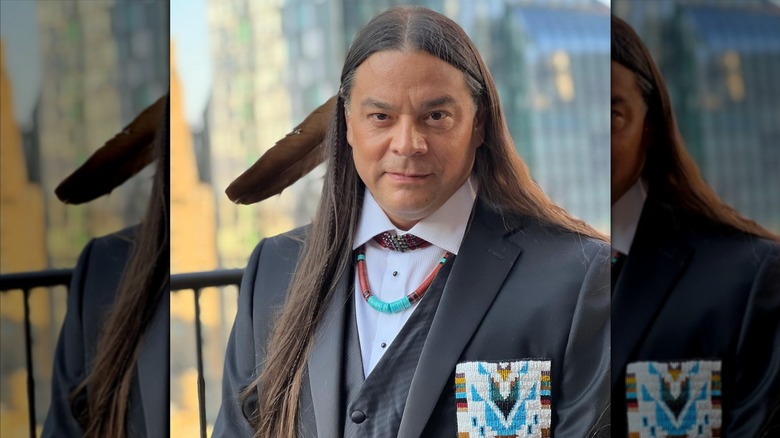
Explaining that people of color were typically denied access to prime cuts of meat, chef Sean Sherman shared that Indigenous people were forced to make do with "a lot of pieces that were kind of thought to be scraps or leftover pieces ... cooking all those things down," he said. Barbecue stems from the necessity of turning those less-than-desirable cuts of meat into something more palatable, usually through the process of smoking. "Indigenous peoples from all over the place just are used to not wasting things," noted Sherman. "Resourcefulness was built into their education," he said, noting that most Indigenous populations let nothing go to waste, including "all the different parts of the animal."
In terms of ingredients, commonplace foods were not available to Indigenous peoples in the Americas until pork, beef, sugar, wheat, and chicken were introduced through colonization. Before that, Native Americans relied on the land's natural abundance, cooking bison, fish, and wild game, while also using ingredients like corn, wild rice, beans, cedar, acorns, sumac, and maple. "That's why we see a lot of corn dishes and bean dishes and chilis and things like that that came from the Americas ... even some of the tomatoes," said Sherman. If you consider contemporary barbecue sauces made with tomatoes and side dishes like baked beans, it's easy to see how Native American ingredients are still used today in barbecuing — all of which "really can be drawn backwards to those particular roots," per Sherman.