

Should Minors Be Served Nonalcoholic Beer And Mocktails? The Answer Isn't That Simple
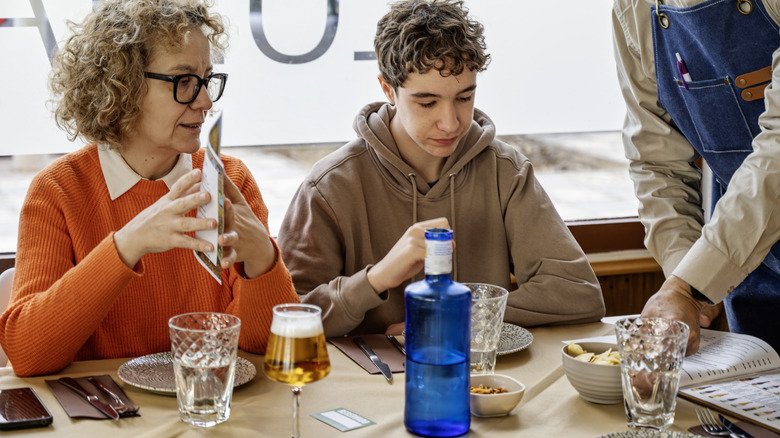
In the past decade or so, nonalcoholic beer and mocktails have become a booming business. Whether it's consumers choosing more health-conscious options, or younger generations, like Gen Z, choosing not to drink at all, NA drinks are on the rise. Heck, these days, it seems like the only age cohort that's still heavily boozing are the Boomers. But the outcome of all these nonalcoholic drinks going mainstream has created a gray area for parents, restaurants, and even policymakers when considering if minors should be allowed access to them. It's a hot topic that gained widespread attention after actress Kristen Bell shared that she sometimes lets her kids drink NA beer.
On paper, nonalcoholic drinks seem harmless enough, considering they must legally have less than 0.5% alcohol. According to a study published by JAMA Pediatrics, many parents believe that letting children try sips of alcohol is a protective practice, stating that when an adult beverage isn't strictly forbidden or non-negotiable, this can remove some of the mystique around it. On social media, parents unsurprisingly share widely different views on NA beer. One parent on Reddit suggested: "Let them try it they'll hate it anyway. I was drinking watered down wine at thanksgiving at 8 years old. If you don't make it taboo and keep it extremely reasonable I think they'll be better off."
On the other hand, some doctors have argued these "faux drinks" can normalize drinking culture too early. CNN reported that some experts believe we should have tighter restrictions on NA drinks, stating that "there's emerging evidence that nonalcoholic beverages may prime kids to switch to the real thing."
Parents and guardians are on both sides of the argument
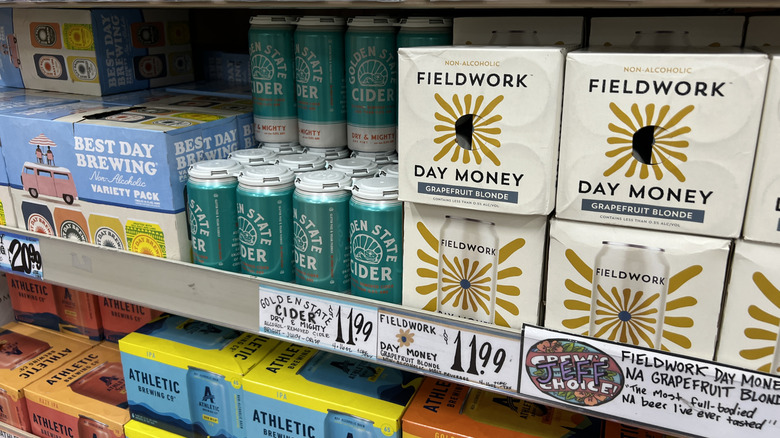
Even if there's no booze inside, these beverages basically mimic all the branding and rituals that come with a bibulous night out on the town. (It's also one reason why some people argue we should stop calling alcohol-free drinks "mocktails.") On the same Reddit forum, another parent argued against NA beer: "I wouldn't because [they] would see 'beer' as an ok thing to drink and might accidentally drink some of the real thing (like at a bbq, party, family gathering)."
There's also the question of marketing. Many of the most popular nonalcoholic beers come from major brands like Budweiser, Michelob, and Heineken. That overlap raises concerns about indirect marketing to teens, who could develop a taste for Budweiser Zero and seek out the real deal later on. In an interview with NPR, clinical psychologist and researcher Molly Bowdring warned: "That might lead to familiarity that then increases the likelihood of purchasing alcoholic products from that producer in the future."
Context certainly matters as well. A kid sipping a virgin Piña Colada at Chili's with family is far different than a teenager at a house party trying to emulate adult behavior. A willingness to have open conversations with your child can make all the difference. Handled thoughtfully, this could be considered as a low-stakes way to build awareness and demystify alcohol. Without context, it can risk reinforcing the very dynamics adults want to avoid. Like so many parental choices, it's a deeply personal one that only families and their kids can make.