

Betty Crocker's First-Ever Cake Mix Isn't The Flavor You'd Expect
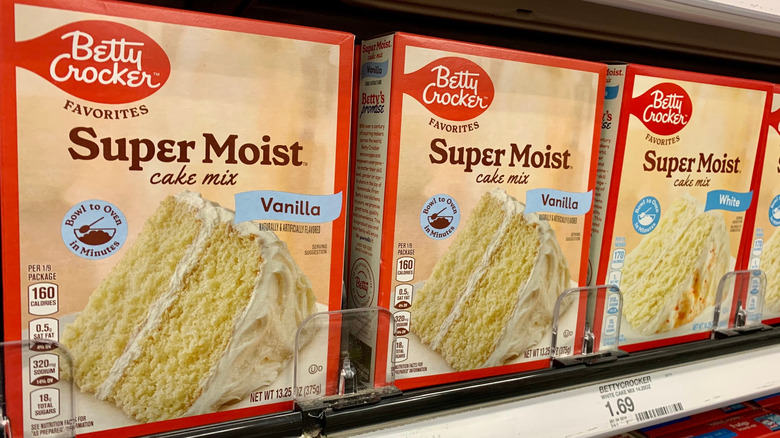
It's hard to imagine what home cooking and baking would be like today, had Betty Crocker never entered the picture. From the initial stroke of marketing genius that invented her in 1921, to an internationally sold line of cake, cookie, and brownie mixes, the "First Lady of Food" has been a fixture in our homes for over 100 years. But can you guess the flavor of the industry giant's very first cake mix? (Hint: you may find it to be a bit of a curve ball.) While you might expect the staples of boxed cake mixes yellow, chocolate, or vanilla — you'd be wrong. Neither is it lemon, carrot, or even spice. Nope, according to Betty Crocker's website, the very first flavor they released was none other than a Ginger Cake Mix.
This initial offering, introduced in 1947, followed by Devil's Food and "Party" cake mixes, may seem like an unlikely choice by today's standards, but Betty Crocker wasn't the first or only company to choose ginger as their cake mix's inaugural flavor.
In fact, it was a Pittsburgh-based molasses company (P. Duff and Sons) that is widely credited with inventing cake mixes in the early '30s and their first flavor was gingerbread, purportedly because they needed to use up excess molasses. While P. Duff and Sons made their decision to deal with a surplus on their hands, the reasons why several other of these companies chose gingerbread as their first-ever flavor release might surprise you as well.
Why ginger made the cut for cake mix
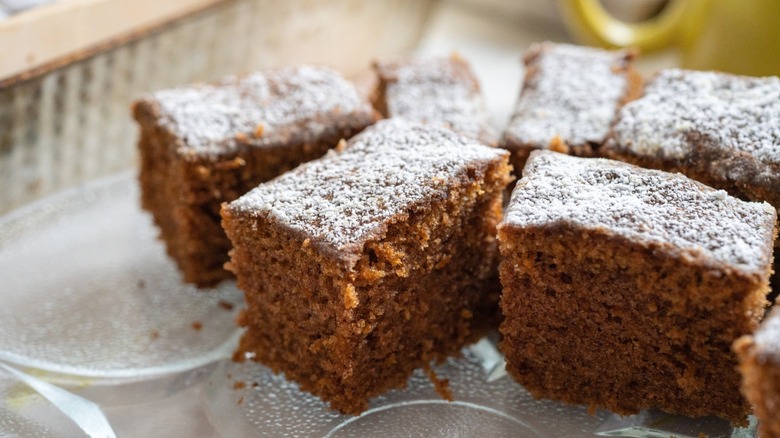
While gingerbread or ginger cake is often associated with winter and the winter holidays, gingerbread has a long history of being a comfort food (starting as far back as the Middle Ages — though that recipe bears little resemblance to ones made today). This is partly due to the inclusion of warming spices like ginger, cinnamon, allspice, and nutmeg that have long been rumored to aid in digestion.
Building on the nostalgia of the holidays and its reputation as a curative, gingerbread then became a prized wartime dessert. This was in part because cheaper molasses could replace (some or all) of its more expensive counterpart, granulated sugar (which was being rationed at the time), and the idea that ginger cake itself carried both physical and psychological comforts, wrapped up in its sweet and spicy flavors. Bearing in mind this historical context, you'll begin to see why this flavor choice wasn't so odd after all. Especially when you consider how big a role Betty Crocker played in encouraging food rationing, like in the 1943 pamphlet, "Your Share."
Fast forward to post-war kitchens, when baking mixes really started taking off, a 1950s ad with the headline "Man Beats Mother-In-Law," the "amateur" beat out the seasoned home baker using Betty Crocker's ginger cake mix because, "It had all the spicy richness of old-fashioned gingerbread ... all of the luscious lightness of cake." The mix is still available today, but under a new moniker now — Gingerbread Cake Mix.