

Should You Be Unplugging Your Oven When You're Not Using It?
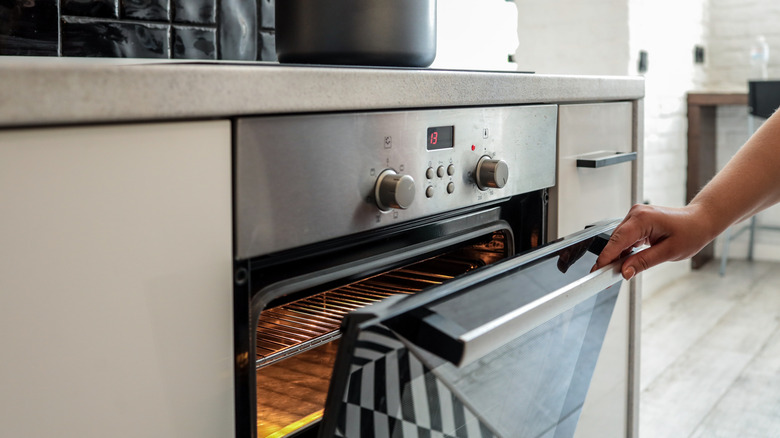
Many have a mental checklist that separates leaving home from moving forward with the day. For some, the stove and oven are often on the list, and it's not irrational. Ovens are one of the main appliances that can generate serious heat or flame — and human error can have real consequences. That low-level mental vigilance is how our brains keep us safe, but they also have a tendency to spiral into questions that seem reasonable but aren't actually helpful. Wondering if the oven should be unplugged entirely when it's not in use is one of those.
In most homes, the answer is no; the oven basically never needs to be unplugged. Among other large household appliances like fridges, dishwashers, and washing machines, ovens are not designed like small countertop appliances that you plug in and out as needed. Electric ovens are often connected through heavy-duty outlets or hardwired directly into the home electrical system, while gas ovens are tied into a fixed supply line. Ovens don't meaningfully draw power when they're off, and unplugging them isn't part of their intended, normal operation.
In fact, trying to regularly disconnect and reconnect an oven can do more harm than good, loosen cords and stress connections, and create instability in a system that's meant to stay put. The instinct to shut everything down safely is understandable, but ovens are built with that assumption in mind.
When it comes to ovens, off is off
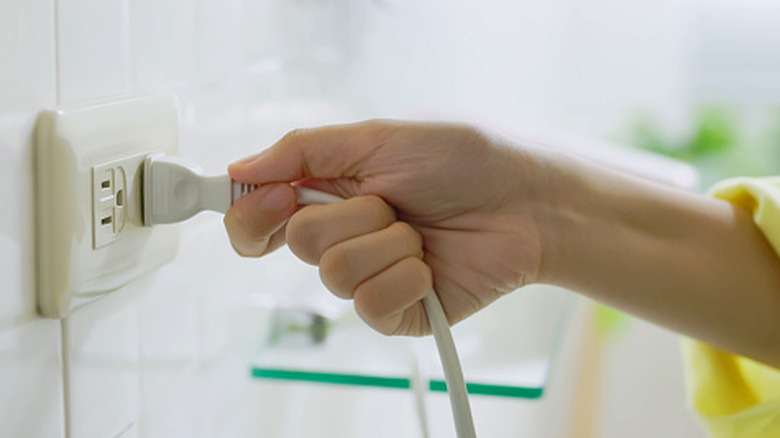
With ovens, safety is more about conscientious usage than connection. Making sure the controls are fully off, avoiding storing anything flammable inside the oven cavity, and keeping the interior clean so grease doesn't accumulate are all more impactful safety practices than disconnecting it from the wall. If you're going away for a long time and want some peace of mind, shutting off the gas supply or circuit breaker could be an appropriate step, and it better aligns with how those systems are designed to be managed.
Unplugging does have a place in the kitchen, just not when it comes to the oven. Smaller appliances like toasters, coffee makers, and electric kettles are designed to be plugged and unplugged regularly, and because of that, they can be more susceptible to faulty wiring and power surges. These potential fire hazards tend to wear down over time, and they draw small amounts of standby power.
If you feel the urge to unplug your kitchen appliances, go for the small ones, especially if you're leaving the house for an extended period of time or are preparing for an impending storm. It's also good to review what kitchen appliances should never be plugged into power strips, and maybe consider never plugging any of them into extension cords. There's a realistic limit to how much you can eliminate risk in your home, and, at a certain point, the effort doesn't influence the outcome. Ovens feel dangerous because they can be, but they're built to sit safely while not in use.