

Stop Throwing Away Plastic Milk Jugs And Use Them In Your Garden
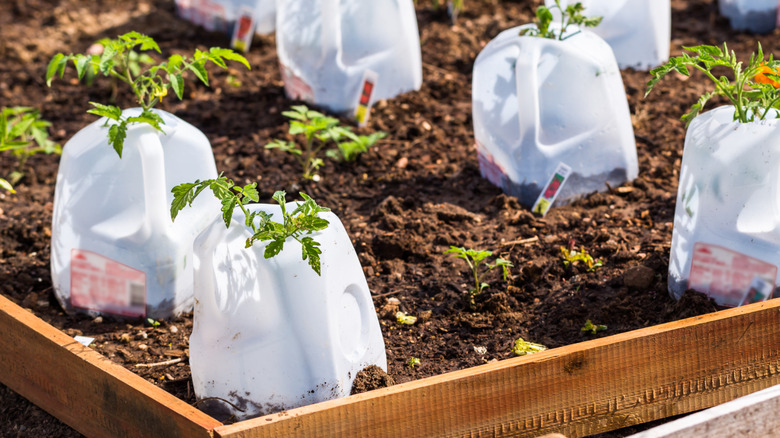
Big plastic containers like milk jugs come in and out of our households perpetually, and when you take a second to step outside the automatic cycle of purchasing and tossing, it feels frustrating to be caught in a cycle of compulsory waste production. Big plastic beverage and food containers can be repurposed in a number of ways, and an easy one is in the garden. When you visit a garden shop, you'll notice two tiers of planters: the ones made of ceramic, terracotta and metal, and then the rest of the more affordable options, which are all made of the same material as the milk jugs: plastic.
We're more accustomed to seeing egg cartons used for gardening, but the milk jugs are surprisingly well-suited to this reuse. They're lightweight and waterproof, and easy to cut through and amend to whatever shape you need. They often have a built-in handle, which makes them easy to move around. The size is also perfect for small plants like herbs and starter seedlings, and any plant whose roots don't mind a shallower soil. If you're a houseplant person, they can be perfect for giving away all the rooted cuttings that inevitably accumulate. If you're working with limited outdoor space, a few repurposed containers can cover a lot of ground.
That being said, it's literally meant to be disposable, so inherently, plastic has limits. Most milk jugs are made from high-density polyethylene, which holds up well in the short term, but will start to degrade with prolonged exposure to the sun and weather. Over time, that breakdown will contribute microplastics to the soil the jugs are holding. They're good for a single growing season, or short-term planting needs, like for seed starts.
One man's trash is another's DIY gardening project
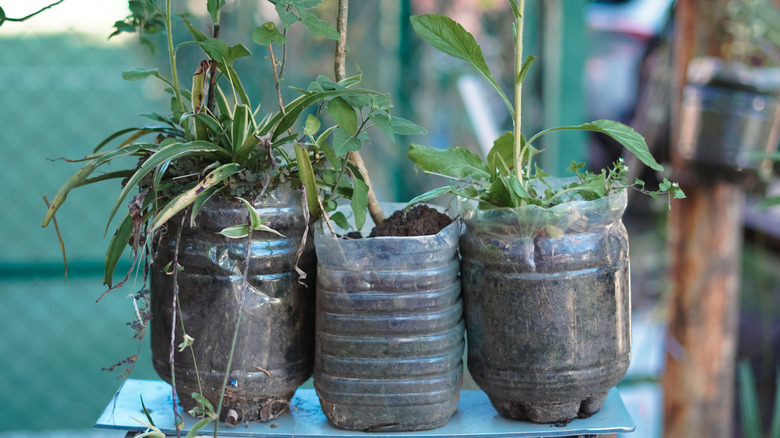
The process is fairly easy, and doesn't require a lot of expertise or precision. Start by rinsing the jug thoroughly, then cut the top off below the narrow neck. How far down you make that cut will affect how deeply your soil will measure, so for a little seed start, you can make a fairly shallow container, but if you want to keep something growing in it all season, make the cut higher up to keep the planter larger. Poke a few holes in the bottom for drainage, then fill it with a potting mix, and plant as you would any other container.
You can adjust the shape depending on what you need and want. Leaving the handle intact turns it into an easy hanging planter. Cutting the jug-top horizontally, then taping it back over the filled base turns it into a tiny greenhouse makes a perfect, nurturing ecosystem for plant babies, by trapping warmth and moisture for seedlings. If you cut a fist-sized hole in each side, but leave the lid and handles on, you can use the jug as a hanging bird feeder — and if that sounds inspiring, there are other common kitchen items you can DIY into charming bird feeders.
There are planters everywhere for those with eyes to see. Empty plastic water bottles and takeout containers and cheese ball tubs, the list of perfectly reusable plastic containers constantly moving through our kitchens truly goes on and on. Not every container needs a second life, but it's worth pausing to consider the potential before you toss.