

The Water Bottle Buying Mistake You're Probably Making
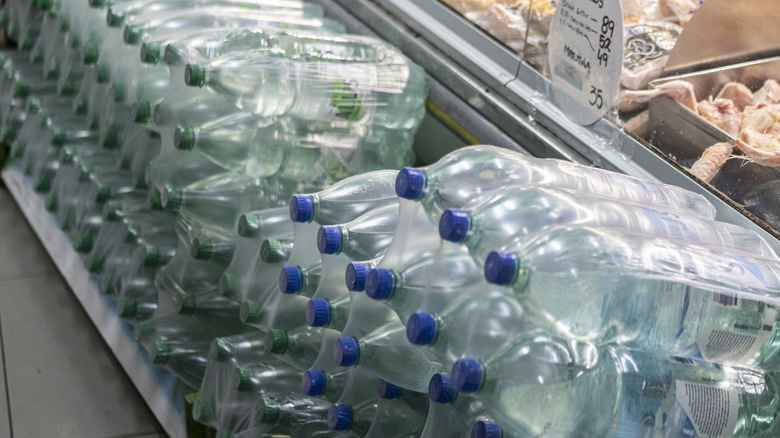
Sure, we can get water straight from the tap, but sometimes — when we're out and about — we need a quick drink. And if you've ever browsed a grocery store's water aisle, you've probably noticed something odd: water isn't always just water. It's instead "spring-bottled water," "mineral water," or "artisan water" that came from seemingly special wells, depending on what brand you picked. These phrases are carefully chosen to guide you toward picking up a $2 bottle of filtered tap water, while feeling like you're making a good choice.
Over the last few decades, companies like Coca-Cola and Nestlé have been hard at work building a myth: that bottled water, dressed in labels beautifully depicted with flowing glaciers and pristine streams, is better than what you'd get out of a tap. Take PepsiCo's Aquafina — they have fancy ads touting its pureness and "mouth-watering" flavor — but, according to the company's website, Aquafina water is taken from "public water sources" and purified. It's basically tap water with extra steps and a price tag tacked on.
Most major brands like Dasani and Pure Life are exactly like that, as well. So the next time you're really thirsty and need to pick up a water bottle, just pick the cheapest one or pick from Tasting Table's ranking of bottled water brands.
What about the artisanal and extra-fancy mineral water?
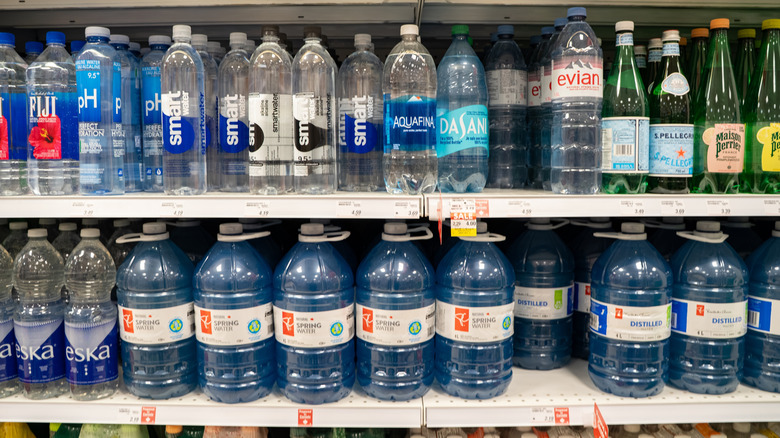
Brands like Evian or Fiji sell a bottle for $3 to $4. But, is Evian truly "natural spring water" and Fiji "natural artesian water" as they say on the labels? As it turns out, yes. According to Evian, the water is sourced from the Cachat Spring in the commune of Évian-les-Bains, France. Sounds great, right? One problem with this: researchers found that despite Evian's marketing, the water has remarkably low mineralization levels, according to the Journal of General Internal Medicine. Basically, you paid extra for minerals that aren't there.
As for Fiji water, it's also true: the water is extracted from an artesian aquifer in Fiji, bottled, then shipped worldwide according to their website. The company proudly claims that they have "Earth's finest water," while also saying how the water is "free from human contact" until the moment you twist the cap and take a swirl. It should be worth the $3 to get all that — until you learn of the Cleveland debacle. The City of Cleveland once tested Fiji water and compared it with the quality of its tap water. It sparked a massive controversy at the time when it was found that, in every liter of Fiji water, there were 6.31 micrograms of arsenic, while Cleveland's tap water had none, according to the Washington Post.
So, the moral of the story is that, outside of picking the cheap water if you ever have to, it's straight up better to just buy yourself a proper water bottle and fill up at home in the kitchen. You'll get better water and avoid having to pay the exorbitant 2,000% markup that all companies charge for their would-be-free-otherwise water.