

Turn Used Coffee Pods Into Seed Starters For Your Garden
We may receive a commission on purchases made from links.
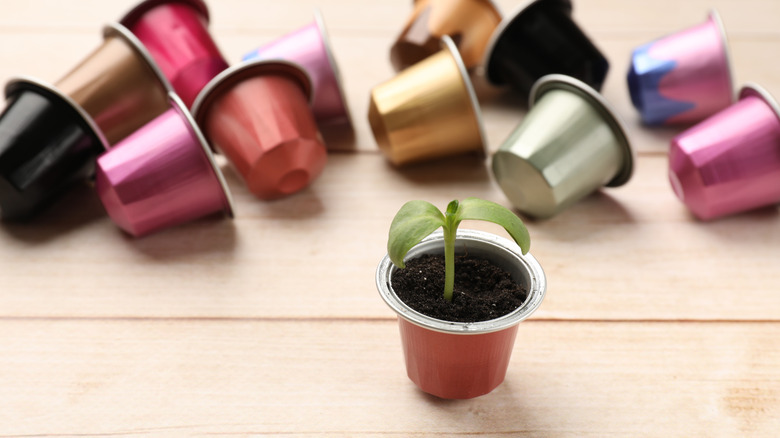
Coffee pods are one of the most convenient ways to get your morning caffeine hit, but that convenience comes at a cost. Whether you opt for a classic Keurig or an espresso-style machine like Nespresso, for every coffee you make, you're left with an empty capsule. While some coffee pods can be recycled, transforming them into seed starters is an even better way to reuse and save them from landfill.
Leftover coffee capsules make the perfect container to germinate seeds or root plant cuttings. To prepare them, you just need to remove the foil top and empty out the coffee grounds — which you can save to use as fertilizer or to upgrade your compost pile. If your coffee pod has a paper filter, this can be removed and added to your compost, too. The pod should already have a drainage hole where it was pierced by the coffee machine, but check that water will flow through it and enlarge the opening with a skewer if needed.
Setting the pods in a tray (like an old takeout container) will provide more stability and make them easier to water without creating a mess. This also makes it easier to move them to different spots in the house or yard, if you're trying to catch the sun. Using a tray is especially necessary if you're using Nespresso pods as they have beveled edges, compared to the flat base of K-Cups.
Growing and transplanting seedlings
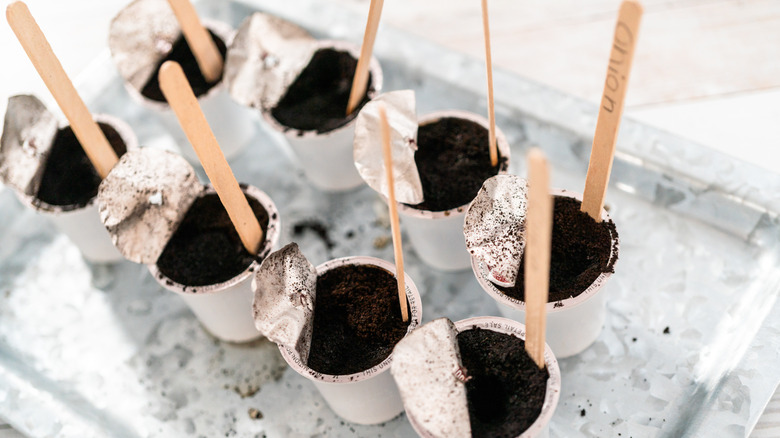
Now that you have your coffee pods empty and assembled, it's time to get growing. For the best results, fill the capsules with a potting mix that's designed for seedlings, such as this Espoma Organic Seed Starter. Poke a hole about ¼-inch deep into the soil and add the seed, covering with more potting mix. Don't forget to label the pods with a sharpie or a popsicle stick, as those new seedlings are all going to look pretty similar.
The seeds need to be kept moist but not wet, so regular misting with a spray bottle can be better than pouring water directly over the soil in such tiny containers. If your pods are in a tray, you can also do what's known as bottom watering — adding water to the tray, rather than the pods, where it can be absorbed upwards into the soil. For a mini greenhouse effect, you can cover the whole thing with a larger plastic container. Otherwise, if you're serious about indoor gardening, don't miss out on investing in a glass cloche.
Unlike when using egg cartons as seed starters, which can break down in the soil, you'll need to transplant the seedlings into the garden before they outgrow the coffee pods. On the plus side, this means that you can reuse the pods for another batch of seed germination. To remove the seedlings, gently squeeze the base of the coffee pod so it will loosen the soil enough to come out easily.