

Don't Toss Eggshells — They Could Be A Secret Weapon Against Garden Pests
We may receive a commission on purchases made from links.
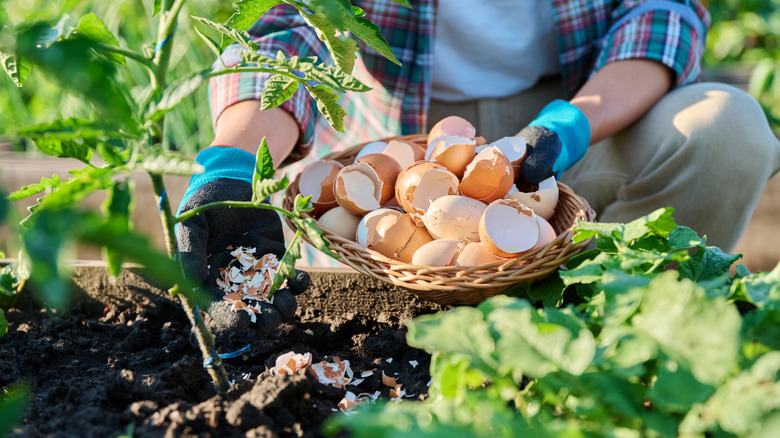
Gardening is fun and relaxing. That is, until you find your precious seedlings have been devoured by slugs overnight. That's when you enter problem-solving mode and find that one common trick to keep pests away is by placing eggshells around the plants. We spoke with Lisa Steele, a fifth-generation chicken-keeper, master gardener, and the author of "In Season," to find out if the hack really works.
"There are mixed opinions about using crushed eggshells around the base of plants to deter slugs," Steele says. "While some say that the sharp edges create a barrier that the slugs are hesitant to cross, others say the slugs are undeterred." So, it's not entirely a foolproof method, but you may find some luck with it. "If you want to try using eggshells, don't grind them into powder or crush them into small pieces," Steele explains. "Instead, leave them as fairly large shards and stick them upright in circles around the plant bases." This way, the shells can act as a sharp-edged fence keeping your plants safe.
Steele does share with us a better alternative to the eggshells. "A cup of beer set in the garden is a far better way to get rid of slugs," she says. "They can't resist a nice drink of beer. I've caught tons of slugs and snails that way." You can banish garden slugs with a cheap and easy beer trap, plus you can clean the traps once they fill up by emptying them straight into the compost.
Eggshells can serve the garden in more ways than one
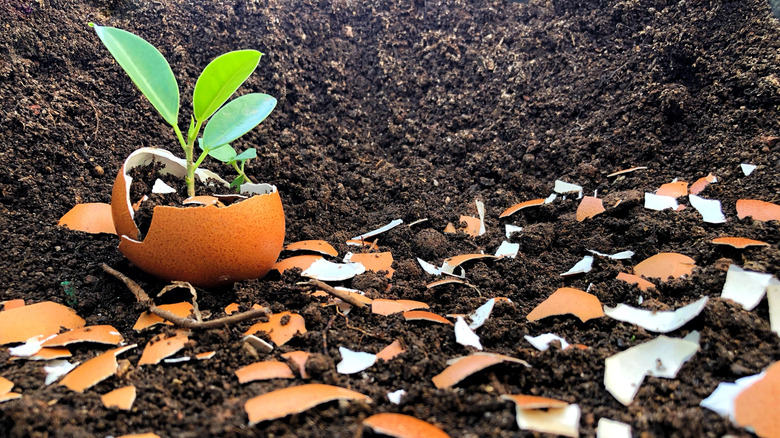
Pest control is not the only reason to stop throwing out your eggshells. "I like to plant seedlings in eggshells," Steele says. "After cracking the egg in half, I remove the membrane, and rinse the shell well under hot running water to remove any bacteria on it. Then I poke a small drainage hole in the bottom of each eggshell half and set the halves in a cardboard egg carton." You can use the egg cartons as seed starters, too.
"Once the seeds have sprouted," Steele continues, "I crush the shell a bit with my fingers to allow the roots of the plant to get out, then plant the whole thing in the ground, shell and all. The decomposing shell will add calcium to the soil." If you're only adding the shells with the purpose of soil enrichment, Steele warns not to skip the process of cleaning them out, exactly as is described above.
Take what's left of the shells, grind them into fairly small pieces before mixing them "into your potting soil or garden soil to provide calcium-loving plants like tomatoes, eggplant, peppers, leafy greens, and root vegetables, etc. [with] an added boost of calcium." Calcium can build a plant's resilience to external factors, which include pests and diseases. Steele also notes that it can prevent blossom end rot. Eggshells for the win!