

Think Twice Before Setting Your Slow Cooker On High. Here's Why
We may receive a commission on purchases made from links.
Slow cookers have somehow managed to stay completely relevant in a constantly evolving kitchen landscape. Want to eat healthy? Slow cooking is the answer. Busy schedule with no time to cook? Put everything in your Crock-pot and forget about it for eight hours. Tight budget? Buy cheaper meats and let your slow cooker work its magic. The slow cooker is the no-brainer solution to multiple meal problems. The only time you need to think twice is before setting your slow cooker on high heat — and that's only because using high heat misses the whole point of slow cooking.
We spoke to slow cooker expert Clare Andrews author of "The Ultimate Slow Cooker Cookbook," about best practices, and avoiding the high setting was one of the things she mentioned. "You can totally use the high setting on a slow cooker, but it's one of those things that kind of defeats the purpose if you're not careful," Andrews told Tasting Table in an exclusive interview. "The whole idea behind slow cooking is low, gentle heat over time. That's what breaks down tougher cuts of meat, develops flavor properly, and gives you that "fall-apart" texture."
According to Andrews, there's only so much you can rush the slow cooking process, which is what anyone turning the knob to high is usually trying to do. "It's not that cooking on high ruins everything, but it does change how food cooks," she said.
Here's what happens when you turn up the heat
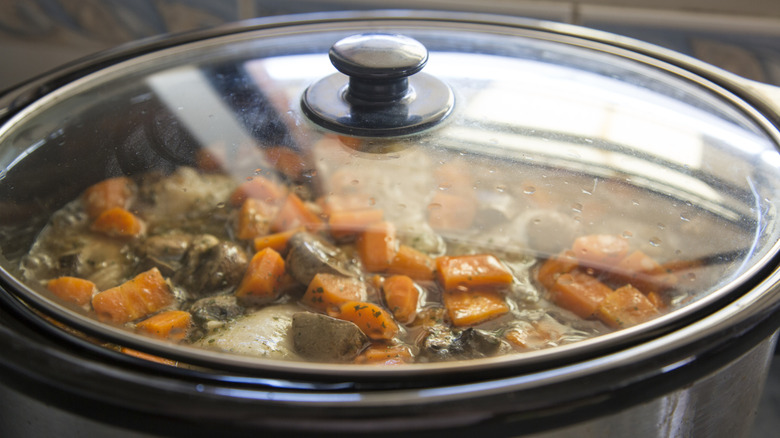
Cooking low and slow helps break down the connective tissues on tougher cuts of meat, gently and over an extended period of time. While it might seem like switching to high heat should logically just hasten the process, what happens instead is that you lose the tenderness and flavor complexity altogether. "You're more likely to end up with meat that's a bit firmer, sauces that haven't fully developed, or dishes that feel more like they've been simmered than slow-cooked," Andrews said. "So yes, in a way, using the high setting can negate the whole point of slow cooking, especially for recipes that rely on time to do the heavy lifting."
This is especially relevant when it comes to tough cuts of meat like a beef brisket or a pork shoulder. "These need hours on low heat to properly break down and become tender. Rush them, and you'll notice the difference straight away." Incidentally, low and high can mean different things in different slow cookers, with the high setting anywhere between 215 degrees Fahrenheit and 300 degrees Fahrenheit depending on what brand you're using. If all of this is making you want to run experiments, there's no better place to start than the best slow cooker pulled pork you'll ever eat.
This all begs the question: Why do they even have the high-heat setting on slow cookers? Because, as Andrews points out, not everything needs to cook low and slow. "The high setting does have its place. It works well for things that don't need long cooking times anyway, like soups [and] stews with already tender ingredients," she said.