

The Major Differences Between McDonald's And In-N-Out's Beef
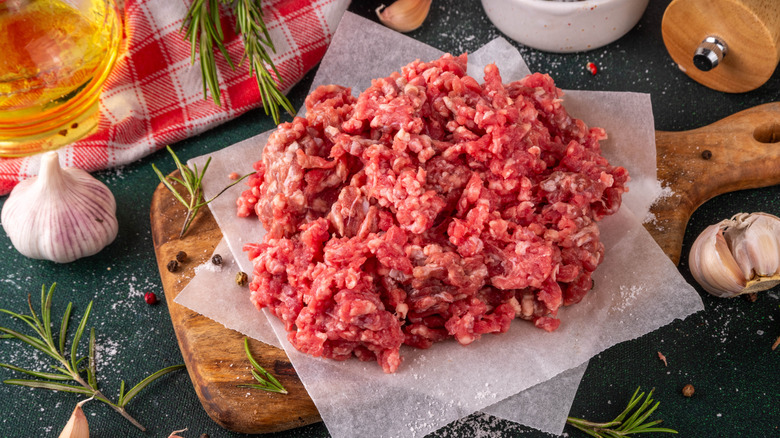
For two chains that produce such similar products, there is a major difference in the image most have of the beef sold at McDonald's and In-N-Out Burger. McDonald's is known as an international corporate chain, while In-N-Out is the beloved, family-owned regional staple. However, despite public perception, the difference in the kind of beef both chains use isn't that huge. In reality, it comes down to how it's handled rather than how it's produced.
It's important to note that both chains use 100% real ground beef with no fillers, additives, or preservatives. Over the years, both In-N-Out and McDonald's have also made attempts to reduce the use of antibiotics in their beef. However, as of 2026, McDonald's has not completely eliminated them, nor has In-N-Out been completely transparent about its progress. As for the beef itself, In-N-Out touts its use of 100% ground chuck, while McDonald's uses a mix of lean and fatty cuts of beef ground from the chuck and round, as well as sirloin.
Of course, McDonald's lower quality reputation was not entirely undeserved. The chain used to supplement its ground beef with vague "beef trimmings," but it ended that practice in 2011 as part of an ongoing effort to improve the reputation of its food. Meanwhile, In-N-Out has been committed to 100% real ground beef patties from the very beginning. That commitment to the highest quality extends to the biggest difference between In-N-Out and McDonalds, as the former is famous for only using fresh, never frozen beef. McDonald's, instead, uses flash-frozen beef patties, with the exception of the Quarter Pounder, which is made fresh to order.
In-N-Out exercises more direct control over its beef production than McDonald's
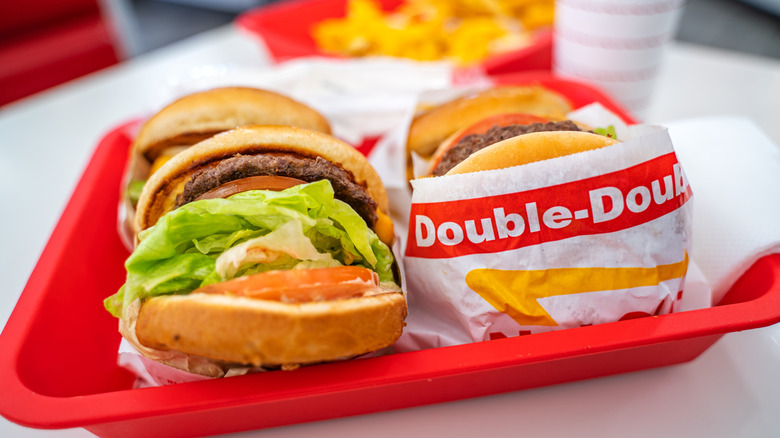
The other big difference between In-N-Out and McDonald's is the oversight that In-N-Out has over the production of burger patties. McDonald's has a famously complex supply chain to meet its massive worldwide beef demands. In the U.S., McDonald's two primary beef suppliers are Lopez Foods and Keystone Foods, but suppliers can sometimes act as intermediaries for smaller producers. McDonald's also gets its frozen patties directly from suppliers.
In-N-Out, however, is strict about overseeing its own production chain. Its beef comes from suppliers, just like McDonald's, with Harris Ranch in California being its major source. But once it has the beef, In-N-Out makes its patties in house, including deboning and grinding, at three major production facilities in California and Texas. In fact, one of the chain's major guiding philosophies is that any new In-N-Out locations must be within a day's drive of any processing facility to ensure that the beef is as fresh as possible when it's cooked. This is a huge part of the reason why In-N-Out has been so slow to expand locations compared to other chains.
While both McDonald's and In-N-Out source similar kinds of beef from large-scale industrial producers, In-N-Out is more committed to doing everything in-house to ensure that everything is fresh and meeting the company's high standards. So, if you think there is a real quality difference between the two, know it comes more from the work In-N-Out puts in than the "realness" of the beef itself.