

The Easiest Way To Thaw Frozen Dinner Rolls Faster Without Ruining The Texture
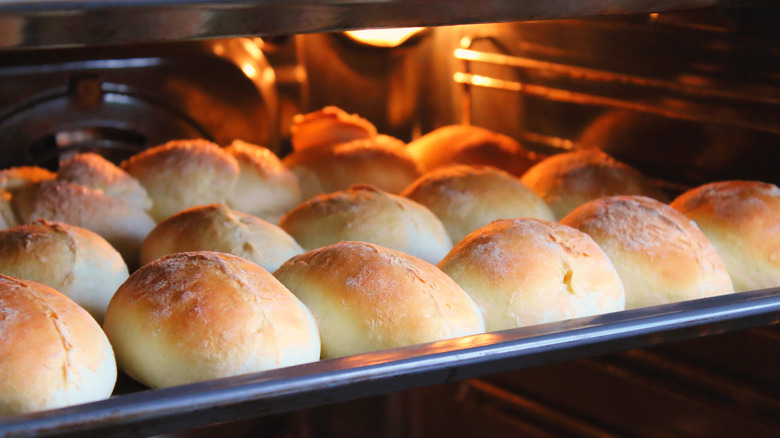
Freezing bread is one of the best ways to keep it fresh for long periods of time. If you're hoping to stockpile some delicious dinner rolls, you can keep them in the freezer for up to three months at a time in a sealed plastic bag. But what happens when you finally want to eat them? You'll have to let them thaw, which, if done improperly, can ruin their light, fluffy texture. The solution: Letting bread thaw in the oven using just the oven light.
Yes, you read that right. In the same way you can proof bread in the oven with just the light, you can also thaw fully cooked frozen bread. Simply turn the oven light on, which naturally heats the oven up to 100 degrees Fahrenheit, and place the rolls on a baking sheet to sit until soft. This is the ideal temperature for thawing bread without overheating it, as well as proofing dough, which needs a temperature of at least 75 degrees Fahrenheit for yeast to rise.
Home bakers have found this method works well in the wintertime, too, especially if you need to proof dough at room temperature. Dough needs warmth to allow yeast to absorb starch and create pockets of air, and can't do so in temperatures under 70 degrees Fahrenheit. But by placing it under the oven light and covering it with a damp towel to proof (while being sure it is fully damp and won't present a fire risk), you'll have puffy, risen dough in no time.
Why this method works so well
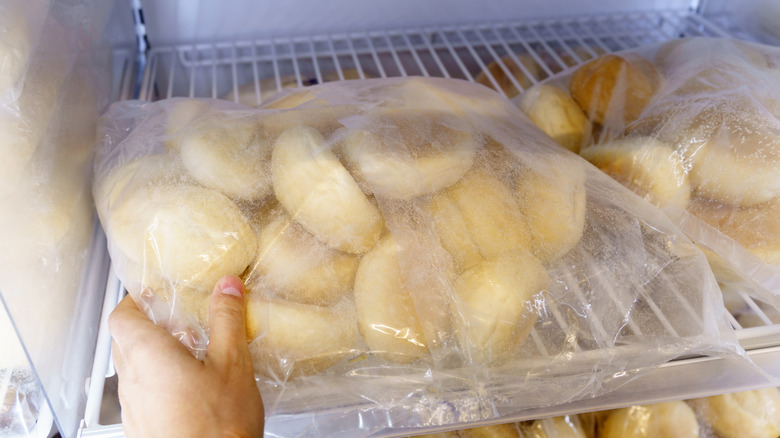
Ultimately, the oven light method will turn frozen dinner rolls into soft, pillowy vessels for your favorite butter. Thawing fully cooked rolls this way keeps them from overcooking and allows them to develop a soft interior and crackly, hard exterior when baked. Proofing frozen dough this way also helps it rise more effectively, since yeast goes dormant in the cold. For easier prep, you can proof bread dough in the microwave. Just pop a tray of hot water under the bowl filled with dough and heat until it's risen. Different concept, same delicious result.
Of course, bakers may occasionally heat the oven to about 200 degrees Fahrenheit and then turn it off to help frozen bread thaw or dough proof faster. But this can cause it to rise too quickly, kill yeast, and lead to flattened, dense final product — aka, an easy way to tell your bread was overproofed. Letting bread thaw with the oven light is gentler, faster than setting it out on the countertop overnight, and if it gets too hot? Just turn the light off.